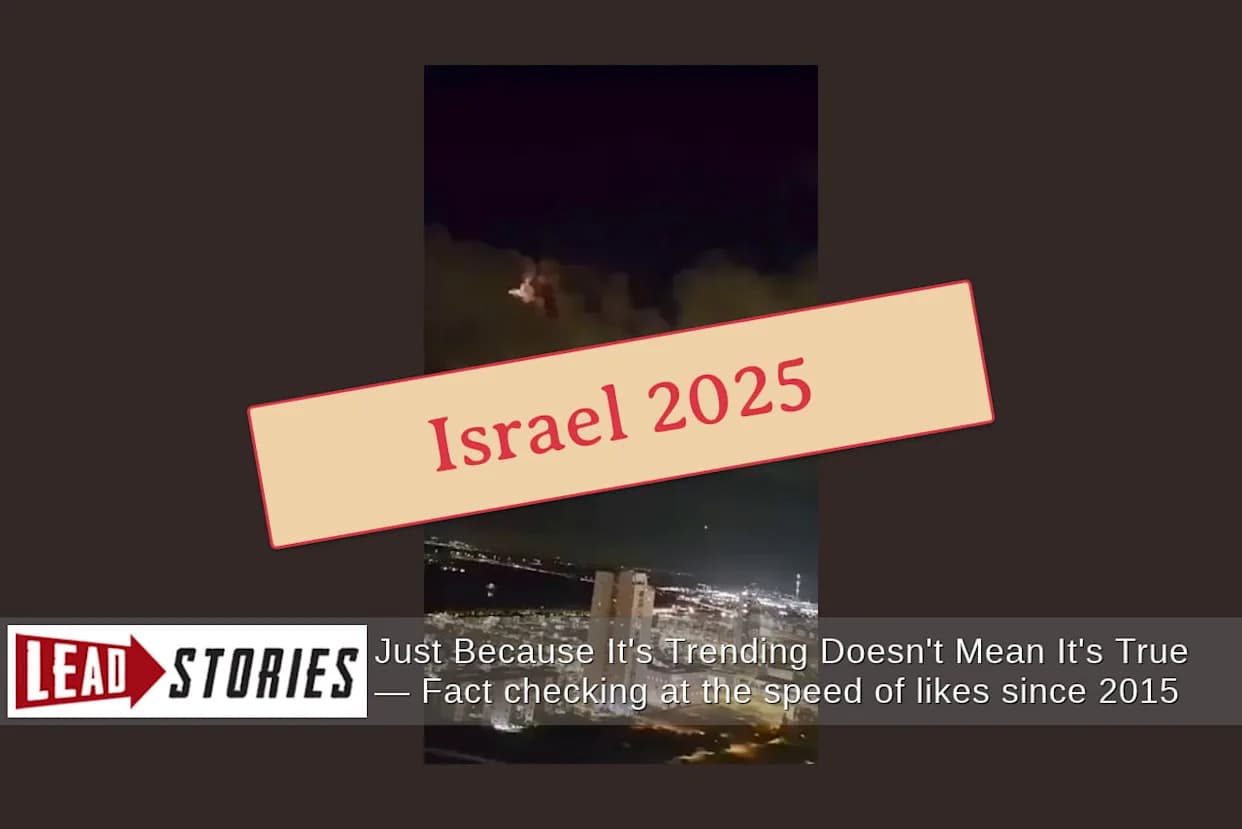
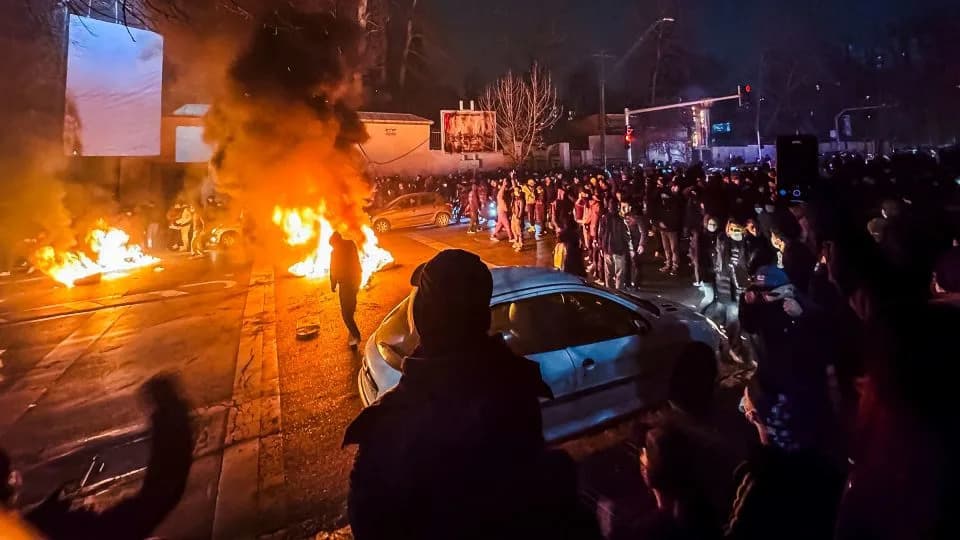
Key points: Viral clips purporting to show Israeli missiles hitting Iranian bases are not genuine CCTV footage. Multiple segments show visual glitches typical of AI-generated video, and one excerpt traces to a television broadcast rather than a leaked surveillance camera. Automated analysis flagged the compilation as overwhelmingly likely to be synthetic. The account that posted the video has a prior history of sharing AI imagery. Verify before you share.
Fact Check: Viral 'CCTV' Clips of Israeli Strikes on Iranian Bases Are AI-Generated, Not Genuine

Short answer: The viral compilation claiming to show Israeli missiles striking Iranian military bases is not authentic CCTV footage. Multiple clips in the post display visual anomalies typical of AI-generated video, and at least one excerpt appears to be taken from a broadcast rather than a leaked surveillance camera.
The compilation was posted on Instagram by the account @kaabusia on December 1, 2025, with a Persian caption that translates as: "After months, several videos have been released showing the moment Israeli missiles struck military bases of the Ayatollahs' regime." The post included no explicit AI disclaimer.
Careful frame-by-frame inspection of the footage reveals several defects consistent with synthetic video generation. Observers identified multiple anomalies, including:
- An object that alternates between appearing as a shelf, a map, or a screen displaying a map;
- A clock whose digits are oddly formed and inconsistent with a real clock face;
- An unusually proportioned keyboard partly covered by paper next to two malformed headphone halves;
- A desk surface that appears visually merged with the floor plane in some frames;
- Shadows that do not align with nearby objects and a running person whose shadow points in a different direction than their body orientation.
At least one segment in the compilation matches a longer clip originally shown on Iranian television, not a leaked surveillance feed. That longer broadcast provides a wider camera angle and lighting context that explains some—but not all—of the odd visual relationships seen in the shortened clip.
Technical analysis strengthens the conclusion that synthetic imagery was used. An automated AI-detection service flagged the assembled video as 99.8% "likely to contain AI-generated or deepfake content." In addition, the Instagram account that published the composite has previously shared clearly synthetic footage, which undermines the post's credibility.
Conclusion: The available evidence — visual artifacts consistent with AI generation, the appearance of a segment taken from a television broadcast rather than a surveillance camera, the publisher's history of sharing synthetic content, and an automated detection tool's high likelihood score — supports the determination that the viral compilation is not genuine CCTV footage of Israeli strikes.
What you should do: Treat these clips with skepticism. Verify video origin and corroborating sources before sharing. When possible, check for original broadcast sources, full-length footage, and independent verification from official or multiple credible observers.
Help us improve.