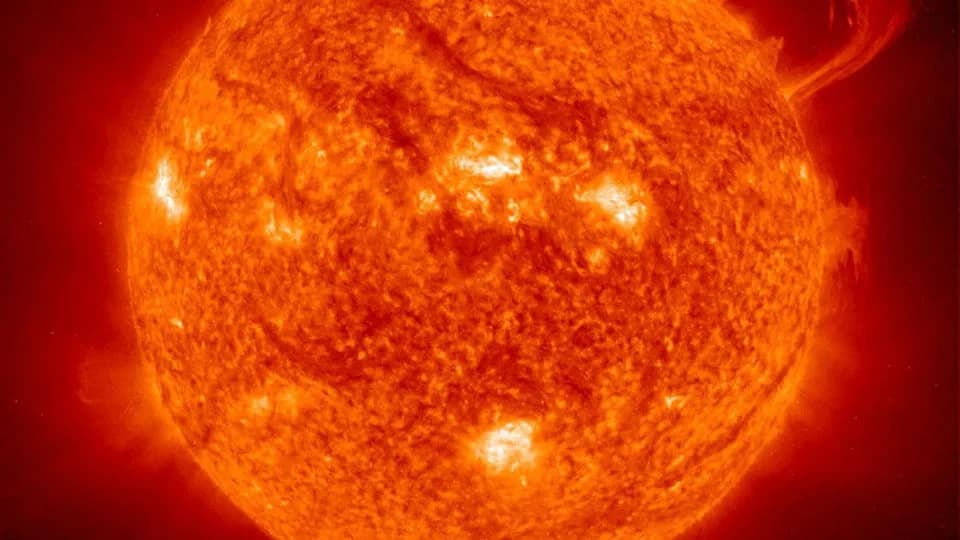
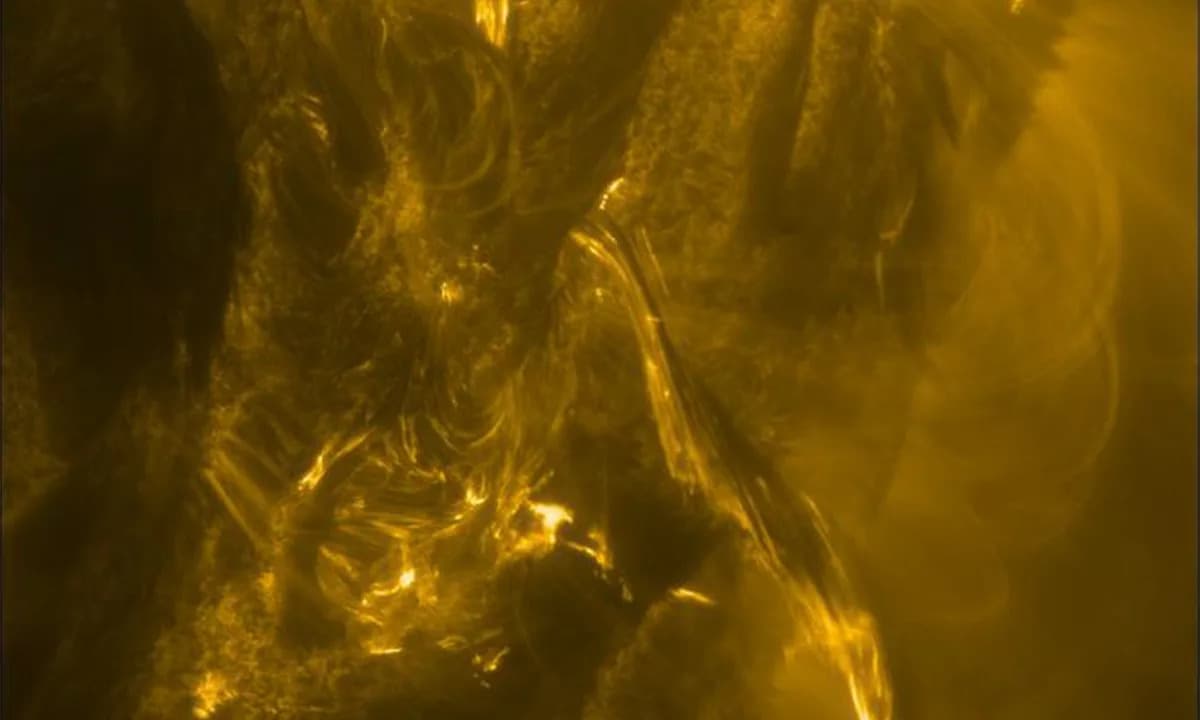
Rapid‑response balloons launched after a strong solar flare on 11 November 2025 recorded radiation at about 12 km (40,000 ft) that spiked to nearly ten times normal background levels—the highest at aviation altitudes in roughly 20 years. The event was a Ground Level Event but measured only ~2% of the largest known event (1956). Scientists warn that larger storms could disrupt aircraft electronics (an estimated ~60 memory errors/hour per GB under the measured flux) and say the new data will refine forecasting models and improve aviation resilience.
Rapid‑response balloons record strongest aviation‑altitude solar radiation spike in 20 years

Scientists monitoring space weather recorded the highest levels of solar‑storm radiation at aviation altitudes in roughly two decades after a powerful solar flare on 11 November 2025. Rapid‑response weather balloons launched from the UK and the Netherlands measured a short‑lived spike in energetic particles that penetrated into the lower atmosphere.
The event qualified as a "Ground Level Event" (GLE) — a class of solar particle event in which charged particles from the Sun are energetic enough to produce measurable effects at the Earth’s surface. Within hours of detecting the flare, teams deployed a series of balloons equipped with advanced radiation sensors to sample the storm in real time.
The balloons climbed to about 12 km (40,000 ft) — altitudes used by business jets and some supersonic transports — and recorded radiation peaks approaching ten times normal background levels for a short period. Although the measured spike is the largest at aviation altitude since the mid‑2000s, researchers note it was only about 2% of the intensity of the largest known event in 1956.
Why this matters
While the spike did not present an immediate public health hazard, scientists warn that stronger future GLEs could pose operational risks for aviation. Analysis of the balloon sensor data indicates energetic particles at these levels can induce errors in onboard computer memory—roughly estimated at about 60 errors per hour per gigabyte of affected memory under the measured flux.
Aircraft manufacturers have also cautioned that intense solar radiation can corrupt critical flight‑control data. Airbus reported it has identified a "significant number" of in‑service A320 family aircraft that could be vulnerable under certain conditions, prompting efforts to assess and mitigate risks.
Improving preparedness
Researchers say this real‑time balloon data will help refine atmospheric radiation models used by forecasting services and airlines. The new sensors are designed to survive near‑vacuum conditions and temperatures down to −70°C, enabling more accurate estimates of how space weather affects electronic systems at flight levels.
"Data from these launches are vital for our understanding of how space weather impacts radiation levels through Earth’s atmosphere," said Krista Hammond, Met Office space weather manager.
"This was the strongest Ground Level Event we've seen since December 2006," said Clive Dyer of the University of Surrey. "Our sensors have given the clearest picture yet of how rapidly conditions can change at aviation altitudes. We know from historical observations that significantly bigger events are possible, and we need to be ready."
Keith Ryden, director of the Surrey Space Centre, added: "Because this type of event is highly unpredictable, it's essential to capture as much data as possible when they do occur. This was our first chance to use the new rapid‑reaction balloon sensors in a real event and it worked very well. Our research aims to improve aviation safety, and this is a great step forward."
Officials and researchers say continued monitoring, improved models, and coordination between meteorological services, airlines and manufacturers are key to building resilience against more extreme space‑weather events.
Help us improve.