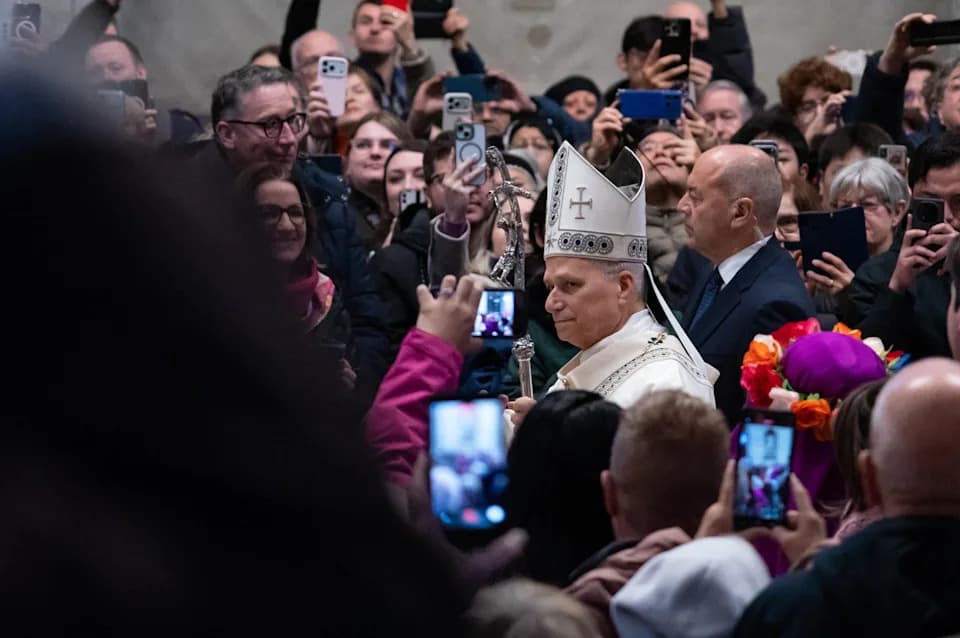
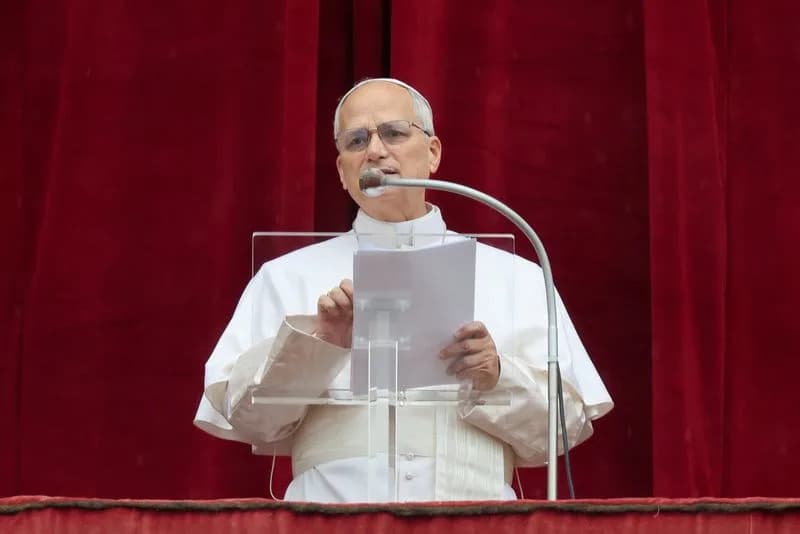
Pope Leo used his second day in Lebanon to call for coexistence and unity, speaking in Beirut’s Martyrs’ Square — a site symbolic of the city’s wartime division. He met President Joseph Aoun, visited religious shrines, and addressed some 15,000 young people. The visit takes place amid ongoing regional tensions, including exchanges between Hezbollah and Israel and UN-reported cross-border strikes that have caused significant casualties, and against Lebanon’s deep economic and political crises.
Pope Leo Calls for Unity and Coexistence in Beirut’s Martyrs’ Square

Pope Leo used the second day of his visit to Lebanon to urge religious leaders and citizens alike to choose coexistence over division, addressing a gathering in Beirut’s symbolic Martyrs’ Square.
A Message from Martyrs’ Square
Standing in Martyrs’ Square — the site that once marked the wartime "green line" separating Muslim west and Christian east during Lebanon’s 1975–1990 civil war — Pope Leo told faith leaders that "fear, distrust and prejudice do not have the final word." He added:
"May every bell toll; every adhan, every call to prayer blend into a single, soaring hymn."
The square, home to a monument honoring those who died for Lebanon’s independence and a recurring focal point for mass protests demanding political change, has long symbolized the country’s struggle to move beyond sectarian divisions.
Visits and Crowds
Arriving in Lebanon as part of his first overseas trip since becoming pope — a tour that also included a stop in Turkiye — Pope Leo met President Joseph Aoun and spoke to diplomats and officials at the presidential palace. Earlier he visited the tomb of St Charbel, a Catholic saint widely venerated across the region, and travelled to Harissa, the hillside shrine that overlooks the Mediterranean.
About 15,000 young people later gathered outside the Maronite Catholic headquarters to hear the 70-year-old pontiff. Addressing them, he said: "There is hope within you, a gift that we adults seem to have lost. You have more time to dream, to plan and to do good." Crowds greeted him with cries of "Viva il Papa" beneath the statue of the Virgin Mary at Harissa.
Politics, Conflict and Community
Lebanon is home to one of the Middle East’s largest Christian populations — roughly 30 percent of the country — alongside Shia and Sunni Muslim communities and smaller Alawite and Druze minorities. Leaders from all major sects attended the interfaith gathering, including representatives from communities affected by violence in neighbouring Syria.
Sheikh Ali al-Khatib, deputy head of the Supreme Shia Islamic Council, thanked the pope for his visit but warned that the country still bore "deep wounds as a result of Israel’s continued attacks." Reporter Zeina Khodr noted that while the scene of interfaith leaders gathered together projects unity, Lebanon remains deeply divided politically.
The visit comes against the backdrop of intensified regional tensions. Hezbollah began firing rockets into Israel on October 8, 2023, describing the strikes as an act of solidarity after events in Gaza; the group was later significantly weakened following a major Israeli escalation in Lebanon in September 2024. Since a November 2024 ceasefire, Hezbollah has only once returned fire, while Israel has continued cross-border strikes that the United Nations reports have killed more than 300 people in Lebanon, including roughly 127 civilians.
Pope Leo largely avoided direct commentary on the fighting during this stop, reiterating instead his long-standing call for dialogue and reconciliation. Observers said some in Lebanon view his presence as a temporary deterrent to escalation and worry about what may follow after his departure.
Economic and Humanitarian Strains
Lebanon continues to grapple with political paralysis and a deep economic crisis that began with a financial collapse in late 2019, which pushed millions into poverty. The country also hosts about one million refugees from Syria and Palestine, placing sustained pressure on public services and communities.
On Tuesday the pope is scheduled to visit the site of the 2020 Beirut port explosion and to lead Mass on the city’s historic waterfront, continuing his message of reconciliation and solidarity with the Lebanese people.
Help us improve.