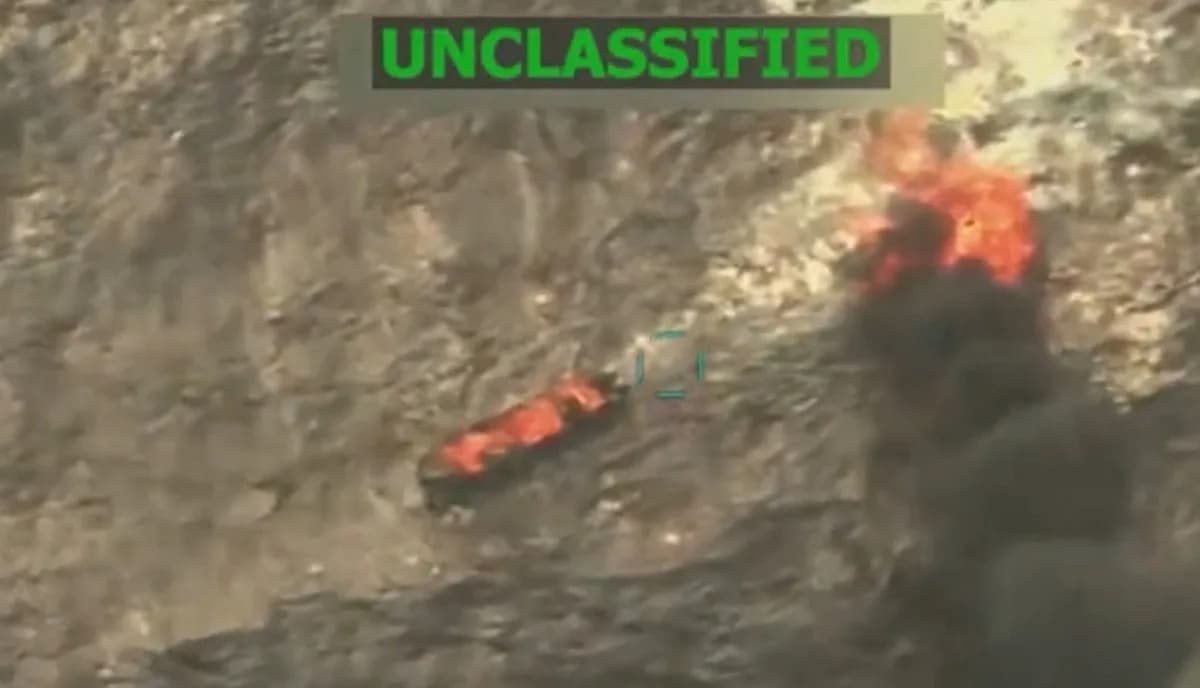
The White House has shifted responsibility to Admiral Frank Bradley after survivors were killed following a U.S. strike on an alleged drug-smuggling boat. The Department of Defense’s Law of War Manual forbids firing on shipwrecked people, yet officials defended the strikes and disputed reports that orders were given to "kill everybody." Questions remain about chain-of-command decisions, the presence of fentanyl aboard the boats, and whether the actions violated the laws of armed conflict.
White House Shifts Blame to Admiral After Survivors Killed in Strike on Alleged Drug-Smuggling Vessel

The White House on Monday shifted responsibility for the killing of survivors in a U.S. military strike on an alleged drug-smuggling boat from Defense Secretary Pete Hegseth to the naval commander who carried out the operation.
The U.S. Department of Defense Law of War Manual explicitly prohibits firing on people who are shipwrecked. As the manual states:
“For example, orders to fire upon the shipwrecked would be clearly illegal.”
Press secretary Karoline Leavitt defended the action as lawful while repeating President Donald Trump’s assertion that Secretary Hegseth was not aware the survivors had been killed. Leavitt issued a statement saying:
“On Sept. 2, Secretary Hegseth authorized Admiral Bradley to conduct these kinetic strikes. Admiral Bradley worked well within his authority and the law, directing the engagement to ensure the boat was destroyed and the threat to the United States of America was eliminated.”
At the time of the operation off the coast of Trinidad, Admiral Frank Bradley led the Joint Special Operations Command (JSOC). Published accounts have reported that Bradley relayed an order to “kill everybody,” sending U.S. forces back to a disabled vessel where two people clung to wreckage and were later killed. Admiral Bradley was promoted in October to lead U.S. Special Operations Command (USSOCOM).
When pressed for additional details, Pentagon officials offered little beyond public statements from Secretary Hegseth, who has denied the reported account and called it “fake news.” U.S. Special Operations Command declined to comment for this article.
President Trump posted portions of video of the assault on his social platform and described the casualties as 11 “narcoterrorists.” The number of people aboard the vessel has raised questions about whether it was engaged in large-scale drug trafficking: analysts note each additional passenger reduces a boat’s payload capacity by roughly 180 pounds, and most interdicted vessels of this type have carried three or four people, not 11.
Officials’ public explanations for a series of strikes in the Caribbean and the Eastern Pacific have been inconsistent with available evidence. The administration has repeatedly said the mission was intended to stop fentanyl shipments and at times claimed fentanyl was found on destroyed vessels, but it has not produced public evidence that fentanyl was aboard these boats. The small size and design of many of the targeted craft more closely match vessels used by low-level cocaine traffickers and are ill-suited for direct transits to the United States without repeated refueling.
The controversy deepened over the Thanksgiving holiday when the president pardoned a former Honduran president who had been convicted in a U.S. federal court for his role in directing the smuggling of roughly 500 tons of cocaine into the United States. Leavitt defended the pardon by repeating the president’s claim that the prosecution was unfair and that the president acted within his constitutional clemency powers.
Legal and Political Fallout
The episode has intensified scrutiny of the administration’s strike policy, the chain of command authorizing lethal follow-up actions, and whether U.S. forces violated the laws of armed conflict by engaging people who were shipwrecked or otherwise hors de combat. Legal experts and human rights advocates say orders to fire on shipwrecked persons would be unlawful under the Law of War Manual and customary international humanitarian law.
As investigators and policymakers seek clearer answers, the key questions include who authorized the follow-up lethal actions, whether commanders believed they were acting within the law, and whether the administration can substantiate its public claims about the targets and the presence of illicit drugs.
Help us improve.