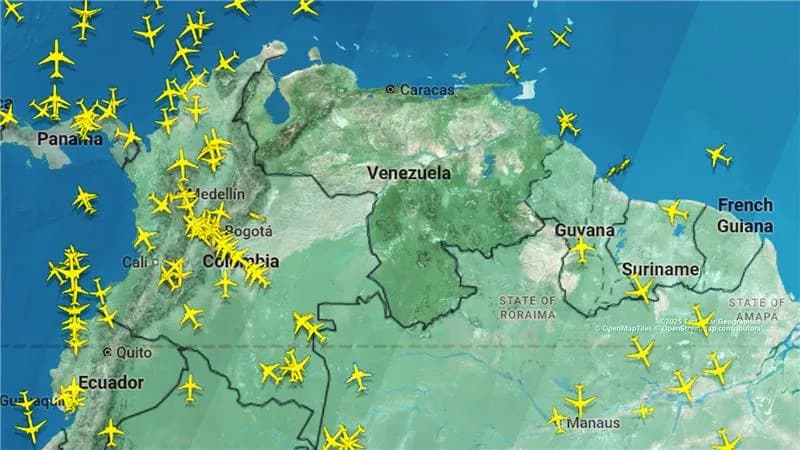
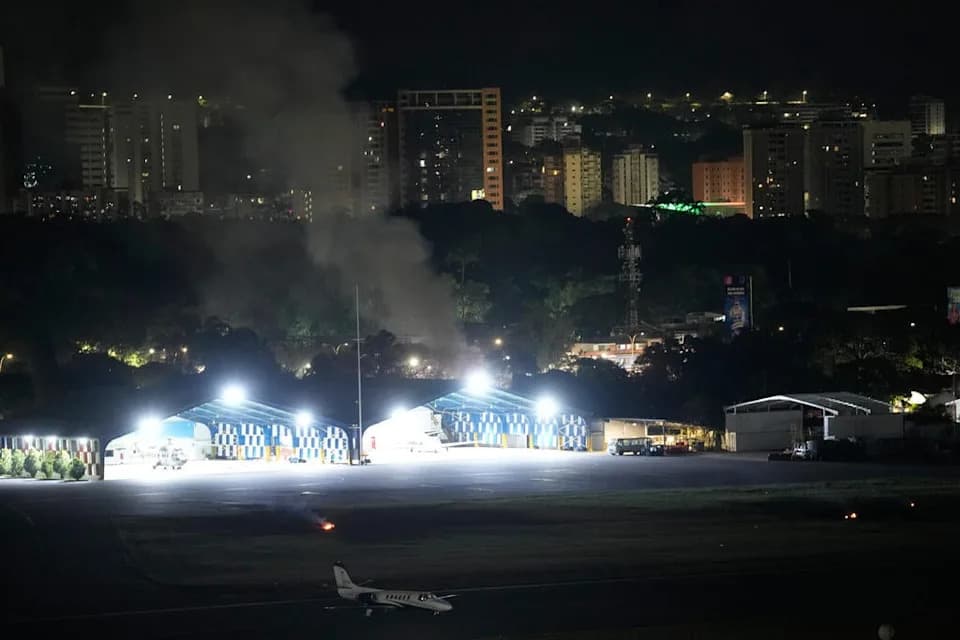
President Trump announced via Truth Social that the airspace above and surrounding Venezuela is "closed in its entirety," a step that escalates tensions with President Nicolás Maduro. The FAA had already advised airlines to avoid Venezuelan airspace citing a worsening security situation, and Venezuela revoked rights for six carriers. The move follows U.S. strikes on vessels accused of drug trafficking and has drawn criticism from lawmakers and the U.N., raising legal and aviation-safety concerns.
Trump Orders Total Closure of Venezuelan Airspace, Escalating Standoff with Maduro

President Donald Trump abruptly declared the airspace above and surrounding Venezuela "closed in its entirety" on Saturday, intensifying a mounting confrontation with President Nicolás Maduro. The White House has accused Maduro of collaborating with narco-terrorist groups to facilitate drug trafficking.
Posting on Truth Social Saturday morning, Trump wrote:
"To all Airlines, Pilots, Drug Dealers, and Human Traffickers, please consider THE AIRSPACE ABOVE AND SURROUNDING VENEZUELA TO BE CLOSED IN ITS ENTIRETY."
The directive goes beyond a recent Federal Aviation Administration advisory that warned airlines and pilots to avoid Venezuelan airspace because of a "worsening security situation," increased military activity, and potential GPS interference. After the FAA notice, Venezuela revoked operating rights for six major international carriers that had suspended flights.
Where the FAA issued safety guidance, the presidential message frames Venezuelan skies as an active security threat. The White House did not respond to requests for comment about the legal basis or the operational details of the order.
Pressure Campaign and Maritime Strikes
In recent months, President Trump and Secretary of State Marco Rubio have stepped up a pressure campaign aimed at ousting Maduro, including a visible U.S. military buildup in the Caribbean and strikes on vessels the administration says were trafficking drugs. Those strikes have prompted international criticism and raised difficult legal and diplomatic questions.
Criticism and Legal Concerns
Lawmakers from both parties and international observers have expressed concern that the administration's actions centralize executive power and may risk violating international law. Last month, the U.N. high commissioner for human rights called the strikes "unacceptable," echoing fears that interdiction efforts could cross legal boundaries.
The president this week also indicated potential expansion of interdiction efforts to land routes. "People aren't wanting to be delivering by sea," he said at the White House. "And we'll be starting to stop them by land also. The land is easier. But that's going to start very soon. We warn them. Stop sending poison to our country."
The situation remains fluid. Key questions for analysts and aviation authorities include how the closure will be enforced, what risks it poses to commercial flights and regional stability, and whether further diplomatic or military steps will follow.
Help us improve.