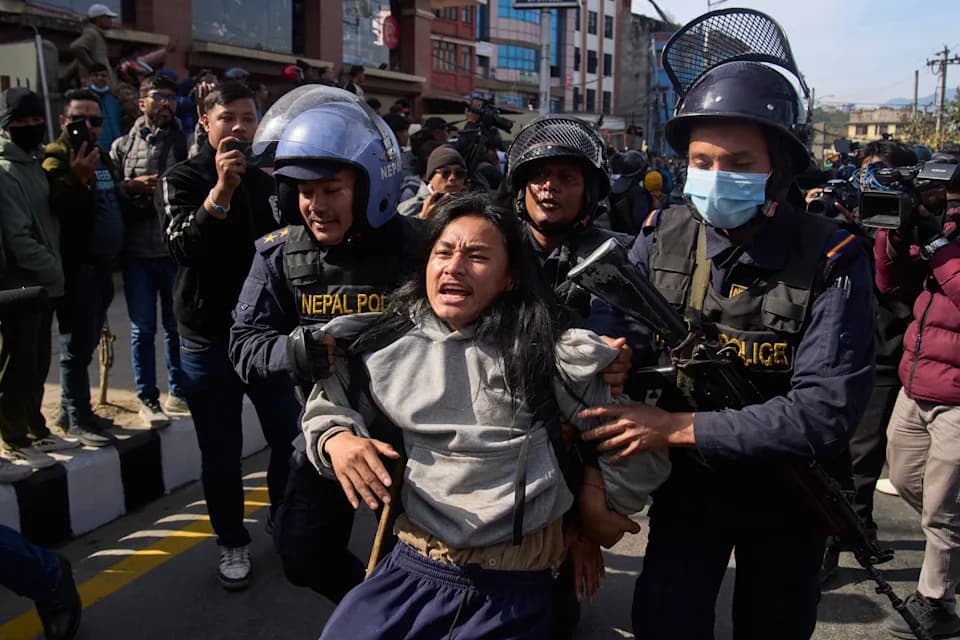
Thousands marched in Giessen as AfD sought to launch a new youth organization, triggering clashes that led police to use pepper spray and water cannon. The new group, likely to be called Generation Germany, replaces the Young Alternative, dissolved in March after links to right-wing extremism were alleged. AfD says it wants tighter control of the successor, but observers remain uncertain whether the new wing will be more moderate.
Thousands Protest as AfD Unveils New Youth Wing in Giessen — Clashes Erupt with Police

Thousands of demonstrators gathered in the western German city of Giessen on Saturday as the anti-immigration party Alternative for Germany (AfD) moved to establish a new youth organization, prompting clashes with police and significant disruption to local traffic.
Protesters attempted to block roads in and around Giessen, a city of roughly 93,000 inhabitants, early in the morning. Police said officers deployed pepper spray after stones were thrown at them at one location and used water cannon to clear a blockade of about 2,000 people who refused repeated orders to disperse.
The founding meeting at Giessen's convention centre — where the successor youth group was due to be established — had not begun two hours after the scheduled start time. The new organization is expected to replace the Young Alternative, which AfD dissolved at the end of March after deciding to formally sever ties with the largely autonomous group.
Why the change matters
AfD officials say they want closer oversight of the successor, tentatively called Generation Germany. The party, which finished second in February's national election with just over 20% of the vote, is now the country’s largest opposition force and has continued to gain ground in opinion polls amid public dissatisfaction with Chancellor Friedrich Merz's coalition government.
Germany's domestic intelligence agency previously concluded the Young Alternative was a proven right-wing extremist association. Authorities later classified AfD itself as a suspected extremist organization, though that designation was temporarily suspended after legal challenges.
In a Cologne court ruling last year rejecting a bid to block the Young Alternative designation, judges said the group’s central political aim included preserving an ethnically defined German people and, where possible, excluding the "ethnically foreign." The ruling cited agitation against migrants and asylum-seekers and links to extremist movements such as the Identitarian Movement.
Observers say it remains unclear whether the new AfD youth organization will be more moderate than its predecessor, though some continuity is expected. Kevin Dorow, a delegate from Schleswig-Holstein who had been active in a local Young Alternative branch, described the new formation as "above all continuing what the Young Alternative started — being a training ground, attracting young people ... and bringing them into politics for the good of the party." He added he had not seen a "drift in a radical direction" in his experience.
Youth wings in German parties frequently take more radical positions than their parent organizations, so the profile and oversight of the new group will be watched closely by authorities, civil-society groups and political rivals.
Contributors: Martin Meissner in Giessen and Geir Moulson in Berlin.
Help us improve.