At AmericaFest, Turning Point USA’s annual conference, young conservatives voiced frustration over high housing costs, job uncertainty and unfulfilled promises — compounded by grief after the killing of founder Charlie Kirk. Some attendees remain cautiously optimistic that policy changes can ease pressures on housing, energy and student debt; others are considering political disengagement. Polling shows rising youth pessimism: only 13% of 18–29-year-olds say the country is on the right track, and Democrats have gained ground among young voters in recent races.
Young Conservatives at AmericaFest Express Frustration Over Housing, Jobs and Unmet Promises

An attendee looks on as Erika Kirk speaks during Turning Point USA's AmericaFest 2025 in Phoenix on December 19, 2025. - Jon Cherry/AP
At 23, Caleb Gasca has checked several traditional markers of adulthood — a college degree, a steady job in a construction office and marriage — yet he still lives with his wife’s parents in San Bernardino County, California, and feels stalled.
“It’s really irritating that in the area I grew up in, that my family lives, that I can’t afford to live there,” Gasca said between speakers at AmericaFest, Turning Point USA’s annual gathering of young conservatives.
Grief, Uncertainty and Unmet Expectations
Last December’s gathering celebrated what many saw as a new bond between young voters and President Donald Trump; this year’s conference carried a more unsettled tone. The movement is still reeling from the death of Turning Point USA founder Charlie Kirk, who was killed in September, leaving an emotional and organizational void. At the same time, several promises voiced to this cohort — lower prices, fewer foreign entanglements and broad “generational change” — have not clearly materialized for many attendees.
Some young conservatives at AmericaFest remain cautiously hopeful that policy changes can improve their prospects. They cited stricter immigration enforcement as a potential way to reduce job competition, energy policies to bring down fuel and electricity costs, and education reforms to alleviate student debt.
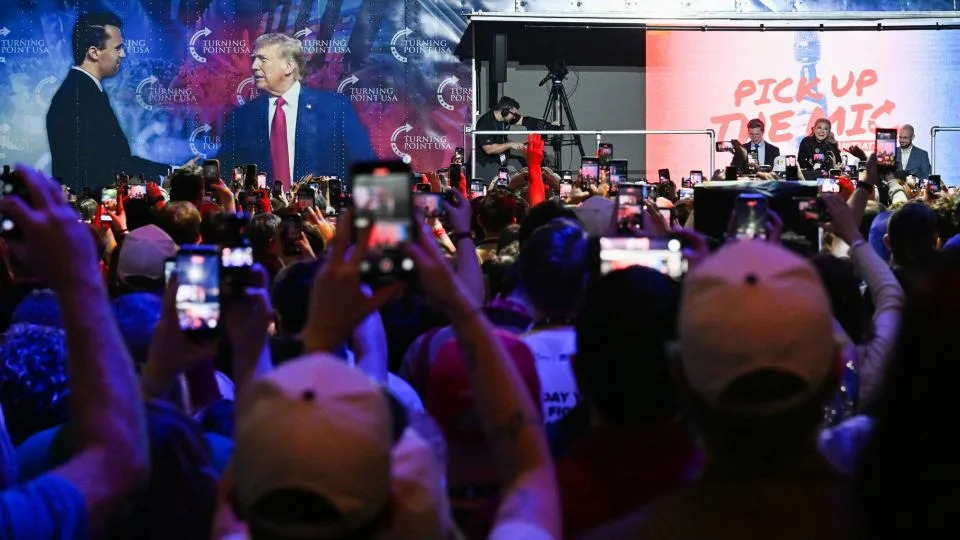
Erika Kirk takes questions during AmericaFest, the first Turning Point USA summit since the death of Charlie Kirk, in Phoenix, Arizona on December 19, 2025. - Caitlin O'Hara/Reuters
“We’re only one year into this administration,” said Chloe Szot, a 27-year-old teacher from California, expressing measured optimism.
Others said their patience is wearing thin. Gasca told reporters, “Unless something changes, I plan not to vote, at least for president, in 2028.”
Changing Pathways Into Adulthood
Many attendees described how today’s route to adulthood differs from previous generations. Location increasingly determines whether homeownership is realistic: Szot said she believes she can buy a house someday, but only depending on where she lives. Couples are more likely to rely on two incomes; Luke Phelps, 25, who plans to start a family near Phoenix, said both he and his wife expect to continue working.
These anecdotes reflect broader trends: fewer than 25% of Americans have reached the four traditional milestones of adulthood (moving out, marrying, working full-time and having children) by age 34, according to the U.S. Census Bureau. Homeownership is also delayed: the National Association of Realtors reported that the median age of first-time buyers reached 40 this year.
New Pressures: Social Media, AI and Pessimism
Young people face additional challenges their parents did not. An April Pew Research Center study found that many teenagers worry they spend too much time on social media and are concerned about its effects on mental health. A Harvard Kennedy School Institute of Politics poll found adults under 30 are three times more likely to believe artificial intelligence will take opportunities away from them than to say it will create opportunities.
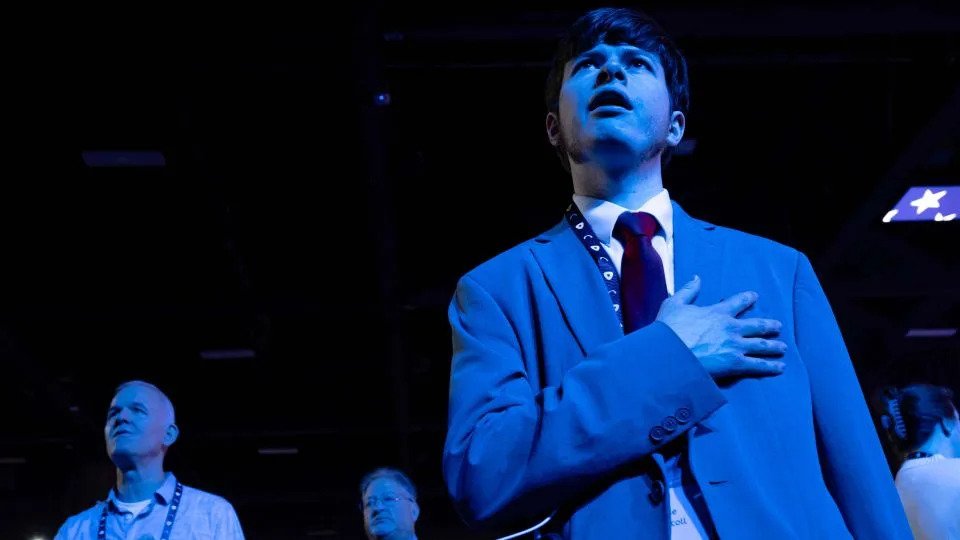
Attendees stand and observe the National Anthem during Turning Point USA's AmericaFest 2025 in Phoenix on December 19, 2025. - Jon Cherry/AP
“You don’t want to start college and get through it and the job that you wanted isn’t there anymore,” said Tyler Osbon, 19, a college student from West Monroe, Louisiana. “It’s definitely getting harder to see what you want to do with your life, and then, is that going to be enough to support you in the future?”
Political Stakes
Analysts say Trump’s 2024 campaign — aided by organizers like Kirk — connected with young voters’ economic and cultural anxieties, producing measurable gains: CNN exit polls show a seven-point increase in support among voters under 30 from 2020 to 2024, the largest gain of any age group.
Yet, one year into the administration, pessimism among young Americans has grown. A Harvard poll found only 13% of 18- to 29-year-olds think the country is headed in the right direction. That pessimism is reflected in political engagement: many young people say they may skip future elections, and Republican youth turnout intent appears weaker — only about half of Trump’s young 2024 voters say they definitely plan to vote in 2026 compared with two-thirds of the young voters who backed the Democratic vice presidential ticket.
Voices at AmericaFest were divided on remedies. Some conservative commentators urged personal responsibility and grit; others, following Kirk’s view, argued for concrete policy solutions to give younger Americans a plausible path to economic stability. The debate underscores a central risk for the GOP: retaining recent youth gains may require new approaches that address the real economic and social anxieties shaping younger voters’ outlooks.
Bottom line: AmericaFest highlighted a generation that helped shape recent electoral outcomes but now feels anxious and uncertain — a dynamic that could reshape political alliances unless parties address housing, work and technological disruption more directly.
Help us improve.