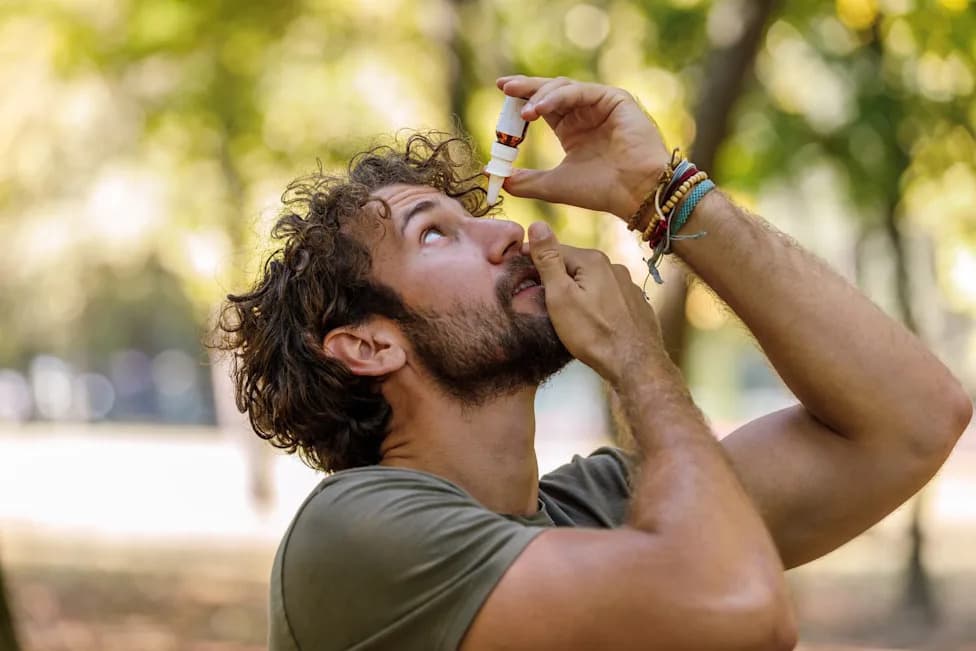
Tetrahydrozoline, the active ingredient in many eye drops, has surfaced as the suspected poison in several recent U.S. murder investigations. When ingested it can cause life-threatening cardiovascular and respiratory effects. High-profile cases include alleged and convicted poisonings in North Carolina, South Carolina, Wisconsin, Colorado and Illinois. Forensic evidence—from preserved blood samples to receipts and surveillance footage—has been central to exposing these crimes.
Eye Drops as a Weapon: Tetrahydrozoline Poisonings in Multiple U.S. Murder Cases

This article examines a disturbing trend: tetrahydrozoline — the active ingredient in many over-the-counter eye drops — has been used as a poisonous agent in several high-profile U.S. murder investigations. Once swallowed, this clear, nearly tasteless liquid can cause dangerously low blood pressure, slowed heart rate, breathing problems and, in some cases, death. Forensic detectives, preserved biological samples and digital records have helped expose a string of cases where loved ones were allegedly poisoned with ordinary eye-care products.
What is tetrahydrozoline?
Tetrahydrozoline is a vasoconstrictor used in eye drops marketed to relieve redness. When applied to the eye as directed it is safe for most users, but ingestion can be toxic. Poison-control authorities warn that swallowed tetrahydrozoline can produce life-threatening symptoms, including hypotension, bradycardia, cardiac arrhythmias and respiratory distress. Because it can be clear and nearly tasteless, it has sometimes been added covertly to drinks.
Notable cases
Joshua Hunsucker (North Carolina)
A former paramedic faces murder and related charges after prosecutors say he fatally poisoned his wife, staged events to distract investigators and allegedly poisoned one of his children. The wife’s death was originally recorded as a heart attack because she had a known heart condition. Investigators later obtained a preserved blood sample taken when she was registered as an organ donor; toxicology on that sample detected a lethal level of tetrahydrozoline, prompting the medical examiner to change the manner of death to homicide. Prosecutors also allege a pattern of harassing behavior, a suspected arson incident involving a helicopter, and an episode in which his daughter fell ill and tested positive for tetrahydrozoline but recovered.
Lana Clayton (South Carolina)
In 2018, a man who was found at the bottom of a staircase was later determined to have been fatally poisoned with tetrahydrozoline. Authorities charged his wife, who admitted to spiking his drinks with eye drops over several days. Prosecutors alleged she sought to benefit financially and destroyed the decedent's will; she ultimately pleaded guilty to voluntary manslaughter and received a lengthy prison sentence. Prosecutors also raised questions about an earlier crossbow injury to the same man, which authorities had previously treated as accidental.
Jessy Kurczewski and Lynn Hernan (Wisconsin)
A 62-year-old woman was found unresponsive in her home amid staged signs of crushed medications. After a worried relative prompted additional testing, toxicology revealed lethal tetrahydrozoline and the death was reclassified as a homicide. Prosecutors said the caretaker and beneficiary had isolated the victim and siphoned large sums of money before and after the death. Following a trial, the caretaker was convicted of first-degree intentional homicide and theft and sentenced to life plus additional years for the financial crimes.
James and Angela Craig (Colorado)
A wife grew progressively sicker after consuming drinks prosecutors say her husband prepared. Investigators found tetrahydrozoline and other poisons in her system and forensic analysis detected tetrahydrozoline in a substance from a bottle associated with the victim. The husband was convicted and sentenced to life without parole after prosecutors presented surveillance, purchase records and communication evidence that they say showed motive and premeditation.
Richard 'Rick' Young and Marcy Oglesby (Illinois)
A retired police chief died after months of unexplained illness; his partially mummified remains were later found in a storage unit. Toxicology eventually showed tetrahydrozoline intoxication. Authorities say his longtime girlfriend used his phone after his death to send misleading messages, and a roommate testified she purchased numerous eye-drop bottles and once put drops into the victim’s coffee. The roommate was convicted of concealing a homicidal death and received a conditional discharge; the girlfriend was convicted of murder and other charges and sentenced to a multi-decade prison term.
How these crimes were uncovered
Many of these investigations depended on a combination of: preserved biological samples (for example, blood reserved because a victim was an organ donor), detailed toxicology, surveillance footage, receipts and digital forensics. In several cases, suspicious behavior around estate planning, insurance claims or sudden financial gain prompted relatives or authorities to dig deeper. Forensic toxicologists have noted that tetrahydrozoline has shown up more frequently in criminal poisonings in recent years.
Manufacturer and safety notes
A spokesperson for the maker of a prominent eye-drop brand condemned misuse of the product and emphasized that tetrahydrozoline is safe when used externally and as directed. Labels clearly instruct consumers that these products are for external use only. Nonetheless, investigators and poison-control centers urge the public to be aware of the risks of ingestion and to report unusual illnesses or suspicious behavior to medical personnel and law enforcement.
Takeaway
These cases illustrate how a common household product can become a lethal tool when misused and how modern forensic tools can reveal hidden crimes. Families and investigators continue to pursue justice in pending trials; several defendants in these cases have been convicted and sentenced, while others remain under indictment. If you suspect poisoning, seek immediate medical attention and contact poison-control services.
Help us improve.