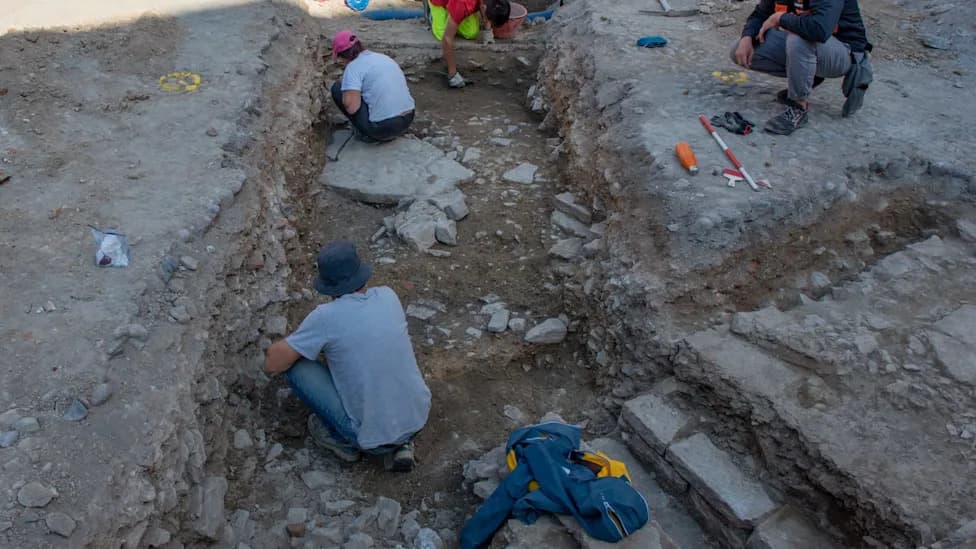
Archaeologists identified 573 previously unknown stone‑walled settlements near Yulin, Shaanxi Province, some dating to about 2800 B.C.E. The six‑year survey found sites from the Yangshao, Shang and Zhou periods located along river systems. Fortified settlements were often larger and drew nearby non‑fortified communities, and variations in size and design point to social hierarchies. Researchers say the discoveries offer important new avenues for studying prehistoric community planning and defensive architecture.
573 Ancient Stone Fortresses Discovered Near Yulin — New Insights into Prehistoric Society

Archaeologists have recorded 573 previously unknown stone fortress settlements tucked into the mountains outside Yulin in Shaanxi Province, with some sites dating as far back as 2800 B.C.E. The large cluster spans multiple prehistoric and early historic periods, including the Yangshao, Shang and Zhou eras.
How the sites were found
The research team spent six years surveying river corridors and adjacent mountain slopes. Guided by water‑system maps, investigators combined on‑the‑ground inspection with aerial mapping to pinpoint fortified enclosures often located beside ordinary, non‑fortified settlements.
Variation and complexity
The 573 locations vary widely in size, layout and construction technique. Some fortresses are small and simply built, while others—generally the later examples—feature more complex internal arrangements and advanced stonework. Many fortified sites are clearly larger than nearby non‑walled settlements, suggesting they acted as focal places that attracted smaller communities.
Social organization and defensive planning
Across the cluster, spatial organization and differing building quality point to social hierarchies and differentiated roles within these communities. The presence of defensive walls near reliable water sources underlines the importance of resource control, protection and community planning in prehistoric settlement choices.
Broader context
The Yulin discoveries resonate with other recent archaeological finds in the region and beyond. For example, researchers recently uncovered a walled city in northern Saudi Arabia dated to around 2400 B.C.E., showing that constructing fortified settlements near water was a widespread strategy in antiquity. Studying the Yulin sites will help scholars trace changes in defensive architecture, community planning and cultural exchange over millennia.
What’s next
Team leaders say the newly identified fortresses open major opportunities for detailed excavation, dating, and comparative analysis. Further work will aim to establish precise chronologies, understand daily life inside and outside the walls, and reconstruct how these communities interacted across the landscape.
Help us improve.