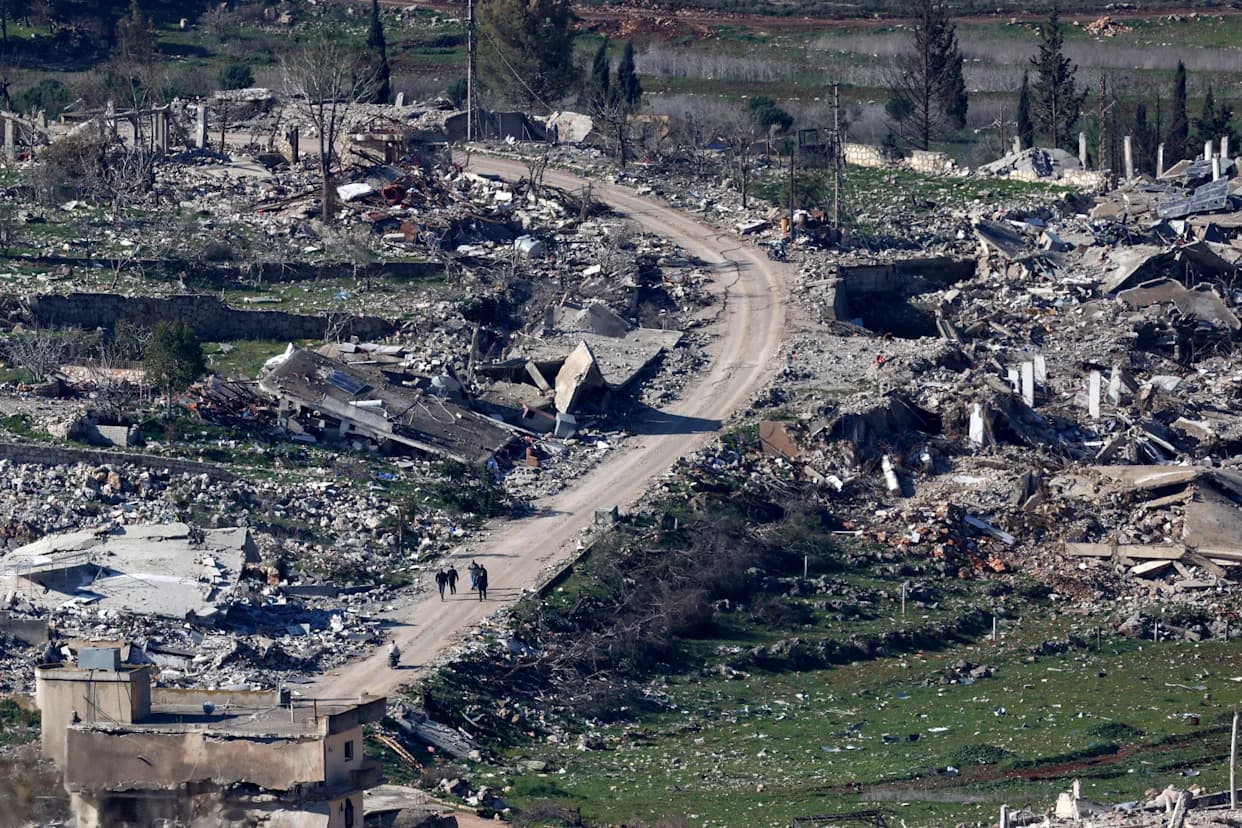
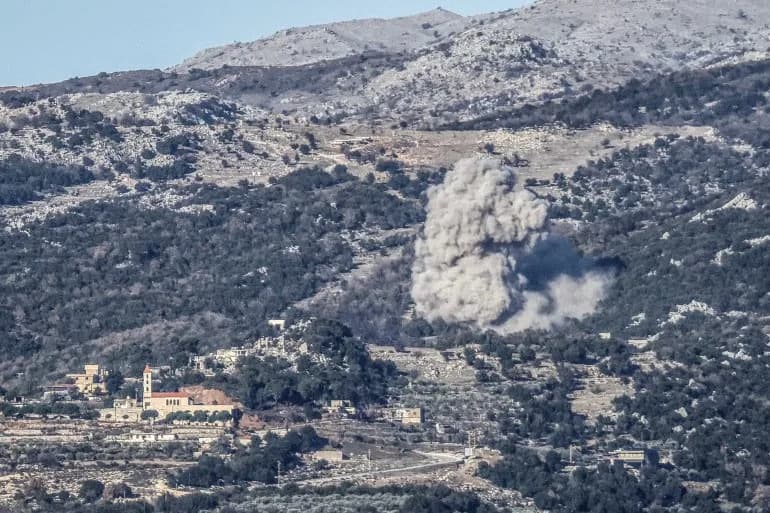
At least 13 people, including children, were killed and about 25 were wounded after an Israeli dawn raid and follow-up strikes on the town of Beit Jinn in the Damascus countryside, state media reported. Dozens of families fled the town to nearby areas as emergency crews were unable to reach the wounded amid ongoing drone and strike activity.
State reports said the remains of several victims, including children, were taken to the Golan National Hospital in al-Salam, Quneitra. Local emergency teams said they could not enter Beit Jinn to assist the wounded because any movement was being targeted.
According to an Israeli military statement, six Israeli soldiers were wounded in an exchange of fire, three seriously. The military said the operation had been "completed," adding that suspects were either arrested or "eliminated," and that forces remain deployed in the area to address perceived threats.
Local witnesses and sources reported that an Israeli ground unit that entered Beit Jinn became surrounded, prompting air strikes and artillery shelling to extract the force. Eyewitnesses also described exchanges of fire involving military helicopters.
Regional context
Incursions into Quneitra province and parts of the Damascus countryside have grown more frequent and intense in recent months. Observers say these operations increased after the fall of President Bashar al-Assad in December 2024, when Israeli forces expanded their presence in southern Syria.
Akiva Eldar, an Israeli political analyst, said some voices in Israel view any instability along the Syrian border as justification for military action and for creating a so-called "security zone." Historically, Israel seized the Golan Heights in the 1967 war and has maintained control since then; more recent moves have been characterized by critics as a deeper advance into Syrian territory and a de facto buffer that includes high ground such as Jabal al-Sheikh.
Impact on civilians and wider implications
Across the Quneitra area, tanks and patrols have established checkpoints and gates; reports say civilians are routinely stopped, searched and sometimes detained. Syrian authorities and human-rights groups describe many of these cases as unlawful detentions or abductions, with recent figures suggesting dozens have been held.
The incident comes as Syria's new government under President Ahmed al-Sharaa faces growing internal tensions, including eruptions of sectarian violence, as the country attempts to re-engage internationally and secure economic support. The raid coincided with the anniversary of the offensive that toppled the previous government in December 2024, an event the new administration urged citizens to mark in a recent address.
The situation remains fluid: drones and surveillance continue over the area and security forces on both sides say they will maintain a presence. Humanitarian access and independent verification of casualty figures remain limited.