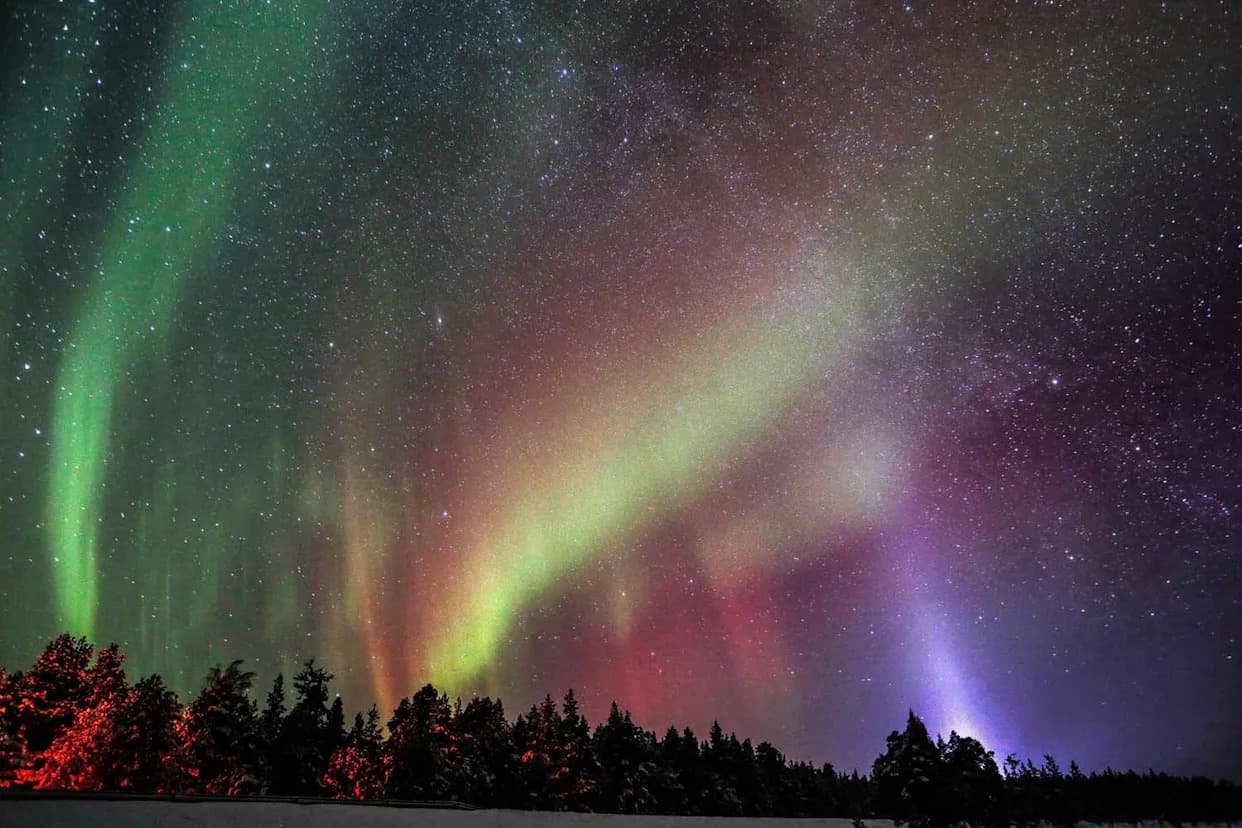
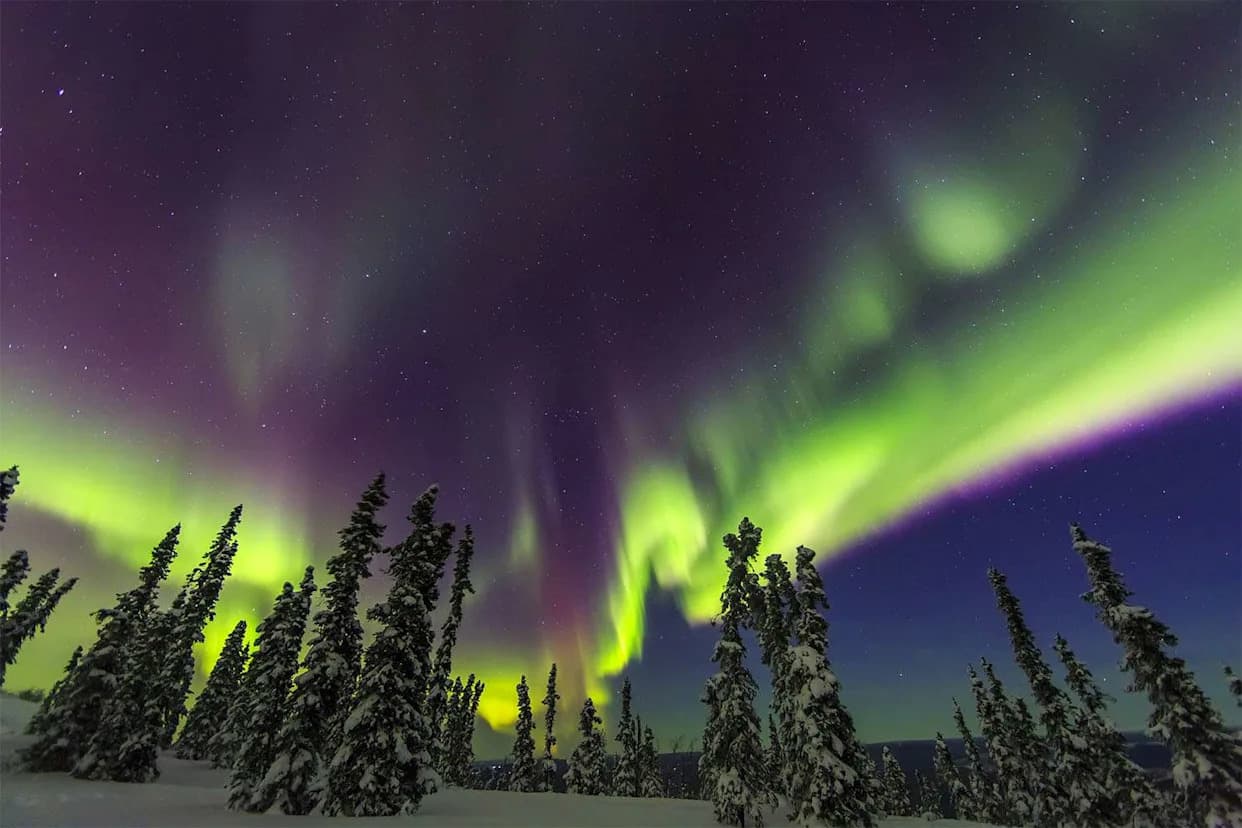
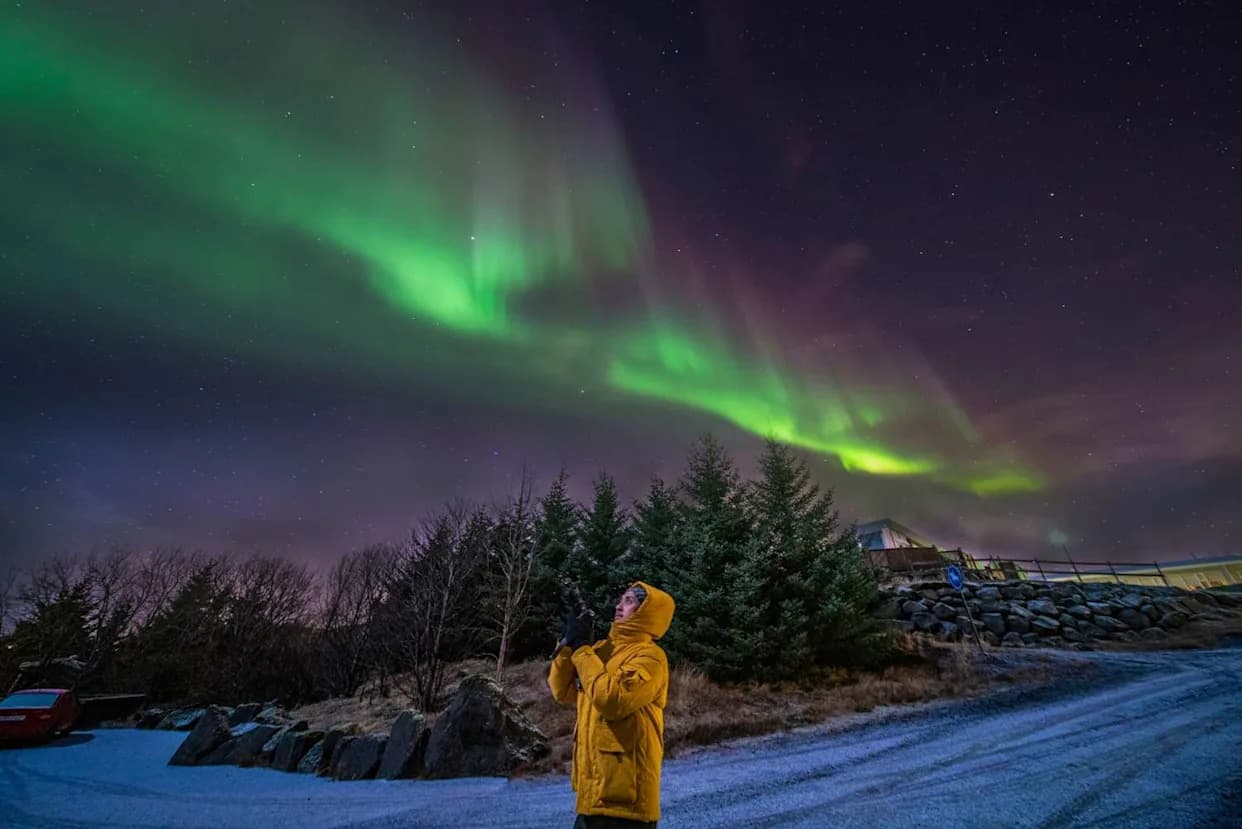
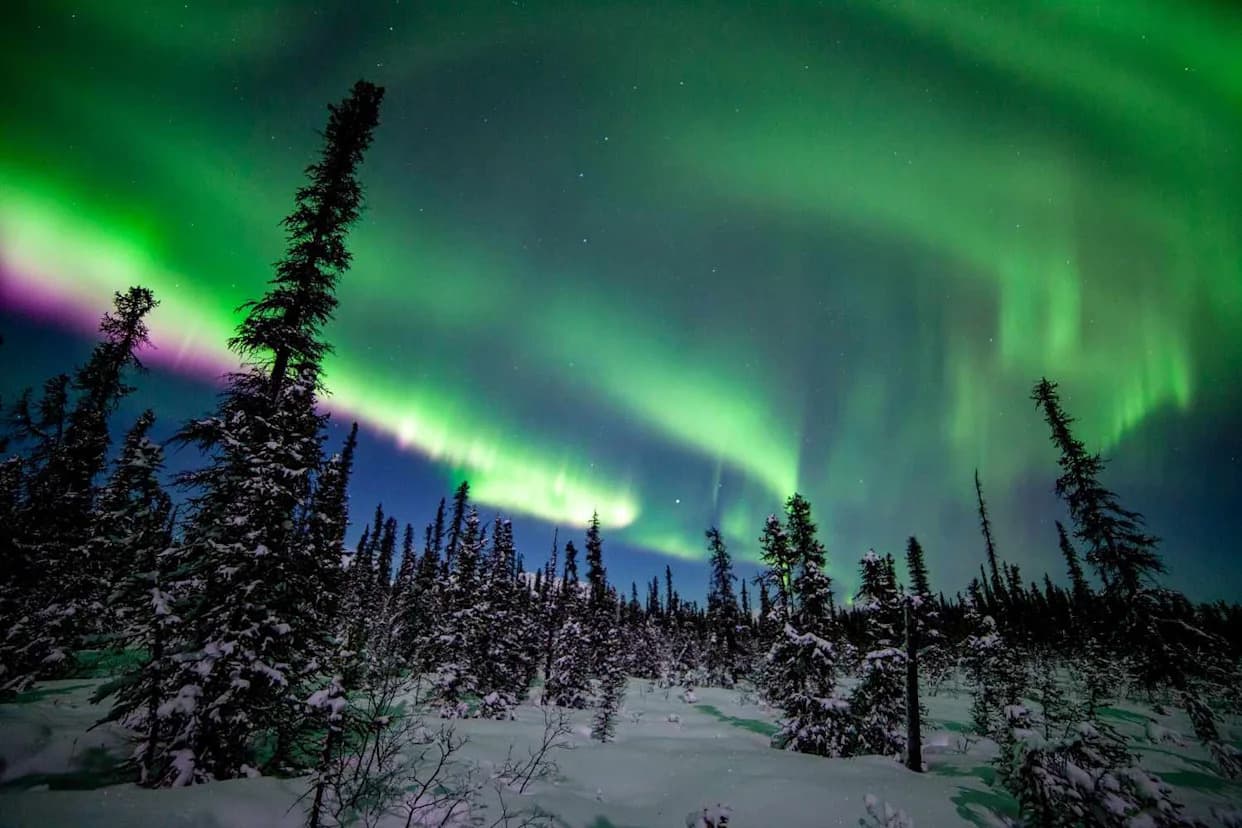
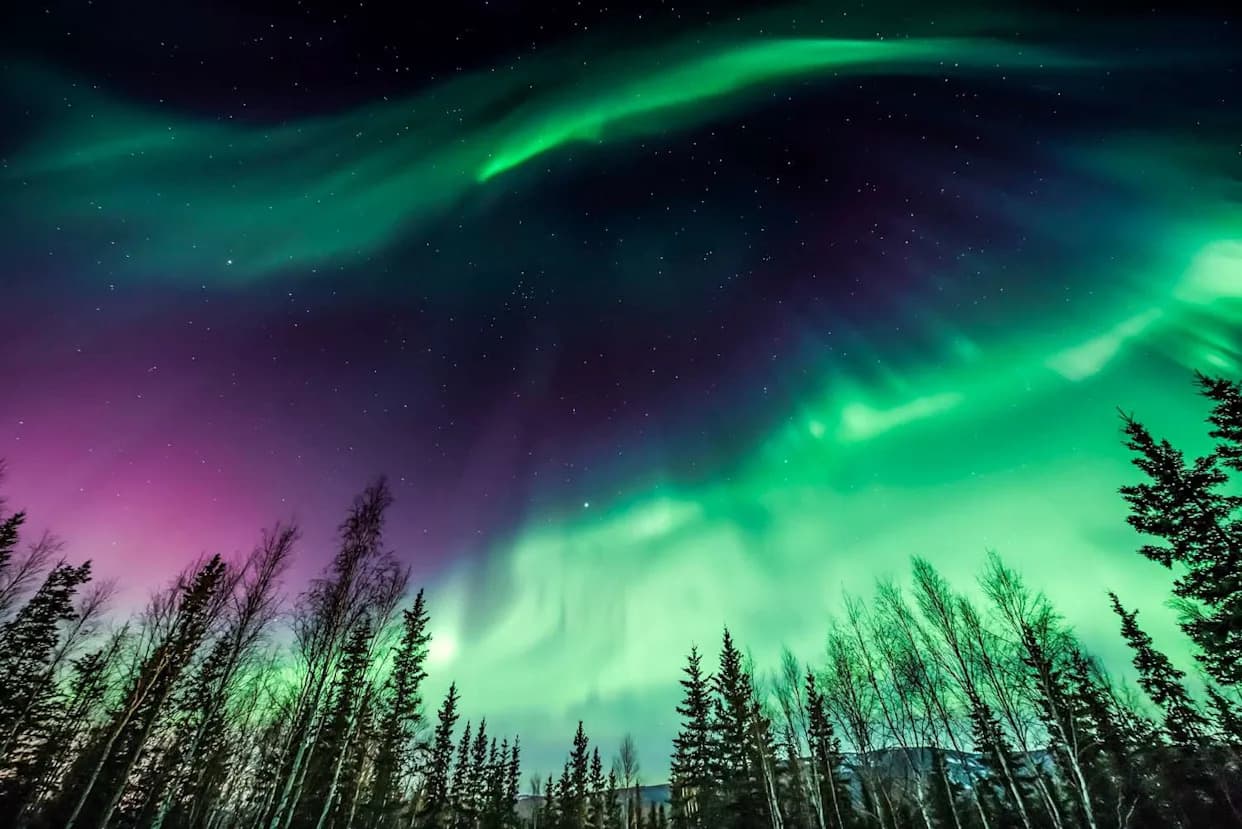
NOAA’s Space Weather Prediction Center warns a minor-to-moderate geomagnetic storm may make the northern lights visible for parts of the U.S. late on Wednesday, Nov. 26 into early Thursday, Nov. 27. Activity could peak in two windows: about 4–7 p.m. ET and 10 p.m.–1 a.m. ET, though timing can shift. Ten states from Alaska to Idaho may see some auroral activity. For best results, head to a dark, north-facing site away from city lights and check NOAA’s short-term aurora forecast or an aurora-tracking app.
Northern Lights May Glow Over Parts of the U.S. for Thanksgiving — Where and When to Look

Some Americans may be treated to the aurora borealis during Thanksgiving as a geomagnetic disturbance moves across the skies late Wednesday night into early Thursday morning. The National Oceanic and Atmospheric Administration’s Space Weather Prediction Center (NOAA SWPC) says the display is most likely to begin in the late-night hours of Wednesday, Nov. 26, and continue into the early morning of Thursday, Nov. 27.
NOAA forecasts a minor-to-moderate geomagnetic storm boosted by a high-speed solar wind stream. That means auroral activity could be visible farther south than usual. NOAA projects possible peaks in activity roughly between 4–7 p.m. ET and again between 10 p.m.–1 a.m. ET, though exact timing and intensity can change as new data arrive.
Where you might see it
In the United States the lights will be most likely in northern states. NOAA’s current projection lists at least some auroral visibility in 10 states, including:
- Alaska
- Washington
- North Dakota
- Minnesota
- Montana
- Maine
- Michigan
- Wisconsin
- South Dakota
- Idaho
Why the aurora appears
The aurora borealis (northern lights) forms when electrically charged particles from the sun collide with gases in Earth’s upper atmosphere. Guided by Earth’s magnetic field toward the poles, those particles create shimmering ribbons of color. Normally the planet’s magnetic field deflects most solar particles, but during stronger solar wind streams some particles penetrate the magnetosphere and trigger visible auroral displays, according to the University of Alaska Fairbanks Geophysical Institute and the Canadian Space Agency.
Tips for viewing
To improve your chances of seeing the lights:
- Find a dark location well away from city lights and light pollution.
- Face north and look toward a clear horizon; auroras often appear in waves and may be faint at first.
- Be patient and dress warmly — waiting may take an hour or more depending on conditions.
- Use NOAA’s 30-minute Aurora forecast for short-term updates and consider aurora-tracking apps (for example, “My Aurora Forecast & Alerts”) to get location-based alerts.
Because aurora forecasting relies on real-time satellite measurements of the solar wind and magnetic conditions, predictions can change quickly. Check the NOAA SWPC updates on the day of viewing for the most accurate short-term forecast.
Help us improve.