Re-analysis of foot bones recovered in 2009 shows that Australopithecus deyiremeda lived within a few kilometres of A. afarensis ("Lucy") about 3.4 million years ago in Ethiopia's Afar Rift. The foot combines traits for strong climbing—including a big toe with a wide range of motion—with features that support bipedal walking. Tooth isotope evidence indicates A. deyiremeda mainly ate C3 plants while A. afarensis had a broader C3/C4 diet, suggesting the two species occupied different ecological niches and avoided direct competition.
Lucy’s Neighbor: Foot Fossils Reveal an Older Hominin Lived Side-by-Side 3.4 Million Years Ago

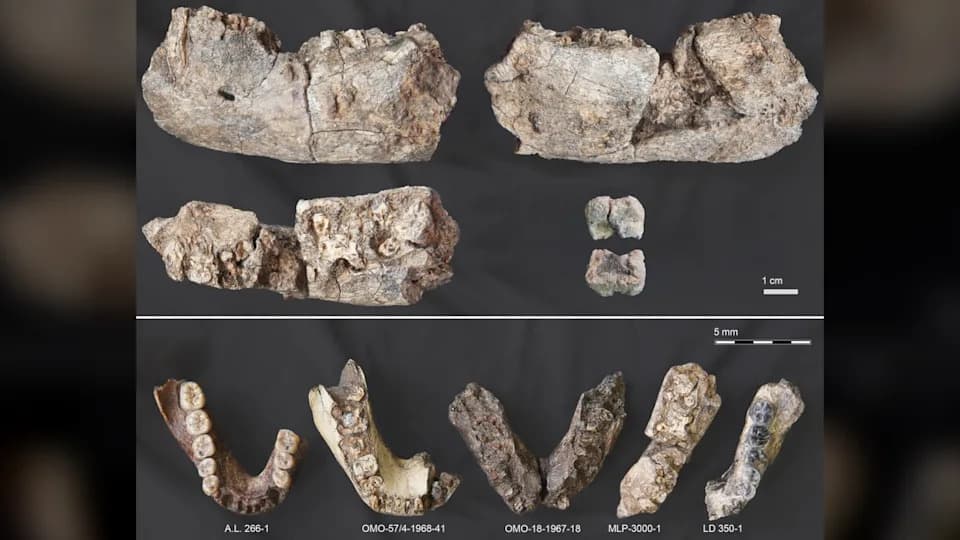
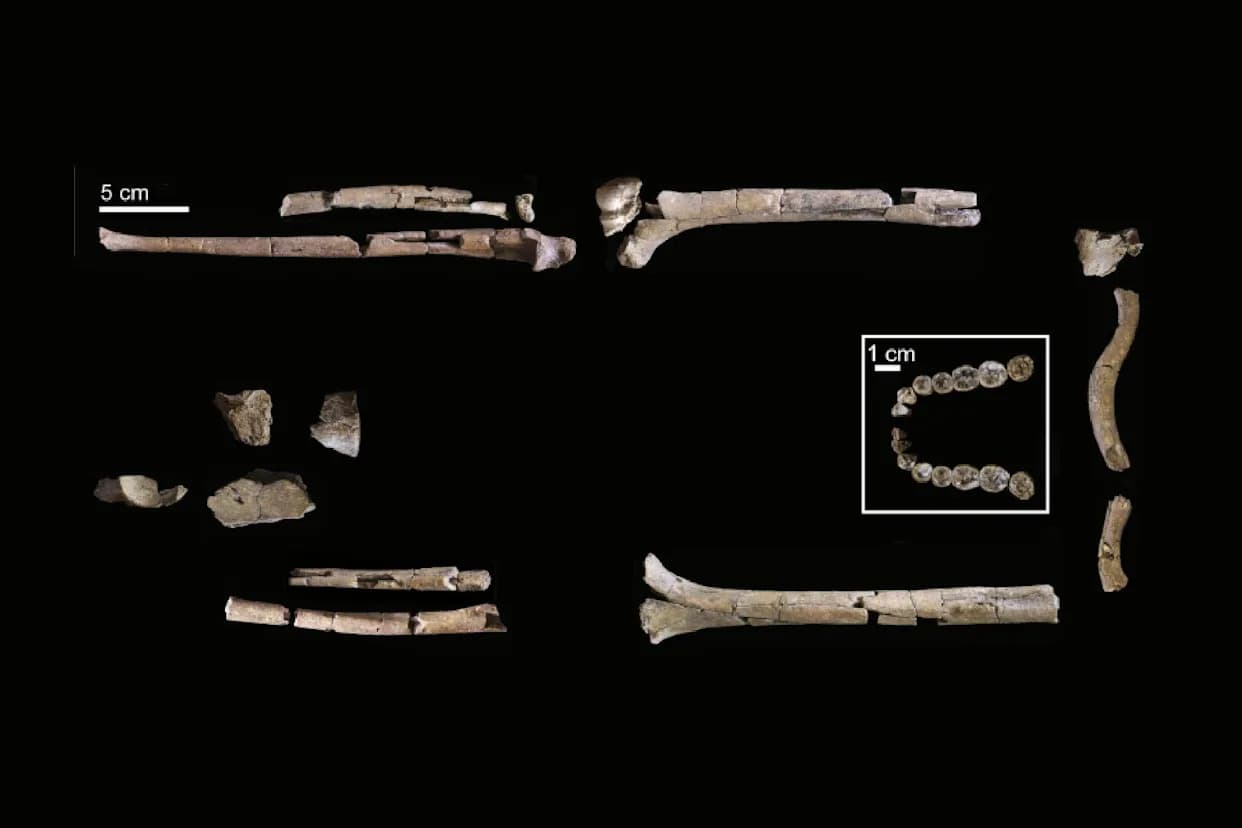
A jumble of bones and teeth from Ethiopia’s Afar Rift shows that two different early hominin species lived within a few kilometres of one another more than 3.3 million years ago. Re-examination of foot bones recovered in 2009 indicates they most likely belong to Australopithecus deyiremeda, a species older than the famous "Lucy" (A. afarensis).
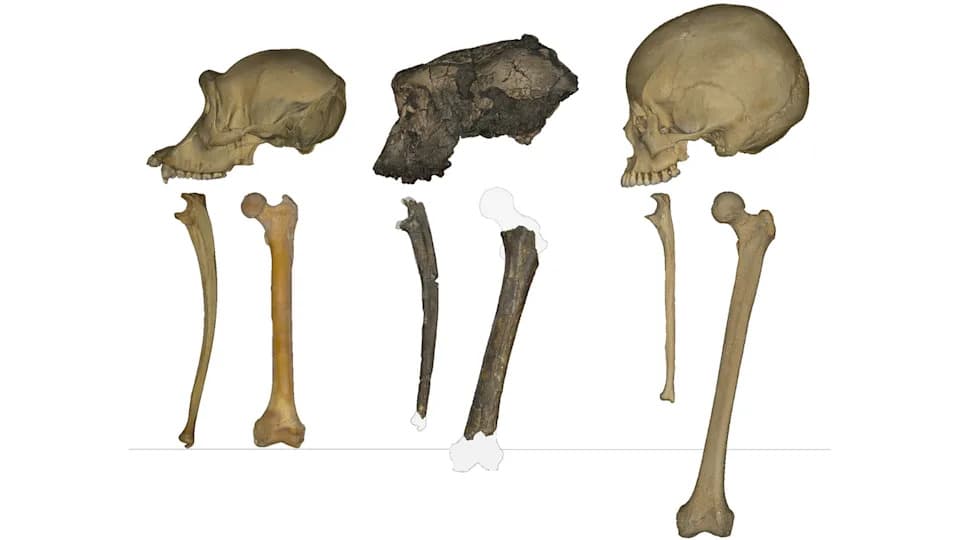
The newly dated foot—about 3.4 million years old and composed of eight bones including fragments of a big toe—paints a picture of an animal adapted both for climbing and for walking on two legs. Specific features of the big toe suggest an unusually wide range of motion, perhaps allowing an opposable-like function useful for grasping branches. At the same time, the other toes show the capacity for hyperflexion, a trait that aids pushing off flat ground and supports effective bipedal locomotion.
"The species to which this foot belongs to was a good and able climber, which allowed this species to exploit resources from trees, arboreal resources,"says paleoanthropologist Yohannes Haile-Selassie, a lead researcher on the study.
Isotope analysis of fossilized teeth from both A. deyiremeda and A. afarensis reveals distinct diets: A. deyiremeda shows a carbon signature consistent primarily with C3 plants—typical of cooler, wetter, more wooded environments—while A. afarensis consumed a broader mix that includes both C3 and C4 plants. This dietary separation suggests the two species avoided direct competition by exploiting different ecological niches despite living in close proximity.
The combination of arboreal adaptations and bipedal ability in A. deyiremeda highlights the mosaic nature of early hominin evolution—different species experimented with different mixes of tree-climbing and upright walking. These findings expand our understanding of hominin diversity and behavior in the Pliocene and were published in the journal Nature.
Significance: The discovery provides strong, locality-based evidence that multiple hominin species coexisted and partitioned resources, implying more complex social and ecological dynamics among our early relatives than previously appreciated.
Help us improve.