Scientists have trained an AI on 1,974 dinosaur footprint silhouettes spanning about 150 million years to identify eight measurable features that capture most track-shape variation. The method helps map those features to likely trackmakers, reducing subjective interpretation. Notably, the AI supported earlier evidence that seven small, three-toed prints from South Africa (≈210 million years old) resemble birdlike feet, a puzzling result that calls for further study.
AI Tool Pinpoints Which Dinosaurs Made Ancient Footprints — And Why It Matters
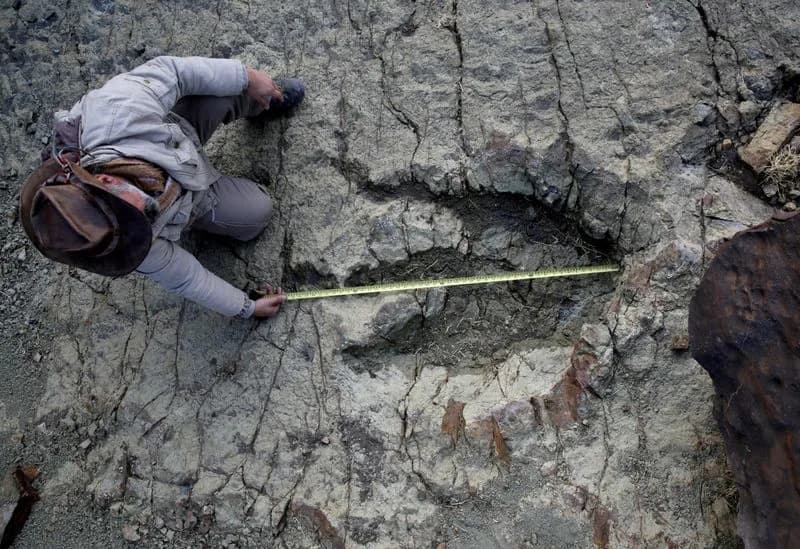
FILE PHOTO: Paleontologist Sebastian Apesteguia measures a footprint made by a meat-eating dinosaur some 80 million years ago at the Maragua Syncline, Bolivia, July 21, 2016. REUTERS/David Mercado/File Photo
Researchers have developed an artificial intelligence method that helps identify which types of dinosaurs made fossilized footprints by analyzing eight measurable features of each track. Trained on nearly 2,000 footprint silhouettes spanning roughly 150 million years, the tool offers a more objective way to classify and compare tracks and reduce reliance on subjective human judgement.
How the Method Works
The algorithm was trained on 1,974 footprint silhouettes and identified eight key features that explain most of the variation in track shapes. Those features are:
- Overall Load and Shape — the foot's ground contact area;
- Position of Loading — where weight was placed across the foot;
- Toe Spread — how far the digits splay;
- Toe Attachment — how toes connect to the main foot pad;
- Heel Position — the location of the heel impression;
- Heel Load — how much pressure the heel registered;
- Toe vs. Heel Emphasis — relative emphasis of digits versus heel in the impression;
- Left–Right Asymmetry — shape differences between the two sides of the print.
From Patterns to Plausible Trackmakers
Many footprints in the dataset had already been attributed to particular dinosaur groups by experts. The AI revealed which measurable traits best separate track types; paleontologists then mapped those traits to known trackmakers to create practical guidance for identifying future prints.
Gregor Hartmann (Helmholtz-Zentrum Berlin): "This is important because it provides an objective way to classify and compare tracks, reducing reliance on subjective human interpretation."
Steve Brusatte (University of Edinburgh): "Matching track to trackmaker is a huge challenge, and paleontologists have been arguing about this for generations."
Why Tracks Are Tricky
Track shape depends on many factors beyond anatomy: what the animal was doing (walking, running, jumping or even swimming), moisture and texture of the substrate, how the print was buried by sediment, and how it was altered by erosion over millions of years. The same species can therefore produce notably different-looking tracks.
Size also varies enormously — from meat-eating dinosaur prints the size of a modern chicken’s tracks to sauropod impressions as large as bathtubs — making identification a careful detective task.
Intriguing Findings
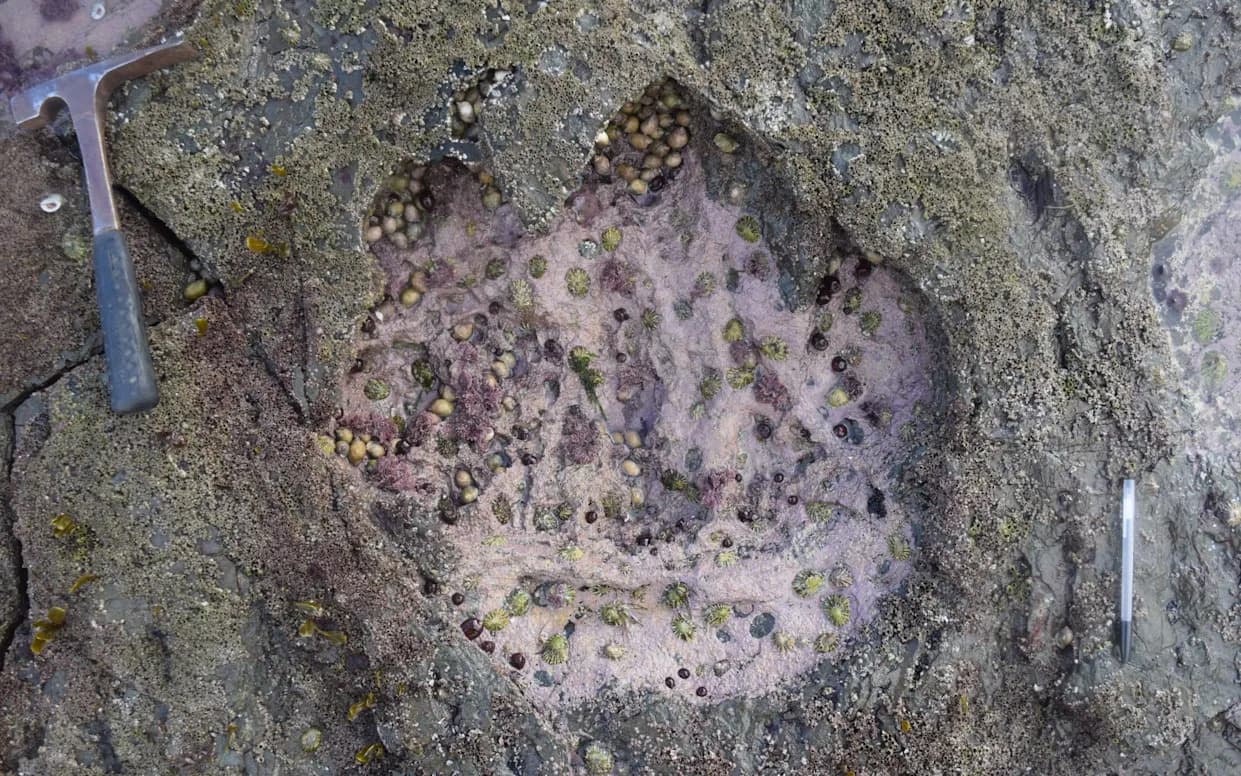
One notable result involved seven small, three-toed footprints from South Africa, about 210 million years old. The AI-supported analysis validated earlier work showing these prints closely resemble birdlike feet, even though they predate the earliest known bird fossils by roughly 60 million years. That does not prove the prints were made by birds; they may represent bird ancestors or unrelated dinosaurs with convergently birdlike feet. The finding highlights targets for further fossil-search and study.
Significance
By quantifying footprint traits and linking them to likely trackmakers, the new AI method gives paleontologists a repeatable, transparent tool to narrow down candidate species and prioritize follow-up fieldwork or anatomical comparisons. It does not eliminate uncertainty, but it makes the detective work of matching prints to animals faster and more systematic.
Help us improve.