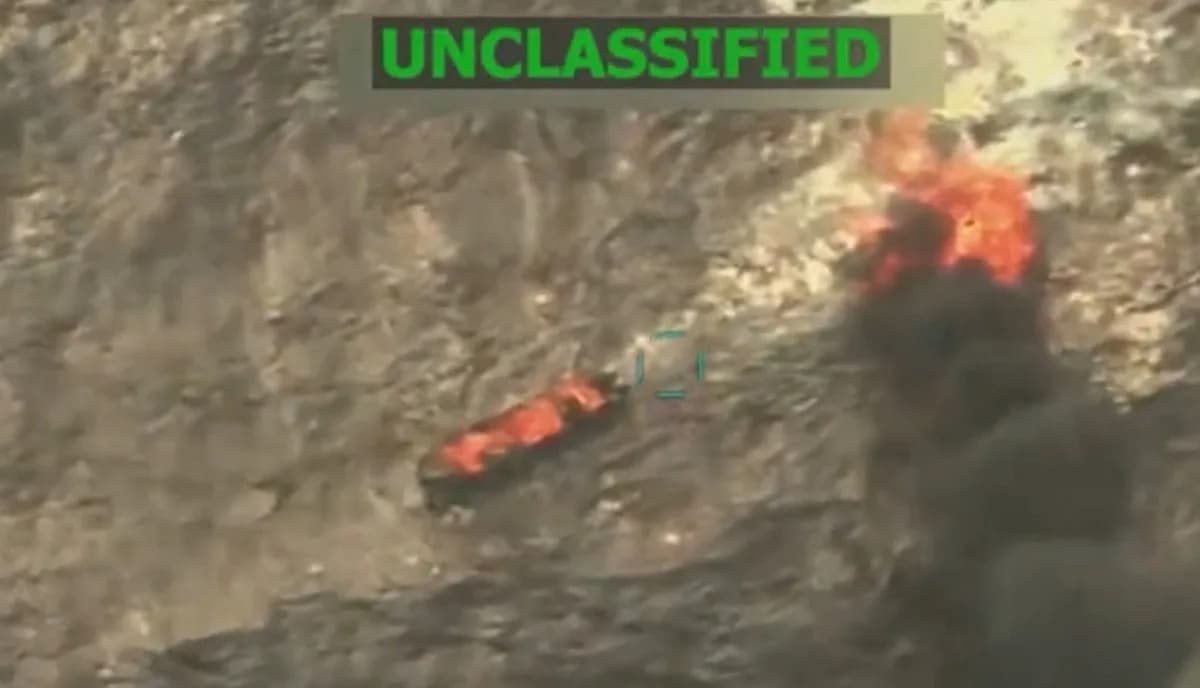
The Justice Department’s Office of Legal Counsel has issued a classified opinion treating U.S. missile strikes on Caribbean drug boats as collective self‑defense on behalf of allies. The memo relies on classified intelligence — including claims that each boat carries about $50 million in cocaine and that proceeds finance cartel violence — and treats casualties as enemy combatants or collateral damage. Legal experts say key factual claims remain unproven publicly, and the rationale diverges sharply from the administration’s public message that the strikes aim to prevent overdoses.
Secret DOJ Memo Recasts Caribbean Boat Strikes as Collective Self‑Defense, Contradicting Trump's Public Rationale

Summary: A classified Justice Department Office of Legal Counsel (OLC) opinion concludes that recent U.S. missile strikes on unflagged boats in the Caribbean can be justified as acts of collective self‑defense on behalf of regional partners. The legal reasoning relies on classified intelligence — including claims that each boat carries roughly $50 million in cocaine and that proceeds finance cartel violence — and treats casualties as enemy combatants or collateral damage rather than unlawful killings.
What the memo says
According to people familiar with the analysis, the OLC memo formalizes a theory that the United States has entered an armed conflict with transnational drug cartels because it is acting to assist allies such as Mexico and Colombia. The opinion, developed after a restricted interagency meeting on July 21 with lawyers from the Pentagon, the Joint Chiefs, the CIA, the White House and OLC, argues that designation as an armed conflict permits reliance on the law of armed conflict.
Under that framework, the strikes — 21 incidents that officials say have killed more than 80 people — are described as targeting cocaine shipments. The memo counsels that deaths of those aboard should be treated as enemy casualties or collateral damage rather than as murder under U.S. law or as unlawful killings under international law.
Legal test and claimed justification
OLC reportedly applied its two‑part test to conclude the president did not need congressional authorization: (1) the strikes serve national interests, and (2) they are not of a prolonged scope, nature or duration. The opinion lists national interests including aid to allies, preservation of regional stability and protection of the United States from drug inflows.
Evidence and skepticism
The memo’s legal conclusions rest on factual claims that have not been publicly released. Officials say classified intelligence estimates each intercepted boat carries roughly $50 million in cocaine and that cartel proceeds are being used to purchase sophisticated weapons. OLC officials, for this opinion, did not attempt to rigorously test those intelligence findings and instead focused on the narrow legal question posed by the White House: whether the president could lawfully authorize military force against unflagged vessels on the high seas suspected of transporting cocaine.
“A significant problem with this theory is that they still have not identified any state that’s engaged in an armed conflict with a particular cartel,” said Martin Lederman, former deputy assistant attorney general at OLC. “Nor has the administration provided any evidence that another state engaged in such an armed conflict has asked the U.S. to destroy cocaine shipments that are allegedly being used to subsidize armed violence against the requesting state.”
Legal experts have called the collective self‑defense claim novel and controversial. Observers note a distant analogy to opium trafficking by the Taliban and al‑Qaeda during the post‑9/11 conflict, but emphasize that in that case there was clear evidence the traffickers’ revenue directly funded armed attacks against the United States and its allies — evidence not publicly shown here.
Military posture and domestic politics
The emergence of this legal rationale accompanies a notable U.S. military buildup in the Caribbean, including the arrival of the aircraft carrier USS Gerald R. Ford, which expands the region’s strike capabilities. The strikes have also prompted domestic political tensions: a senior defense official reportedly threatened disciplinary action after several Democratic lawmakers posted a video urging service members to question unlawful orders, apparently referencing the campaign.
The Justice Department declined further comment beyond a spokesperson’s statement: "These operations were ordered consistent with the law of armed conflict." The Pentagon did not respond to requests for comment.
Implications and unanswered questions
The OLC opinion provides the clearest internal explanation yet for how the administration says it satisfied legal conditions to use lethal force, but it leaves key factual claims classified and unverified in public. Central questions remain: whether partner states have definitively identified cartels as parties to an armed conflict, whether cartel revenue is being directly used to wage armed campaigns against those states, and whether congressional authorization should have been sought or publicized.
Until those underlying facts are made publicly available or independently verified, the legal novelty of treating cartel trafficking as a basis for collective self‑defense is likely to remain a subject of debate among lawyers, policymakers and the public.
Help us improve.