Superhot-rock geothermal injects water into rock hotter than 705°F so the fluid becomes supercritical and can deliver about 5–10 times more energy per volume than conventional geothermal. Mazama Energy is pursuing this approach at Newberry Volcano in Oregon, aiming for ~15 MW within a year and possibly scaling to hundreds of megawatts or more. Models suggest ~20% of U.S. land could host similar resources, but risks—particularly induced seismicity and severe drilling conditions—must be managed with monitoring, engineering controls, and robust regulation.
Superhot-Rock Geothermal at Newberry Volcano Could Supercharge U.S. Clean Power

Geothermal power today supplies only a sliver of U.S. electricity, but a technique called "superhot-rock" geothermal could unlock far larger, low-carbon baseload supplies by tapping extremely hot, dry rock deep beneath the surface.
Unlike conventional geothermal sites—where naturally coexisting heat and water produce steam—superhot-rock systems inject water into rock heated well above 705°F. Under such temperatures and deep pressure, the injected fluid becomes supercritical: it carries heat with the density of a liquid while flowing like a gas, yielding roughly five to ten times the energy per volume of typical geothermal systems.
Why Newberry Volcano?
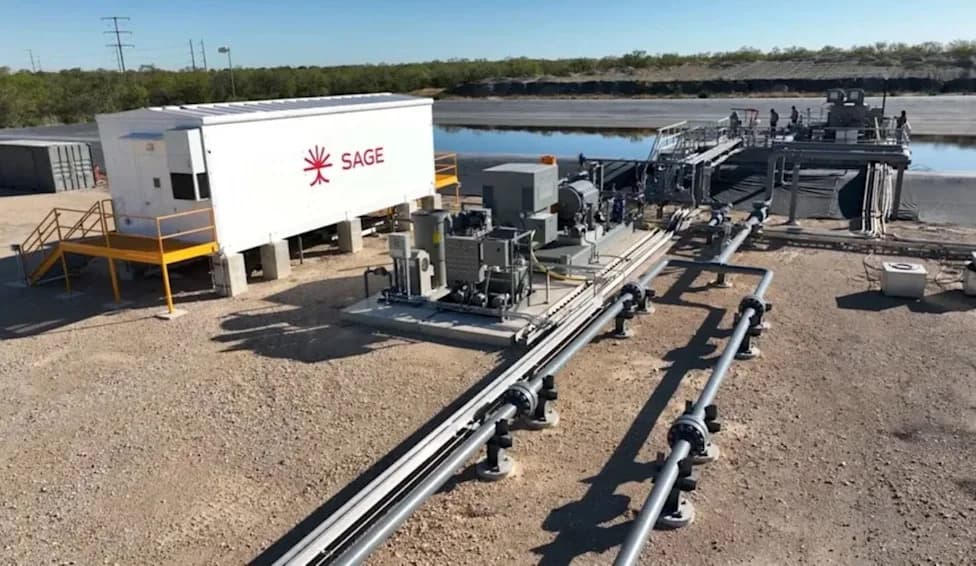
Mazama Energy, an Oregon startup, is targeting superhot zones on the western flank of Newberry Volcano, about 20 miles south of Bend. Newberry is the largest volcano in the Cascade Range and is classified by the U.S. Geological Survey as a "very high threat" volcano—a hazardous site that also offers unusually accessible heat. The area has been explored for geothermal potential for decades, and Mazama plans to hydraulically stimulate superheated rock with the goal of producing roughly 15 megawatts within the next year or so.
The company estimates it could scale output to about 200 megawatts—roughly the power demand of a small city—and says the site's theoretical potential could approach five gigawatts, a substantial fraction of Oregon's average electricity load.
Broader potential and evidence
Interest in superhot rock extends beyond Oregon. A recent state geological report modeled injecting water into superhot rock in southwestern Texas, and policy-oriented models suggest that roughly 20% of U.S. land area (about 750,000 square miles) may host superhot-rock resources. Most existing U.S. geothermal capacity sits in seven western states where heat lies close to the surface; deeper resources elsewhere are harder to access. By contrast, countries such as Iceland already obtain more than one-fourth of their electricity from geothermal, showing what broader deployment can achieve.
Risks, challenges and mitigation
Unlocking superhot-rock energy entails important risks. Injecting fluids into deep rock can trigger induced seismicity—man-made earthquakes—when pressure changes affect faults. A significant seismic event in 2018 in South Korea has been linked to geothermal operations, highlighting this hazard. Engineering challenges are also substantial: drilling and maintaining wells and equipment in extremely hot, abrasive conditions pushes current materials and methods to their limits.
Proponents say these risks can be managed. Measures include extensive seismic and pressure monitoring, careful reservoir engineering, staged or lower-rate injections, and closed-loop or other designs that minimize fluid loss and isolate operations from shallow groundwater. Effective regulation, site-specific risk assessment, and transparent community engagement will be essential for safe deployment.
Outlook
If technical hurdles are overcome and risks are managed, superhot-rock geothermal could become a major, low-carbon source of continuous power, helping the United States diversify its electricity mix. Policymakers have set ambitious goals—one target envisions geothermal providing roughly 16% of U.S. electricity by 2050—and superhot-rock systems could be a critical enabler of that transition.
Key names and figures: Mazama Energy; Sriram Vasantharajan (Mazama CEO); Newberry Volcano (Oregon); target near-term output ~15 MW, potential hundreds of MW to multi-GW; modeled resource area ~750,000 sq mi nationwide.
Help us improve.