The U.S. Coast Guard is seeing record drug seizures at sea and is urging the Department of Homeland Security and Congress for additional ships, aircraft and personnel. The cutter Stone recently offloaded more than 49,000 pounds of cocaine — the largest single-vessel haul on record — and the service reported nearly 510,000 pounds seized in FY2025. Leaders say ISR and uncrewed aerial systems like Shield AI's MQ-35 V-BAT are "game-changing," and the 2028 force design plan prioritizes fleet expansion, helicopters and persistent surveillance.
Coast Guard Reports Record Cocaine Seizures and Urges More Ships, Aircraft and Personnel

The U.S. Coast Guard is reporting record-breaking drug seizures at sea and is pressing for more ships, aircraft and personnel to keep pace with a rising flow of narcotics through the eastern Pacific and Caribbean.
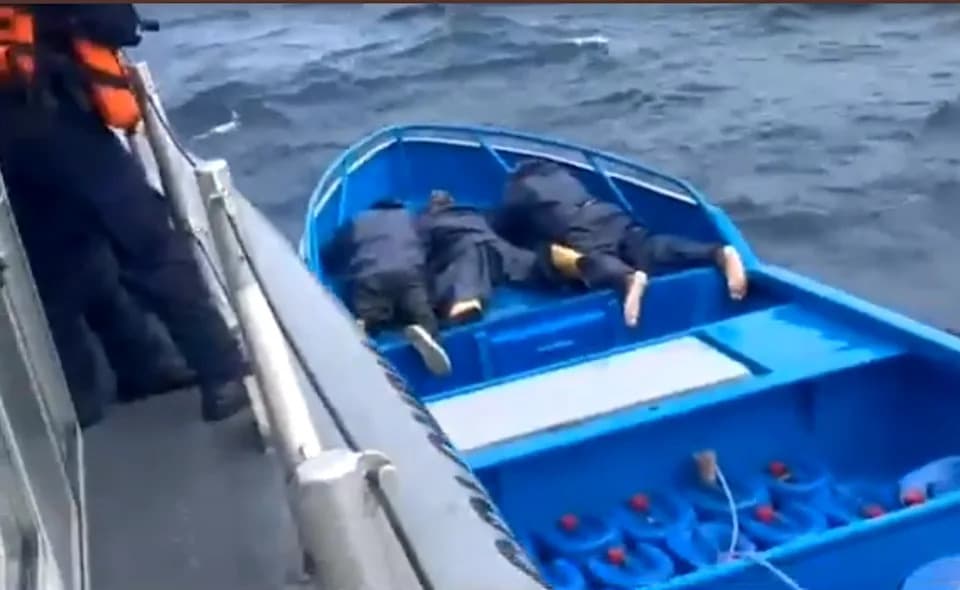
In a recent high-profile offload at Port Everglades, Florida, the cutter Stone turned over more than 49,000 pounds of cocaine — an amount the service estimated at roughly $362 million — after a months-long patrol. The crew completed 15 interdictions during the deployment, including three in a single night; the haul is the largest seized by a single Coast Guard vessel on one deployment.
Officials say the Stone’s result is part of a broader surge in interdictions. In fiscal year 2025 the service reported seizing nearly 510,000 pounds of cocaine, and the Coast Guard estimates roughly 80% of U.S.-bound interdictions take place at sea, with the eastern Pacific accounting for the majority.
Why the Coast Guard wants more assets
Leadership argues that expanding platforms, sensors and personnel is essential to sustain and scale interdiction operations. The Coast Guard’s force design plan for 2028, approved earlier this year by the Department of Homeland Security, calls for growing the workforce, modernizing and buying ships, adding helicopters and investing heavily in intelligence, surveillance and reconnaissance (ISR) capabilities. The plan, officials say, aims to address long-standing readiness shortfalls tied to shipbuilding delays, maintenance backlogs and past recruiting shortfalls documented by oversight agencies.
"From a service perspective, I'd say we need assets," Cmdr. Chris Guy, commanding officer of the Coast Guard's South Tactical Law Enforcement Team, said in describing capability gaps. "We need ships. We need maritime patrol aircraft, and we need persistent surveillance at sea so that we can find the drugs. We need vessels that can carry boarding teams, and we need the end-game capability to stop fleeing boats."
Technology and tactics
Uncrewed aerial systems (UAS) and improved onboard sensors are playing an increasingly important role. Shield AI's MQ-35 V-BAT, deployed aboard the Stone, helped the crew locate and track vessels at night. "The UAS is a game-changing capability for us," Capt. Daniel Broadhurst, commanding officer of the Coast Guard's Helicopter Interdiction Tactical Squadron, said. "The number one enabler of what we do, the key to success, is ISR."
Traffickers are moving larger loads and experimenting with multiple platforms — from "go-fast" boats to fishing vessels and semi-submersibles — prompting both enhanced surveillance and more aggressive interdiction tactics across agencies. Some recent actions by the federal government have broadened operational approaches beyond routine interdictions, a shift that has generated public and policy debate.
Outlook
Coast Guard leaders say a combination of more cutters, additional maritime patrol aircraft, expanded drone and sensor suites, and increased personnel will be necessary to keep up with evolving smuggling methods and rising shipment sizes. "The rising tonnage of seizures reflects the intensity and scale of the threat we face," Vice Adm. Nathan Moore, commander of the Coast Guard's Atlantic Area, said, underscoring the service's call for sustained investment in platforms and ISR.
Help us improve.