The Technical University of Munich developed the Smart Grapple, an autonomous underwater robot that uses AI vision and sonar to locate and retrieve seabed litter. It can lift objects up to about 1 metre across and 250 kg, then deposit debris onto an autonomous surface boat for recycling. Part of the EU-funded SeaClear 2.0 project with 13 partners, the system has been trialled in Marseille and Hamburg and was trained on over 7,500 labelled underwater images. Researchers see robotic cleanups as a useful tool for high-pressure areas but not a replacement for reducing pollution at the source.
Meet Smart Grapple — The Autonomous Robot Retrieving Trash from the Seabed

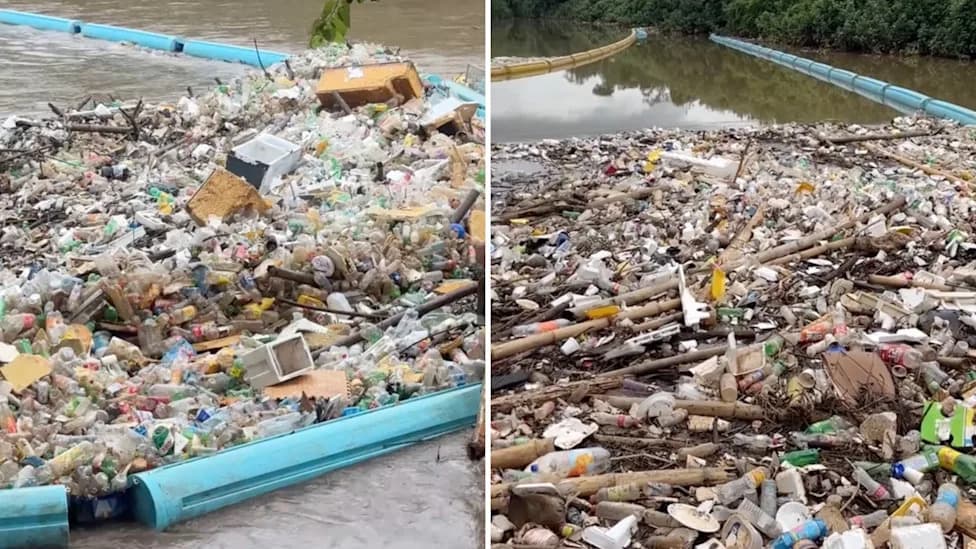
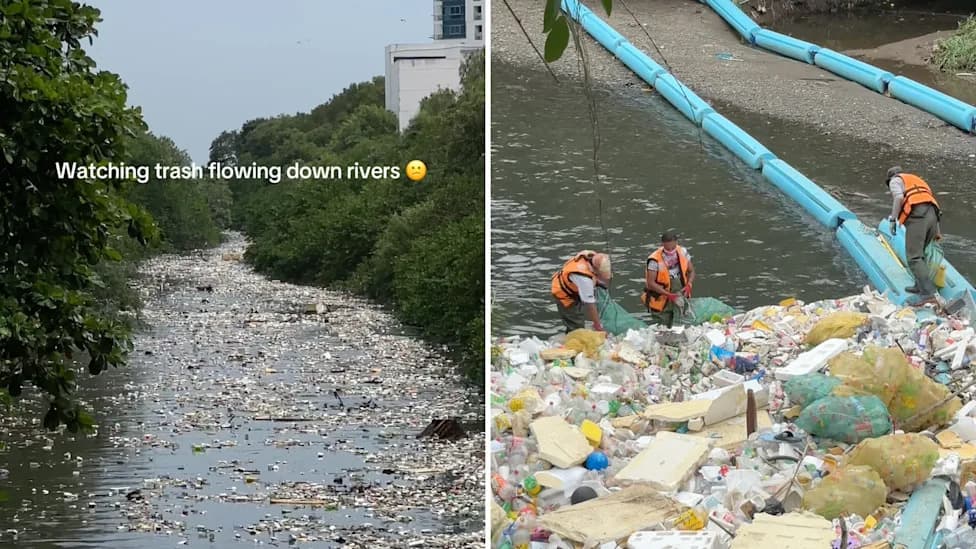
Marine litter is a growing global threat: abandoned containers and lost fishing gear can entangle or kill wildlife, while plastic fragments break down into microplastics that release chemicals into the water and enter the food chain. Some research suggests microplastics may even reduce plankton’s ability to store carbon on the ocean floor, with potential impacts on the climate.
Researchers estimate roughly 32 million metric tons of plastic accumulated in the world’s oceans between 1950 and 2020 — a mass equivalent to more than 200,000 blue whales — and that figure could rise to about 76 million metric tons by 2040 if no further action is taken.
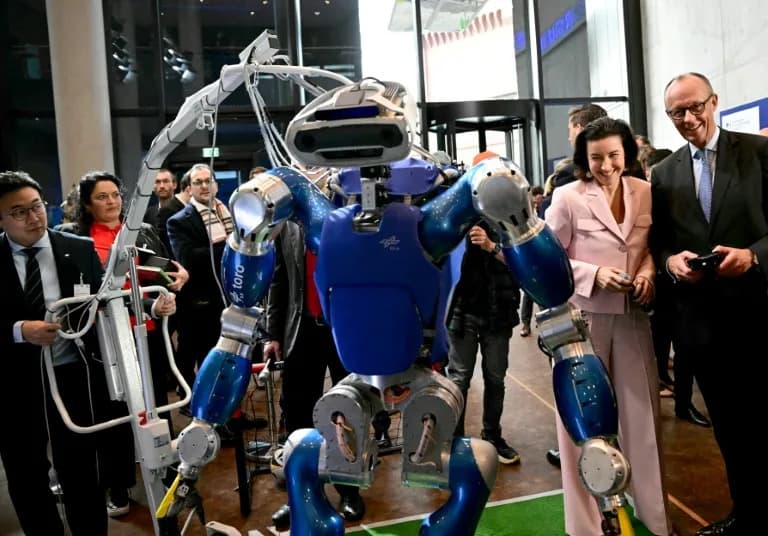
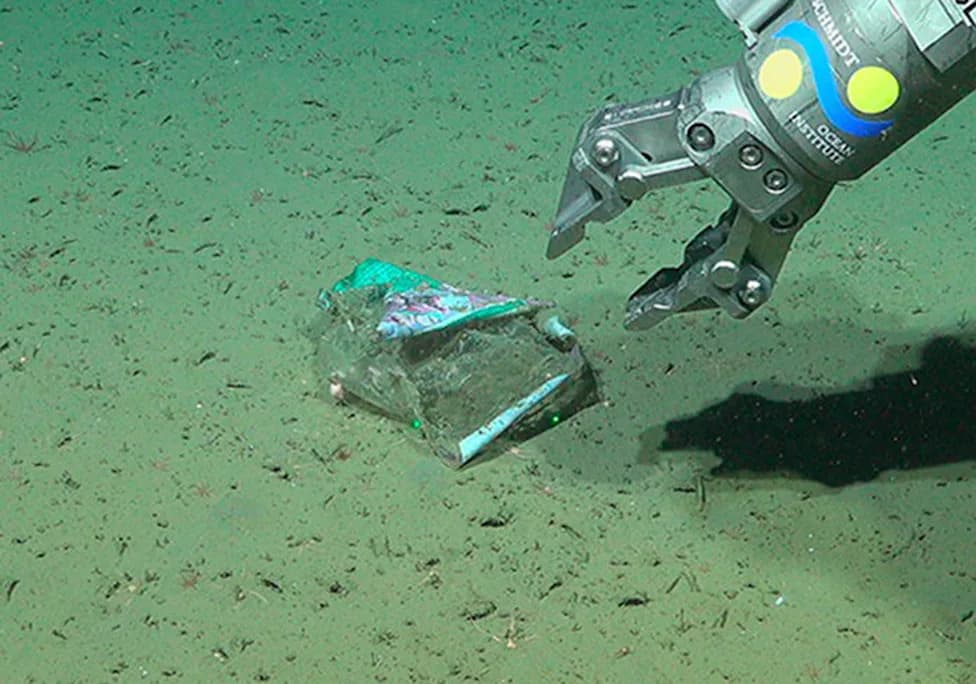
At the Technical University of Munich (TUM), a team of scientists and students has developed the Smart Grapple, an autonomous underwater robot designed to locate, grasp and retrieve litter from the seabed. The system pairs AI-driven vision with sonar for low-visibility conditions and deposits collected debris onto a small autonomous surface vessel for transport to shore and recycling.
Key specifications: the diving unit is 115 cm (45 in) tall, 70 cm (28 in) in diameter and weighs about 120 kg (265 lb). Its four-fingered manipulator can handle objects up to roughly 1 meter across and lift items weighing as much as 250 kg (550 lb). The robot moves with onboard thrusters but remains tethered by a cable that supplies power and enables winch-assisted retrieval of heavy loads.
Stefan Sosnowski, head of the TUM research group, explains the cable’s role:
"We can use the cable like the cable of a crane, and the winch can pull up the system, which is more efficient than the little robot trying to swim things up."After detecting an item, the Smart Grapple reconstructs it in 3D to plan a precise grasp. A suite of sensors ensures the manipulator applies enough force to hold objects securely without fragmenting them into smaller pieces.
Nicolas Hoischen, a doctoral student who has worked on the project for two years, says the most rewarding moment was seeing the full system in action after starting with rudimentary components:
"It’s breathtaking and amazing to see, in two years, how far we can go."Hoischen was motivated by the opportunity to convert robotics research into a practical tool for ports and coastal authorities.
The Smart Grapple is part of the EU-funded SeaClear 2.0 initiative, a collaborative effort of 13 European organisations that aim to map and collect marine debris using networks of unmanned robots. Bart De Schutter, project coordinator, says robotic solutions can extend cleanup efforts beyond the limited hours and capacity of human divers, and he expects SeaClear systems may be ready for wider deployment between 2030 and 2033.
The team has trialled the Smart Grapple at the Ports of Marseille and Hamburg, recovering diverse items from car seats to cloth handkerchiefs. During some trials the system ran under remote control while engineers resolved technical issues; its design also supports fully autonomous missions.
One of the biggest development challenges was teaching the system to distinguish litter from natural seabed objects. TUM students labeled more than 7,500 underwater images as either litter or natural material to train the neural network. As Sosnowski notes, good underwater datasets are rare, and the team has built one of the largest available for this task.
Limitations and outlook: the researchers stress that robotic removal is a complement, not a substitute, for preventing pollution at the source. Smart Grapple and similar technologies are best suited to targeted areas under ecological pressure — such as harbours and protected reserves — where they can significantly reduce risks to wildlife while broader waste-prevention measures continue to be implemented.
Help us improve.