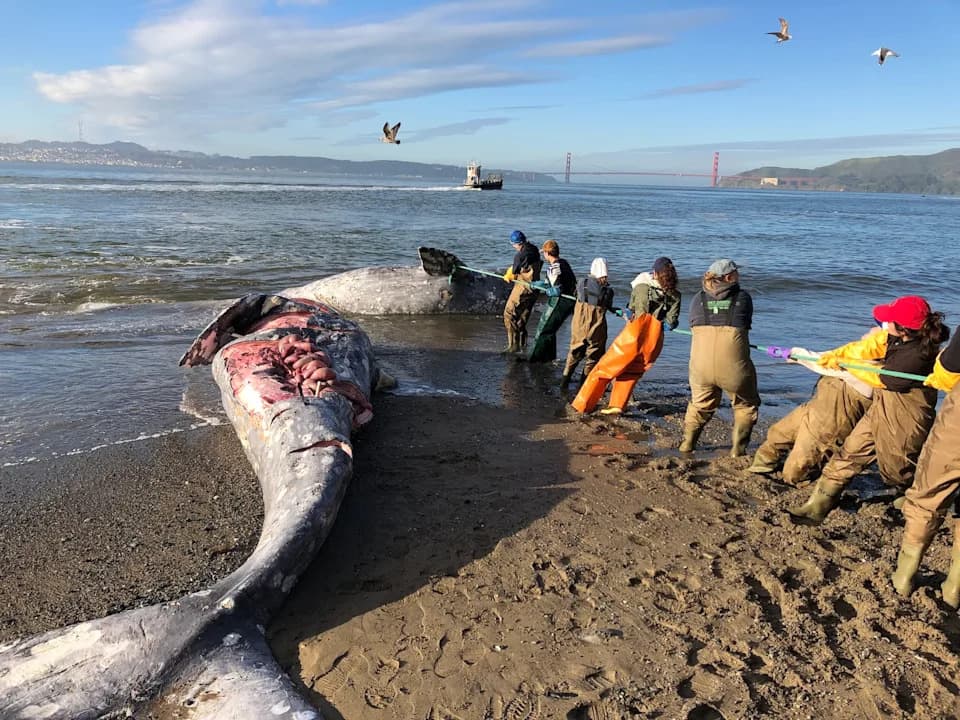
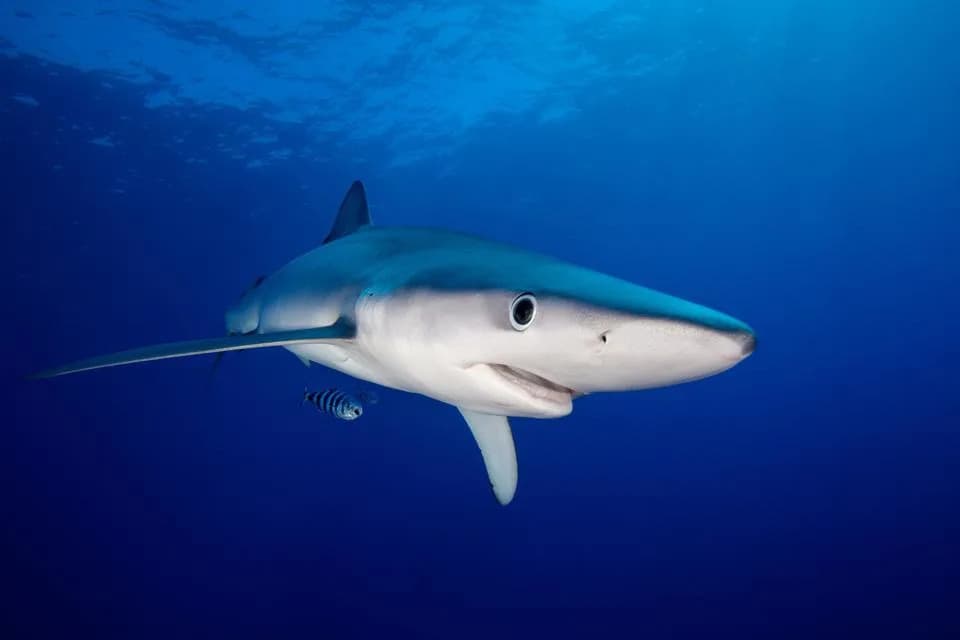
Scientists warn warming oceans are disrupting migrations and food chains, placing over 20% of migratory species at risk of extinction. Baleen whales face dwindling krill supplies as sea ice melts, forcing longer and more dangerous journeys. Sharks are shifting ranges to find prey, altering ecosystems and human interactions. The report calls for more research, public engagement and adaptive protections like dynamic marine measures, shipping-lane changes and targeted fishing limits.
Warming Oceans Are Starving Whales and Sharks — Scientists Warn of Shifting Migrations
A new international report warns that rising ocean temperatures are disrupting the migrations and food chains that sustain whales, sharks and many other migratory marine species. Dozens of scientists met at a United Nations workshop in Edinburgh to assess the mounting evidence: more than one in five migratory species now face extinction risks tied in part to climate-driven changes in ocean ecosystems.
Baleen whales are among the most vulnerable. These giants spend months fattening on krill in polar waters before swimming thousands of miles to breed. Krill depend on algae that grow beneath sea ice, so as seas warm and ice melts, the food web that supports whales is weakening. Reduced krill abundance forces whales to travel farther, expend more energy, and may leave mothers unable to store enough fat for migration and calf rearing.
Sharks are showing parallel shifts. Many species are moving beyond their historical ranges in search of prey, appearing in areas where they were rarely seen before. These range changes can increase human-wildlife conflicts and disrupt local ecosystems.
"There's just not enough food around," said Ari Friedlaender, an ecologist and professor at the University of California.
The decline of whales and sharks carries outsized consequences because of the ecological services they provide. Migratory whales help fertilize oceans with nutrient-rich waste, supporting plankton growth and regional productivity. Both whales and sharks act as mobile carbon reservoirs: they store carbon in their bodies during life, and when they die their carcasses sink to the seafloor, transferring carbon to deep-sea systems for long-term sequestration.
Report authors emphasize that static marine protected areas alone are insufficient for species that traverse entire ocean basins. They call for adaptive, landscape-scale strategies that track shifting migrations. Practical recommendations include dynamic protections and seasonal closures in key feeding zones, adjusting shipping lanes to reduce disturbances and collisions, and implementing targeted fishing restrictions where migratory animals concentrate.
Scientists also urged more research to close knowledge gaps, better public engagement to build support for adaptive policies, and international cooperation to manage species whose ranges cross multiple jurisdictions. With timely, flexible conservation measures, researchers say whales and sharks can continue to sustain marine ecosystems and contribute to the ocean carbon cycle for generations to come.
Help us improve.