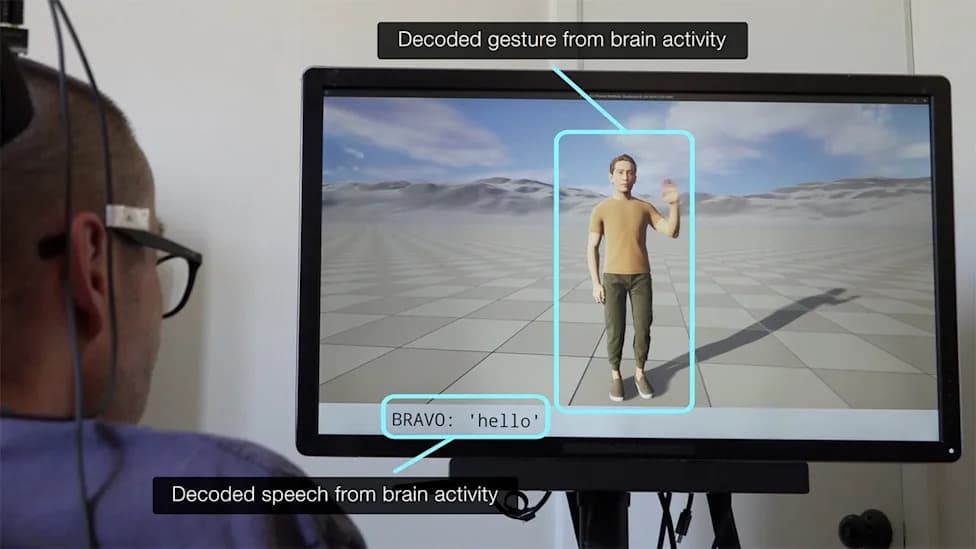
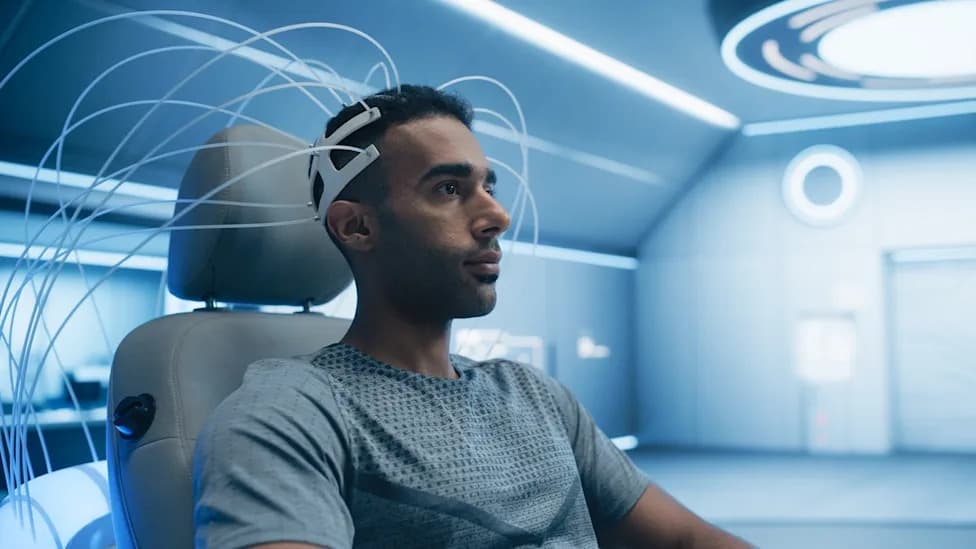
BCIs and AI are expanding the ability to decode intentions and preconscious signals from brain activity. Implanted devices have restored communication and control for some paralysed people, while consumer EEG products—improving with AI—can reveal attention, fatigue and other mental states. Regulators and ethicists warn that raw neural data and the inferences drawn from it could be exploited, and propose stronger protections including fiduciary duties for developers. The central challenge: maximize clinical and assistive benefits while guarding mental privacy and personal agency.
When Devices Read Your Thoughts: How BCIs and AI Threaten Mental Privacy

Before a 2008 car crash left her paralysed from the neck down, Nancy Smith loved to play the piano. Years later, an implanted brain–computer interface (BCI) let her make music again: when she imagined pressing keys on an on‑screen keyboard, the device translated those brain signals into keystrokes and produced simple tunes such as "Twinkle, Twinkle, Little Star." Smith described the experience as if the piano played itself: "It felt like the keys just automatically hit themselves without me thinking about it."
Smith was one of roughly 90 people over two decades to receive implanted BCIs to operate assistive technologies—computers, robotic arms and synthetic‑voice systems—demonstrating that motor‑cortex signals produced during imagined movement can be decoded into actionable device commands. She also took part in trials that implanted sensors in the posterior parietal cortex, a region involved in planning, attention and high‑level intentions. Researchers led by Richard Andersen at the California Institute of Technology found that signals from this area can reveal users' intentions before they become conscious, raising both hope for better prosthetics and new ethical concerns.
From Motor Commands to Preconscious Signals
Implanted BCIs record activity from small groups of neurons and can deliver highly specific control signals. By contrast, consumer neurotech typically uses electroencephalography (EEG), which measures broad voltage fluctuations across large neuronal populations from the scalp. Consumer devices prioritize comfort and design—headbands or sensors inside headphones—rather than optimal signal fidelity. Nevertheless, advances in AI and signal processing are making even noisy EEG recordings more useful in everyday settings.
Companies such as Neurable and others use machine learning to extract reliable features from imperfect recordings. As Ramses Alcaide of Neurable puts it, AI helps make EEG "usable in real‑life environments." Marcello Ienca, a neuroethicist, notes that EEG can detect tiny voltage shifts occurring within milliseconds of a stimulus, potentially revealing attention and decision processes tied to that stimulus.
What AI Brings—and What It Risks
AI enhances decoding performance and enables the construction of so‑called foundation models of brain activity trained on large datasets. Synchron and collaborators such as NVIDIA are developing these models, which can reveal previously hidden structure in neural recordings. Proponents argue that better decoding will improve prosthetics and offer new therapies for psychiatric disorders by monitoring symptoms and delivering targeted stimulation.
But pairing BCIs with AI also raises thorny questions. If a system can detect a preconscious error signal or anticipate a user's next move, should it automatically correct mistakes? Could AI‑mediated responses to preconscious intentions nudge behaviour or shape a person's identity over time? Nita Farahany of Duke University warns that embedded AI systems—especially those that draft or suggest speech—could exert outsized influence on what users end up saying and how they think about themselves.
Regulatory and Privacy Concerns
Unlike clinical BCIs that are subject to medical regulation and patient‑privacy protections, consumer neurotech operates in a largely unregulated market. Analyses have found that many consumer firms retain broad rights over user data and lack robust privacy safeguards. Some jurisdictions have begun to act: Chile and four US states have passed laws protecting direct recordings of nerve activity, and international bodies such as UNESCO and the OECD have issued guidelines. In the US, legislators have proposed reviews of how neurotechnology data should be protected.
Experts caution that laws focusing solely on raw neural recordings may be incomplete. Combining neural data with other digital streams can generate sensitive inferences—about mental health, political views or decision tendencies—that are arguably as invasive as raw signals. Marcello Ienca says adding neural data to today's data economy is like "giving steroids to the existing data economy." Farahany and colleagues have proposed new legal frameworks that would impose fiduciary duties on developers, obliging them to act in users' best interests.
Where the Technology Stands
No implanted BCI yet has broad clinical approval, though some devices are approaching that milestone. Synchron's endovascular device, threaded into a blood vessel over the motor cortex, has shown safety and function in early trials and is being discussed with regulators. Neuralink has implanted motor‑cortex devices in volunteers for short‑term experiments. Other companies have recently begun first‑in‑human tests during neurosurgical procedures. Most experts expect early approvals will focus on motor‑cortex systems that restore independence to people with severe paralysis, including devices that enable synthetic speech.
The long‑term goal for many developers is to move beyond motor signals and probe higher‑level brain regions to access intentions and potentially subconscious precursors to thought. Researchers are divided on how far decoding can go and how generalizable models will be across individuals. Maryam Shanechi and others emphasize that decoder performance depends heavily on the quantity and diversity of training data.
Balancing Benefit and Risk
BCIs offer transformative benefits for people with severe disabilities, enabling communication and independence that were previously impossible. But the combination of invasive and non‑invasive neural recording, stronger AI decoders, and commercialization creates new privacy and agency risks. Key decisions remain: how to secure neural data, what inferences may be inferred or sold, how to ensure devices act only with informed user consent, and whether developers should carry fiduciary responsibilities to protect users' mental privacy and autonomy.
"If you care about mental privacy, you should care a lot about what happens to the data when it comes off of the device," says Nita Farahany. "I think I worry a lot more about what happens on the device now."
The debate is urgent: as AI improves decoding and large tech companies show interest in wearable neurotech, policy and design choices made now will shape whether these systems empower users or expose them to new forms of surveillance and influence.
Help us improve.