The Bashplemi Lake excavation in Georgia produced a 9.4 × 7.9‑inch basalt tablet bearing 60 carved signs in seven rows, 39 of which are unique. Comparative analysis across 20+ writing systems finds visual similarities to Semitic, Brahmanic, North Iberian, and early Caucasian scripts, but no direct match. The inscription shows advanced carving techniques—likely a conic drill and a round‑headed finishing tool—and may represent an alphabetic inventory related to Proto‑Kartvelian traditions. Proposed readings include records of spoils, construction notes, or a ritual offering, but decipherment remains tentative and will require extensive study.
Undeciphered Basalt Tablet Discovered in Georgia — 39 Unique Characters Point to a Lost Script

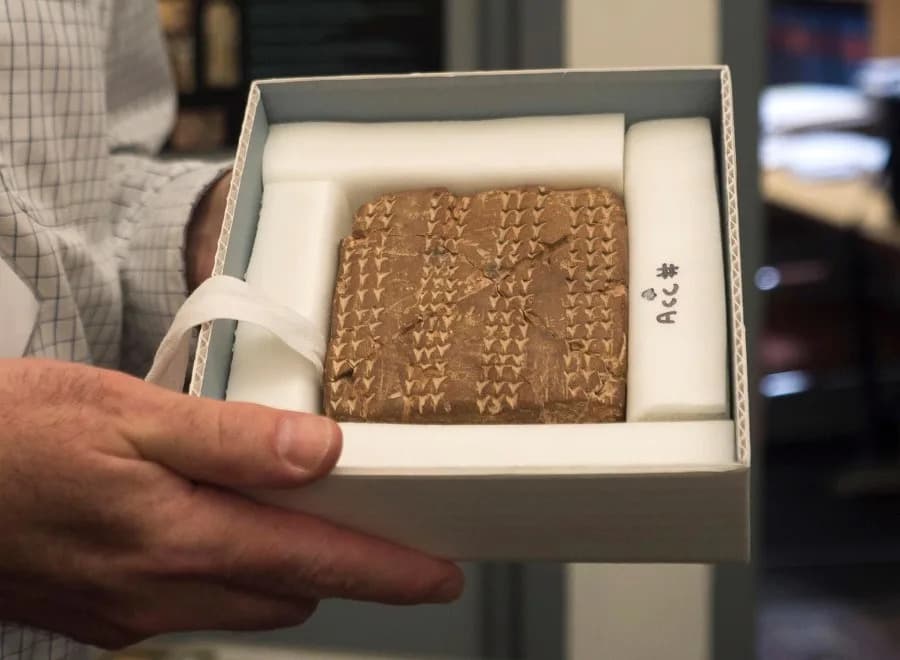
Archaeologists working near Bashplemi Lake in Georgia have unearthed a small basalt tablet inscribed with an unfamiliar script. Roughly the size of a sheet of paper, the stone bears 60 carved signs arranged in seven horizontal rows; 39 of those signs are distinct. The find raises fresh questions about early writing in the Caucasus and possible links with ancient scripts across Eurasia.
Discovery and context
The tablet measures 9.4 inches by 7.9 inches and is made of local vesicular basalt, according to a paper published in the Journal of Ancient History and Archaeology. The excavation site is notable: researchers previously identified hominin remains there that some argue represent an early European presence dating to roughly 1.8 million years ago.
What the researchers found
"This tablet, which bears 60 signs, 39 of them different, raises the question of the origin of the Georgian script, proto‑Georgian," the study authors write, emphasizing that while the stone is locally sourced, its inscription remains undeciphered and will require substantial effort to interpret.
An initial comparative analysis against more than 20 writing systems shows that the Bashplemi characters do not directly match any known script. However, the team reports visual affinities with several distant traditions, including Semitic, Brahmanic, and North Iberian letterforms. Some symbols also echo early Caucasian styles—potentially related to Georgian Mrglovani or historical Albanian alphabets—and show traits similar to Proto‑Kartvelian, Phoenician, and Proto‑Sinaitic scripts.
Script type and possible features
The authors suggest that among the 39 distinct characters there may be numerals and punctuation marks, and that the overall inventory could function as an alphabet. Their comparative work indicates the strongest affinities with a Proto‑Kartvelian tradition from the fourth millennium B.C., while also noting expected influences from Bronze Age Georgian symbols and contact with Phoenician, Aramaic, and Greek alphabets.
Craftsmanship and technique
Technically, the inscription demonstrates a high level of skill. The study describes the likely use of a conical drill to outline sign contours and a smooth, round‑headed tool to finish and polish each character—evidence of advanced carving techniques for the period.
Interpretation and significance
Any interpretation of the tablet’s content remains speculative. The authors propose several possibilities, including a record of military spoils, notation tied to a significant construction project, or an offering dedicated to a deity. Regardless of its original purpose, the Bashplemi tablet represents an intriguing, undeciphered addition to the region's archaeological record and may shed light on early writing practices in the Caucasus once further study is completed.
Next steps: Specialists in ancient scripts, comparative epigraphy, and regional archaeology will need to undertake a systematic decipherment effort—comparing sign frequencies, contextual finds, and material analyses—to determine whether the tablet records a known language, a regional variant, or an otherwise undocumented writing system.
Help us improve.