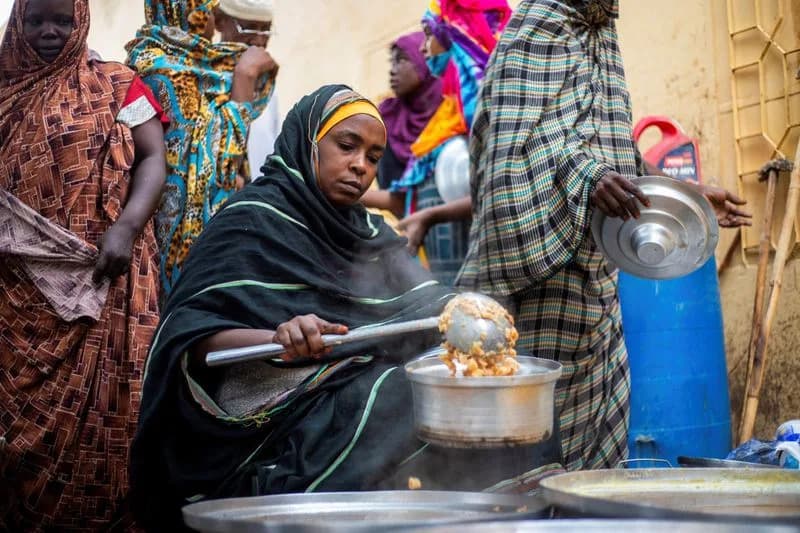
Thousands of Sudanese refugees are crossing into eastern Chad, worsening an already fragile humanitarian situation. The UN says more than 4.3 million have fled abroad since April 2023 and nearly 12 million are displaced internally. Eastern Chad — where some seven million people already require aid — faces shortages of food, water, health services and schooling, with children making up a large share of arrivals. The EU has sanctioned RSF deputy Abdul Rahim Dagalo over alleged crimes in el-Fasher.
Waves of Sudanese Families Flood Into Impoverished Chad as War Escalates

Thousands more Sudanese fleeing the country’s brutal conflict are crossing into neighbouring Chad, deepening an already severe humanitarian crisis across the region.
The United Nations estimates that more than 4.3 million people have fled Sudan to neighbouring countries since the civil war began in April 2023 between the Sudanese Armed Forces (SAF) and the paramilitary Rapid Support Forces (RSF). Nearly 12 million people are now displaced inside Sudan — the largest displacement crisis in the world.
Many of the new arrivals are heading for eastern Chad in search of safety and food, but they are arriving in a country where roughly seven million people — at least half of them children — already need humanitarian assistance.
Dozens of families are arriving in the border town of Tine every day. Local resident Abdulsalam Abubakar said prices at the market have surged: "The money I spent at the market a few days ago no longer buys the same amount."
"Now food is expensive because more than 10,000 Sudanese arrived here after their country disintegrated," said trader Khadijah Kurgule. "There are goods everywhere but people can’t afford them."
The recent arrivals include thousands who fled RSF-led attacks and mass killings in and around el-Fasher in western Sudan's Darfur region. Their arrival adds to more than one million people who have entered Chad since the fighting began, intensifying competition for food, water, shelter and medical care.
Long queues are common at water and aid distribution points, and local hospitals and schools are stretched beyond capacity. John-Paul Habamungu, a UNHCR representative on the ground, warned that 57 percent of the arriving population are school-age children but there are currently no available schools to serve them.
"We don’t have the funding to construct at least temporary learning spaces. We don’t have the means to recruit teachers," Habamungu said.
The UN and humanitarian partners have moved several thousand refugees to surrounding areas to ease pressure on border communities, but aid workers caution the situation could deteriorate further if fighting in Sudan continues.
In a related development, the European Union has imposed sanctions on Abdul Rahim Hamdan Dagalo, deputy leader of the RSF and brother of RSF commander Mohamed Hamdan "Hemedti" Dagalo. The measures include an EU-wide travel ban, an asset freeze and prohibitions on deriving direct or indirect financial benefits from resources within the bloc. EU officials said the sanctions are linked to alleged crimes during the storming of el-Fasher.
Humanitarian agencies are appealing for more funding and rapid delivery of aid to prevent further suffering as both refugees and host communities confront shortages of food, clean water, health care and education.
Help us improve.