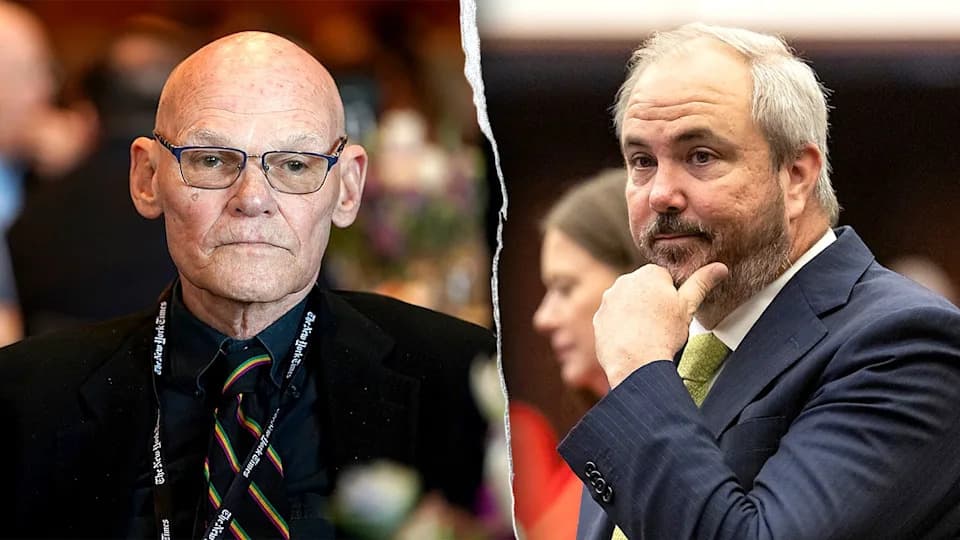
James Carville warned that rising costs and structural policy choices have left many young Americans unable to buy homes or attain affordable education. He argued that the nation’s long-standing bets on universal homeownership and four‑year college are faltering and called for presidents to embrace economic populism to avert wider social strain. Carville highlighted workforce mismatches — such as thousands of unfilled mechanic jobs — and urged policy reforms in housing, zoning and vocational training.
Carville Warns Future Presidents: Embrace Economic Populism or Risk a 'Break' Over Generational Affordability

Veteran Democratic strategist James Carville warned that future American presidents must confront a growing affordability crisis that threatens younger generations' prospects for homeownership, education and stable employment.
"The thing that's coming in this country, and we're not ready for it, and that is the accumulation of generational wealth by our generation," Carville said on his "Politics War Room" podcast. "This thing could break. And if somebody doesn't get ahead of it, it's going to get ahead of everybody else."
Carville described a string of painful realities for young people: difficulty buying homes, burdensome education costs, and a mismatch between job openings and available workers — citing a report that the CEO of Ford said there are approximately 5,000 unfilled auto mechanic positions.
He argued the country made two major strategic bets that are now backfiring: promoting universal homeownership and encouraging four-year college as the primary pathway to success. "One is we decided we're going to be a nation of homeowners. And, two, that we were going to be a nation of people that went to college," he said. "Both of those strategies are, in effect, blowing up in our faces."
Political and policy implications
Carville urged the next president to adopt a form of economic populism that directly addresses affordability — from housing policy and zoning to education and workforce training — to prevent mounting frustration from turning into broader social instability. He warned that people are "starting to get really pissed" as they recognize how structural choices have limited their opportunities.
He also recalled earlier comments urging Democrats to rethink messaging and priorities to better connect with working-class and younger male voters, a group he said has grown alienated by certain cultural and political emphases.
Carville concluded by calling for a serious national conversation about rethinking assumptions around four-year college and single-path definitions of success, and for practical policy responses that expand affordable housing, vocational training and clearer labor-market pathways for younger Americans.
Help us improve.