The Expedition 73 crew on the ISS ran science and station upkeep from Nov. 17–21, 2025 while supporting the complex’s roughly 1 million pounds (454,000 kg). NASA flight engineer Johnny Kim explained how mass is measured in microgravity using devices like Russia’s Body Mass Measurement Device and Newton’s Second Law (F = ma). The crew worked on DROPLET, Ultrasound 3 and Stellar Stem Cells-2 experiments, prepared spacesuits for return, and raised the station’s orbit after a Progress MS-32 reboost. Seven people were aboard the station on Nov. 21.
How Astronauts 'Weigh' Themselves in Space — Inside a Busy Week on the ISS (Nov. 17–21, 2025)

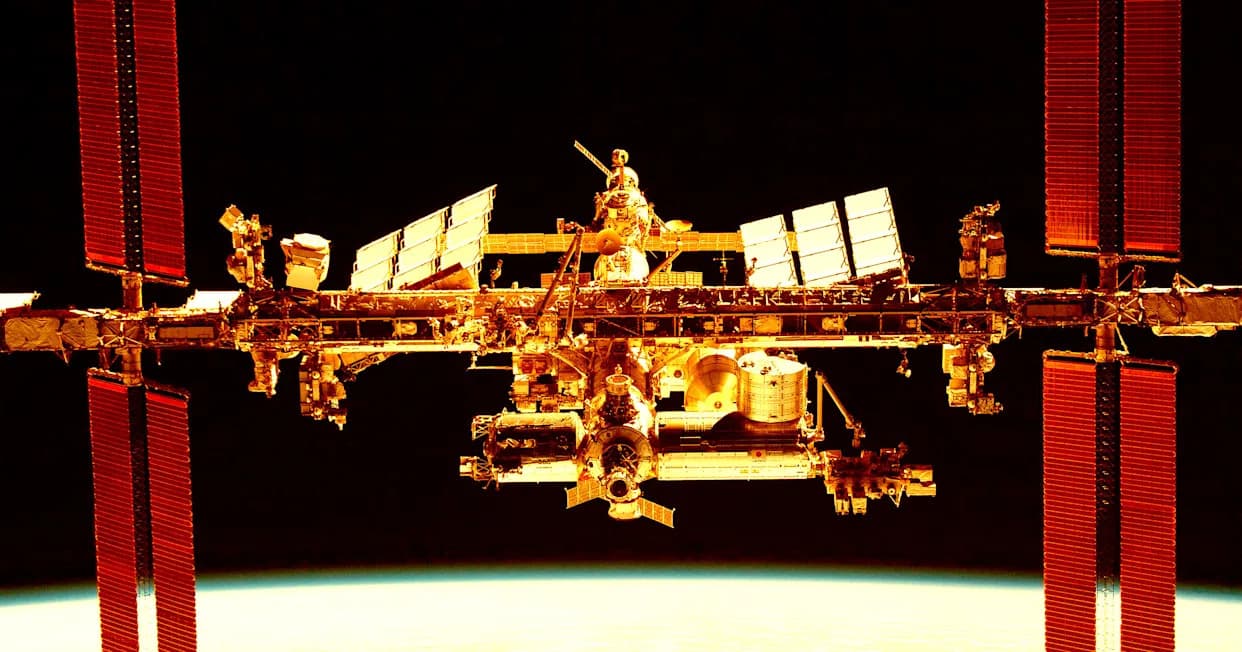
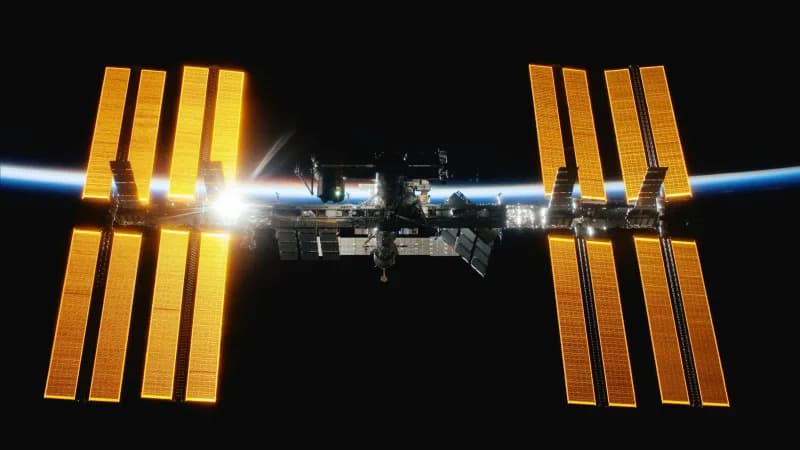
The Expedition 73 crew aboard the International Space Station carried out a packed schedule of science, maintenance and logistics during the week of Nov. 17–21, 2025, while supporting the station’s roughly 1 million pounds (454,000 kg) of hardware and systems.
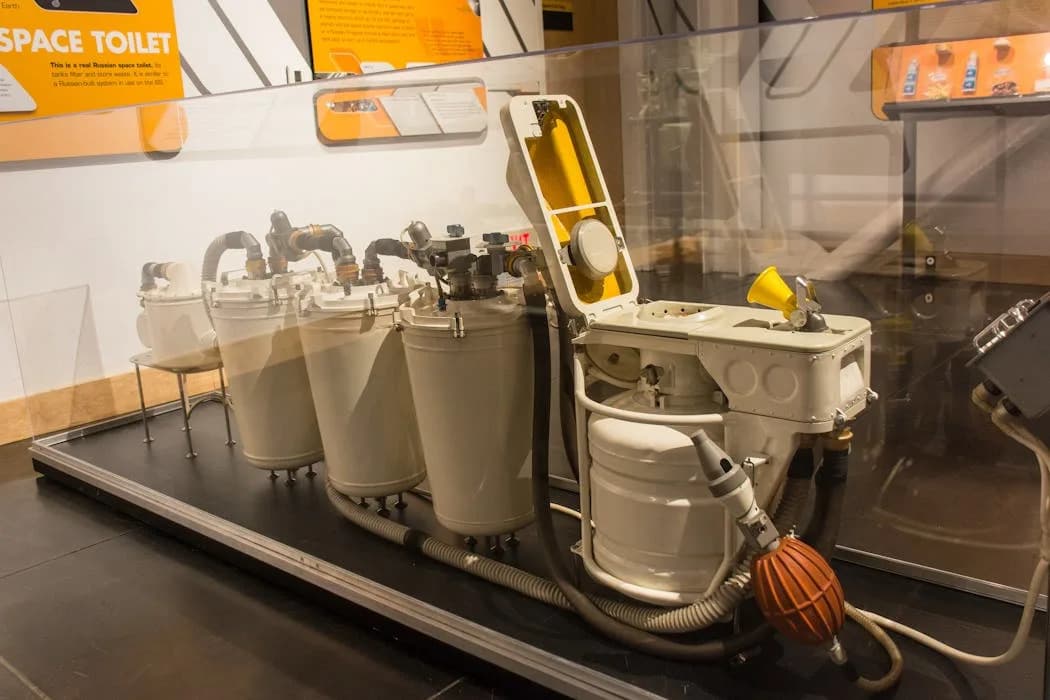
Daily routines that are routine on Earth become more complex in microgravity. "In space, we’re weightless, but not massless. So how do we measure our mass?" NASA flight engineer Johnny Kim asked in a social media post on Nov. 20. He explained that the practical answer is specialized hardware such as Russia’s Body Mass Measurement Device, and — fundamentally — Newton’s Second Law, F = ma.
"Apply a known force, measure the resulting acceleration, and you can calculate mass from the relationship between the two," Kim wrote.
Key science activities
DROPLET — NASA flight engineer Mike Fincke continued an experiment that studies how particles attach to and rearrange on liquid droplets in microgravity. He installed samples into a fluorescence microscope for observation by researchers on Earth.
Ultrasound 3 — NASA flight engineer Zena Cardman tested a new ultrasound scanning system that can image the heart and veins and support internal scans of bones, organs and other tissues for both science and crew health monitoring.
Stellar Stem Cells-2 — Also this week, Fincke began a new campaign inside the Microgravity Science Glovebox to study how microgravity influences stem cells as they develop into cardiac and neural cells. Growing those cells in space can yield insights useful for regenerative medicine on Earth and for long-duration missions.
Maintenance, cargo and crew operations
Progress MS-32 (93P) reboost — On Nov. 19 the Russian Progress MS-32 cargo vehicle fired its engines for 14 minutes and 7 seconds while docked to the aft port of the Zvezda service module. The burn raised the station’s orbit by about 1 mile at apogee and 2.3 miles at perigee (approximately 1.6 and 3.7 kilometers) to prepare for the arrival of an incoming Soyuz crew.
Crew sleep accommodations — Johnny Kim set up a temporary sleep station in the Columbus laboratory module for one of the three crewmembers arriving aboard Soyuz MS-28, a brief configuration that will increase the station population to 10 when that Soyuz is docked.
Spacesuit stowage — Zena Cardman photographed and prepared components from the station’s extravehicular mobility units (EMUs) for return to Earth aboard Soyuz MS-27.
Station status
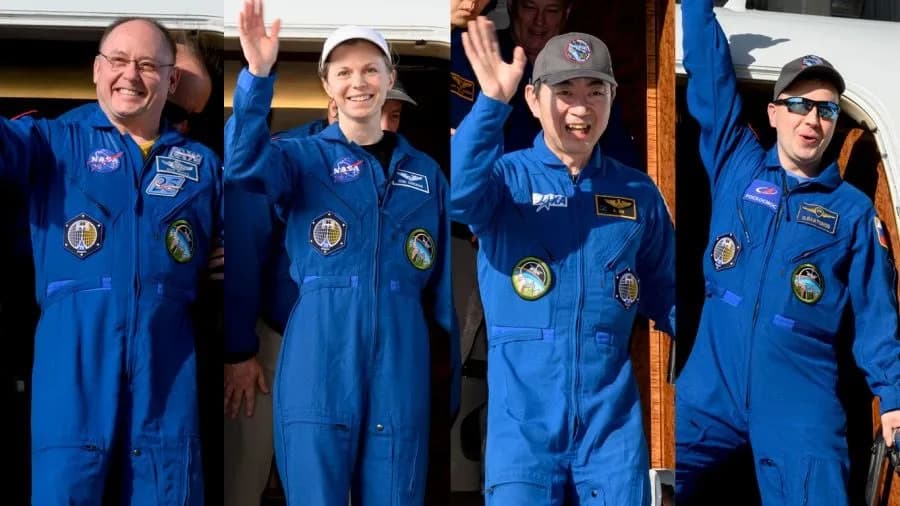
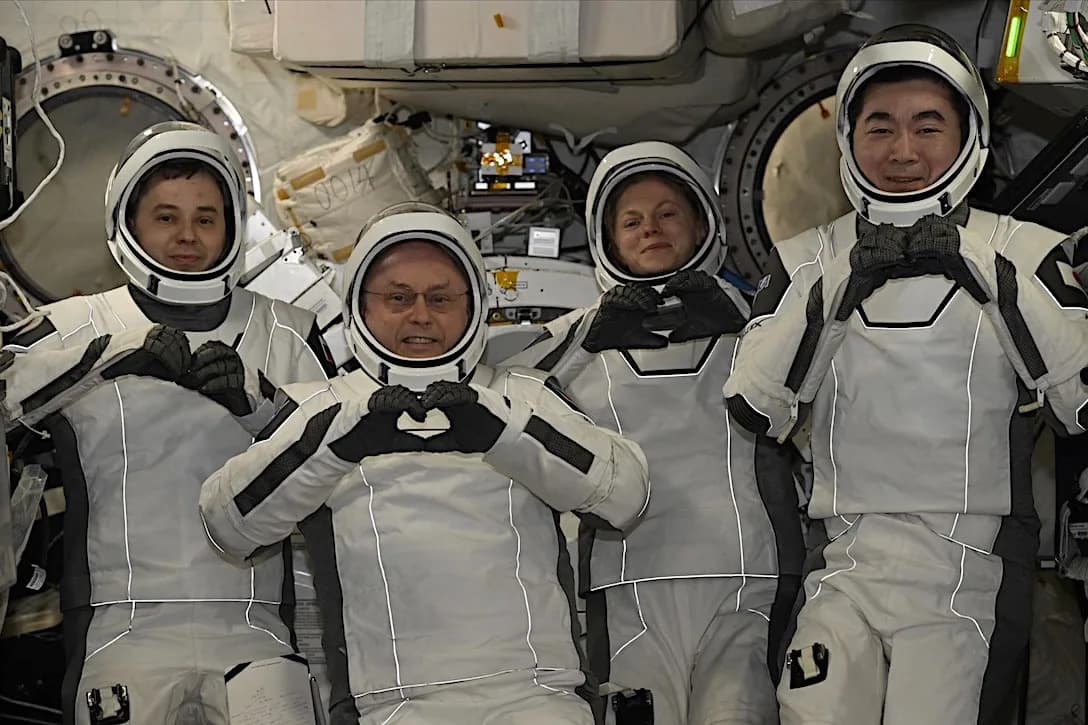
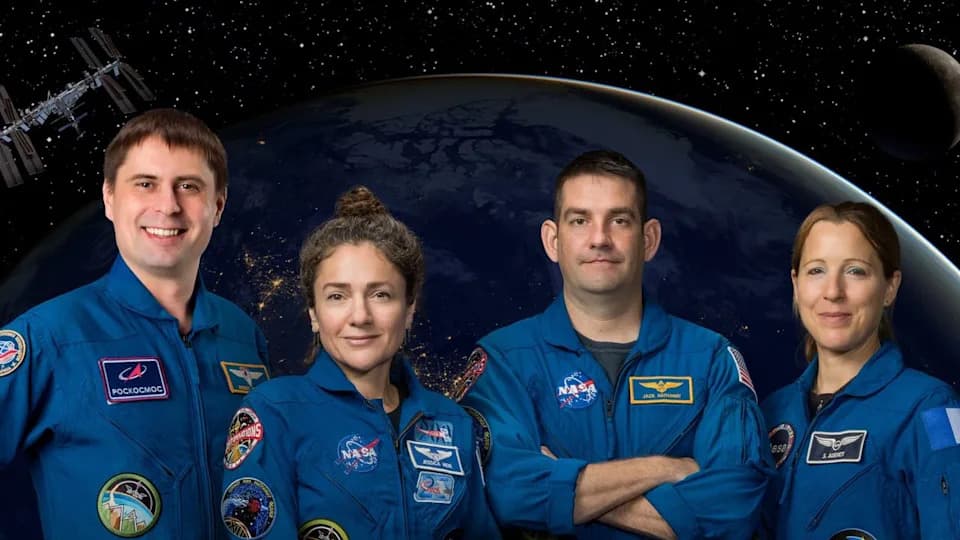
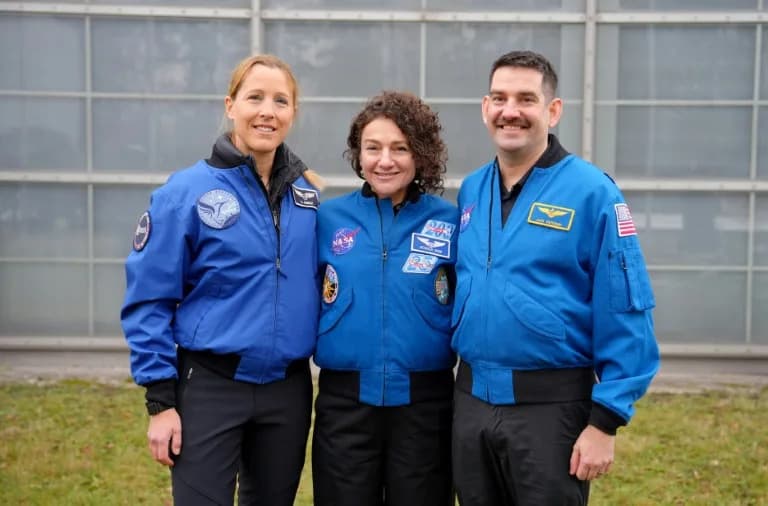
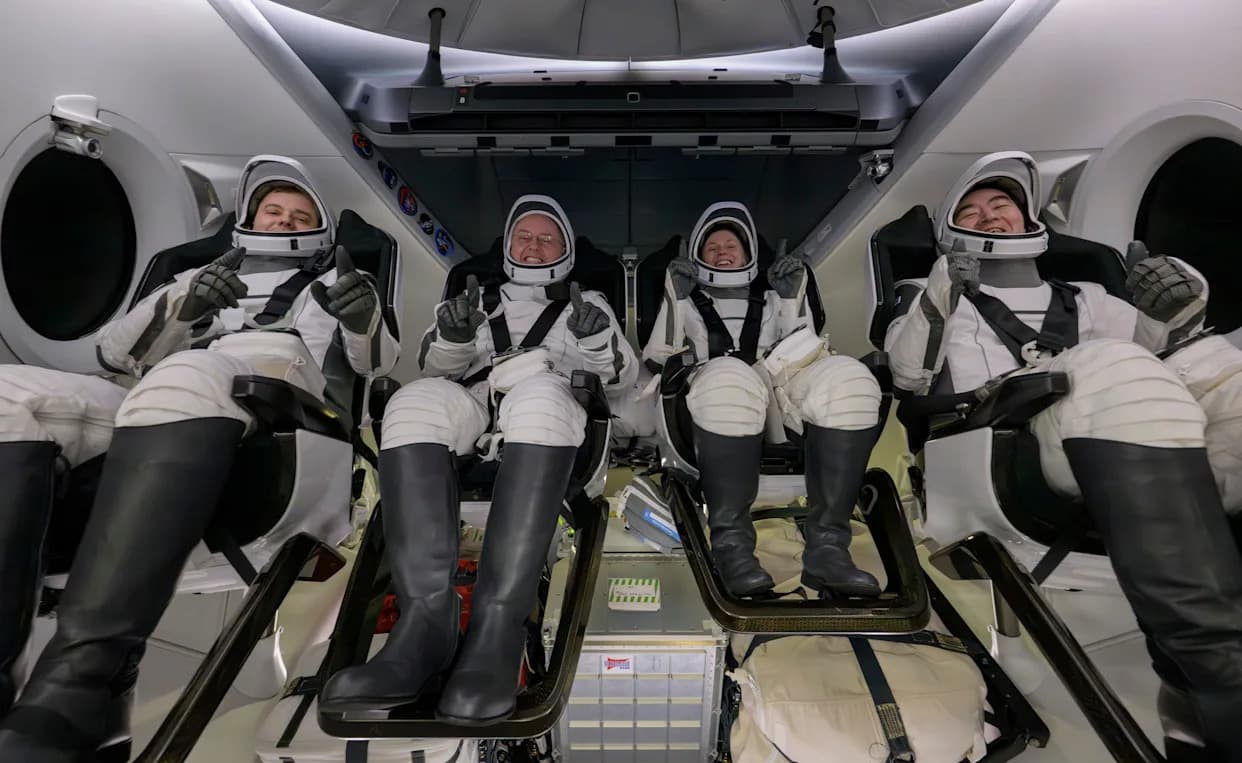
As of Nov. 21, seven people were aboard the International Space Station: commander Sergey Ryzhikov and flight engineer Oleg Platonov of Roscosmos; NASA flight engineers Zena Cardman, Mike Fincke and Johnny Kim; and JAXA astronaut Kimiya Yui. Two crewed spacecraft were docked: SpaceX’s Dragon Endeavour at Harmony’s space-facing port and Roscosmos’ Soyuz MS-27 at Prichal’s Earth-facing port. Four cargo vehicles were attached: Progress MS-31 (92P), Progress MS-32 (93P), Northrop Grumman’s Cygnus XL (S.S. William C. "Willie" McCool) and Japan’s HTV-X1.
By Nov. 21 the station had been continuously crewed for 25 years and 19 days.
Help us improve.