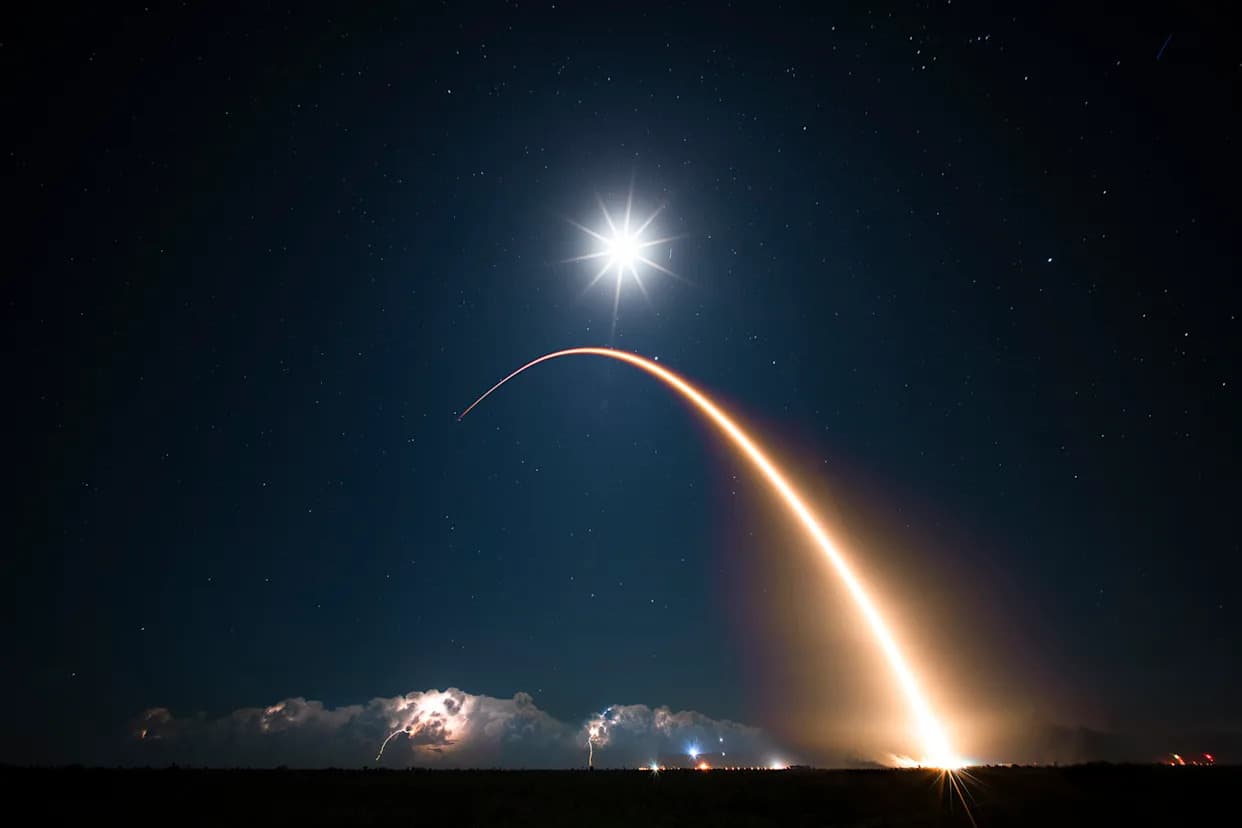
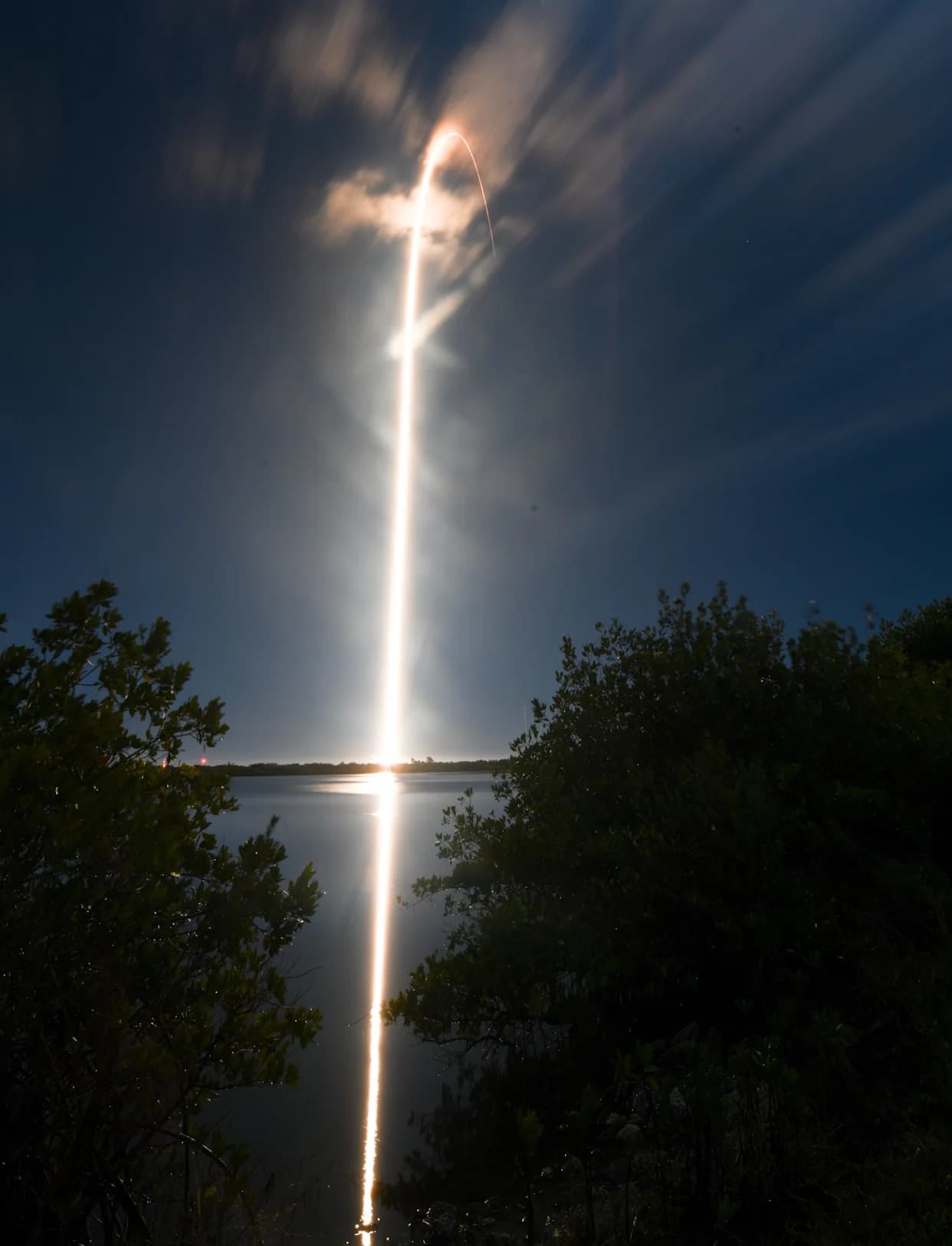
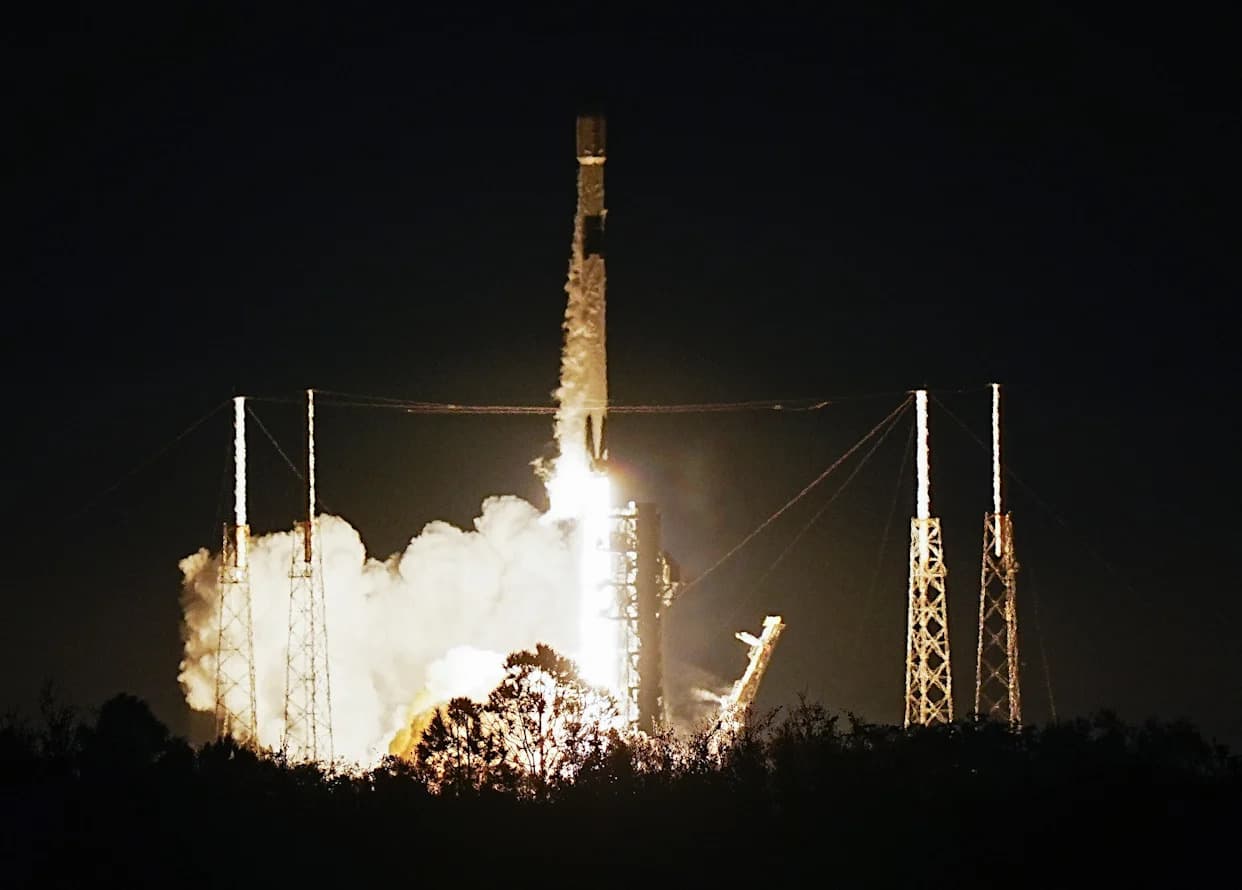
The United Launch Alliance Atlas V is scheduled to lift off from Launch Complex 41 at Cape Canaveral at 10:04 p.m. ET on Nov. 13, 2025, carrying Viasat’s ViaSat‑3 Flight 2. The rocket — boosted by five side‑mounted solid rockets — should be visible across much of Florida and, if conditions permit, into southern Georgia and parts of the Carolinas, the Caribbean and Bermuda. ULA’s visibility graphic provides time‑based sightline estimates at +60, +90, +150, +210, +270, +330 and +390 seconds after liftoff; actual visibility depends on weather and local conditions.
Atlas V Liftoff Nov. 13 — ViaSat‑3 F2 May Be Visible Across Florida and Neighboring States

Atlas V Liftoff from Cape Canaveral Could Be Seen Across Florida and Into Nearby States
What: United Launch Alliance’s Atlas V rocket carrying ViaSat‑3 Flight 2 (F2), an ultra‑high‑capacity Ka‑band broadband satellite for Viasat.
When: Planned liftoff at 10:04 p.m. ET on Thursday, Nov. 13, 2025, with a 44‑minute launch window through 10:48 p.m. (Previous attempts on Nov. 5 and Nov. 6 were scrubbed.)
Where: Launch Complex 41, Cape Canaveral Space Force Station, Florida.
The Atlas V for this mission is equipped with five side‑mounted solid rocket boosters that produce a bright nighttime plume and rapid climb. ULA published a visibility graphic showing the vehicle’s trajectory and estimated sightlines; the following timeline is drawn from that graphic and assumes clear skies and unobstructed views.
Estimated visibility timeline (times are seconds after liftoff)
- Launch to +60s: Easily visible across the Space Coast and much of east/central Florida — including Titusville, Merritt Island, Cocoa Beach, Melbourne, Palm Bay and nearby beaches.
- Launch to +90s (payload fairing jettison): Visibility expands to Daytona Beach, New Smyrna Beach, Port Orange, Treasure Coast communities, Orlando, Sanford, Kissimmee, Ocala and Lakeland.
- Launch to +150s (solid rocket booster jettison): Broader Florida coverage: Tampa Bay area (Tampa, St. Petersburg, Clearwater), Sarasota, Cape Coral, Fort Myers, Naples, West Palm Beach and most of Lee and Collier counties. Estimates also include southern Georgia (Savannah) and parts of the Bahamas and Caribbean.
- Launch to +210s (booster separation): Views could reach Tallahassee and portions of Florida’s Big Bend, and extend farther up the U.S. East Coast into coastal Georgia, South Carolina and parts of North Carolina.
- Launch to +270s and beyond: ULA’s graphic shows possible late‑phase visibility along the Georgia coast (Savannah, Brunswick), South Carolina coast (Hilton Head, Charleston, Myrtle Beach), North Carolina (Wilmington), and, in later seconds, parts of the Caribbean and Bermuda — weather permitting.
Important: These are estimates based on ULA’s published graphic. Actual visibility depends on cloud cover, haze, light pollution, terrain and the final flight profile. Range safety constraints can also change the launch timing or trajectory.
Where to watch in Florida
Prime in‑person viewing is along the Space Coast in Brevard County (Titusville, Merritt Island, Cocoa Beach, Melbourne). Other good corridors include east Orlando near UCF and Bithlo, Volusia County (Daytona Beach, New Smyrna Beach), the Treasure Coast (Vero Beach, Jensen Beach, Fort Pierce) and Gulf Coast locations for later‑phase sighting (Tampa Bay, Cape Coral, Fort Myers).
How to follow the launch
Live coverage and ULA’s webcast typically begin about 90 minutes before liftoff. For the most accurate, up‑to‑date information use ULA’s official channels and mission page; local media and major outlets will also stream the event and provide real‑time updates.
Viewing tips
- Check cloud cover and local weather before heading out — a clear horizon matters more than distance.
- Find an unobstructed, dark spot with a clear view to the east/southeast (the ocean side).
- Bring binoculars or a camera with a telephoto lens for a better view, but the rocket’s bright plume is often visible to the naked eye during a night launch.
- Follow official sources for last‑minute changes; do not rely on static schedules if the launch is delayed or scrubbed.
All timing and sightline guidance are estimates provided for observers’ planning and are based on ULA’s published visibility graphic.
Prepared from ULA’s mission information and public visibility graphics. For official launch status and livestreams, consult ULA and mission partners.
Help us improve.