Summary: Taiwan’s remaining diplomatic partners—mainly small countries in Latin America and the Caribbean—are building tailored, results-focused partnerships that go beyond symbolic recognition. Initiatives include semiconductor training in Guatemala, expanded rice and agricultural projects in Haiti and St. Vincent, health and port infrastructure, and green-energy pilots. Taiwan’s Diplomatic Allies Prosperity Project (launched 2024) channels technical expertise and private investment into partner-prioritized areas while those allies advocate for Taiwan’s inclusion in international forums.
Beyond Recognition: How Taiwan Is Turning Diplomatic Ties Into Concrete Cooperation
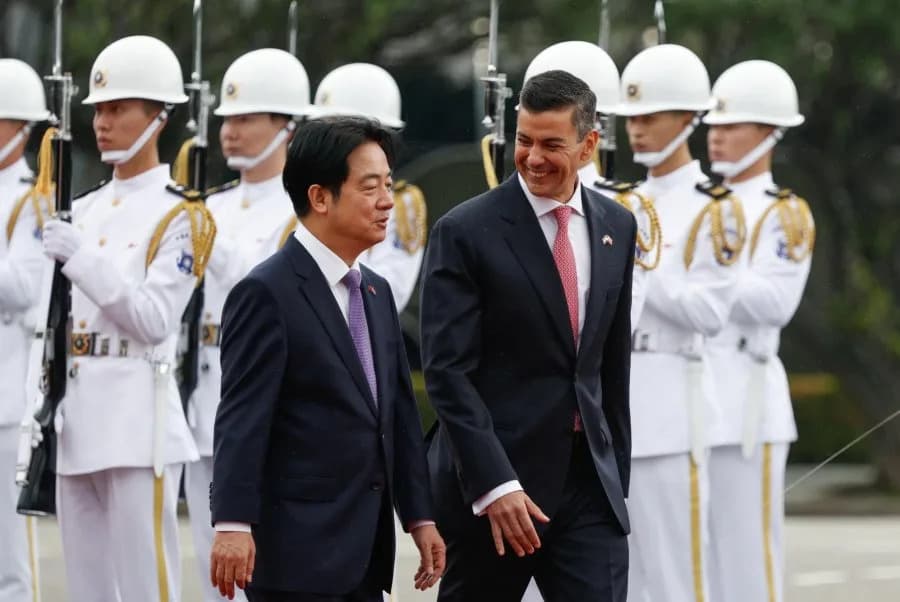
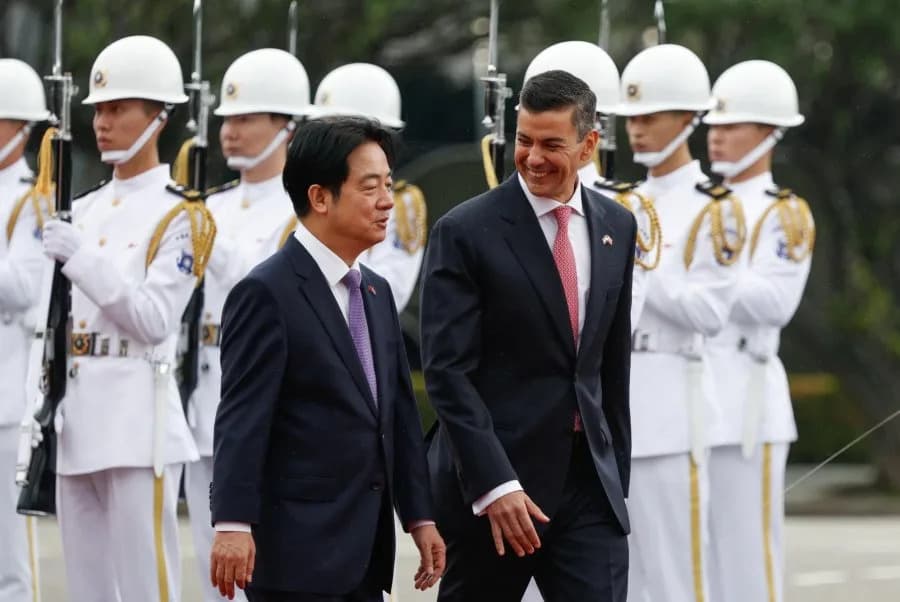
Taiwan President Lai Ching-te (L) and Paraguay President Santiago Pena (R) react as they review honor guards during a welcome ceremony in front of the presidential office Taipei, Taiwan, on May 8. File Photo by Ritchie B. Tongo/EPA
At the United Nations on Sept. 23, leaders from Paraguay, Palau and Eswatini used their General Assembly addresses to press for Taiwan’s meaningful participation in the international system — underscoring a wider diplomatic effort that goes far beyond symbolic recognition.
Diplomatic Advocacy Meets Practical Partnership
While Taiwan today maintains formal diplomatic relations with just 12 governments worldwide, seven of those are in Latin America and the Caribbean: Paraguay, Guatemala, Belize, Haiti, St. Kitts and Nevis, Saint Lucia and St. Vincent and the Grenadines. These ties are no longer only ceremonial. Instead, Taiwan is building tailored, results-driven partnerships that match Taiwanese technical strengths with partner-country priorities.
Guatemala: Semiconductors and Skills
Guatemala — a diplomatic partner since 1933 — illustrates how these relationships have moved beyond traditional aid. President Bernardo Arévalo’s "Ruta del Chip" strategy aims to integrate Guatemala into semiconductor supply chains. During Arévalo's June 2025 visit to Taipei, the two governments signed a letter of intent on semiconductor cooperation. According to Economy Minister Gabriela García, 28 Guatemalan professionals completed specialized semiconductor training in Taiwan in 2025, and Universidad Galileo hosted Guatemala’s first semiconductor-design course this year.
Haiti: Practical Food-Security Work
Despite chronic instability, Taiwan and Haiti have kept diplomatic ties for decades. Much of Taiwan’s engagement focuses on food security. In August, Taiwan’s development fund expanded a rice project in southern Haiti with Food For The Poor and WES TRADE, providing farmer associations with improved seed, drying fields, mills, warehouses and soil/weather sensors.
"This is not a gift," said Jacques Liu, the fund’s project manager, explaining that farmers receive inputs and technical assistance and return most of the value after harvest so future groups can be supported.
Caribbean Projects: Hospitals, Ports and Agriculture
In St. Vincent and the Grenadines Taiwan supported the new Arnos Vale Acute Care Hospital and helped modernize Kingstown Port. A youth agriculture initiative launched in 2025 carries a roughly $3.1 million budget, with $2.5 million funded by Taiwan; its first cohort graduated in July.
Belize secured approval for shrimp exports in July 2025 after two years of technical and regulatory work, opening access to a market that imported an average of more than $349 million in shrimp annually from 2020–2024. In St. Lucia, where ties with Taiwan were restored in 2007, a "Seven Crops Project" aims to reduce dependence on imported food; 76 farmers completed a six-week training program in August. St. Kitts and Nevis launched a Green Energy Transition Demonstration Project in April and is exploring pathways for students to study medicine in Taiwan.
A Coherent Strategy: The Diplomatic Allies Prosperity Project
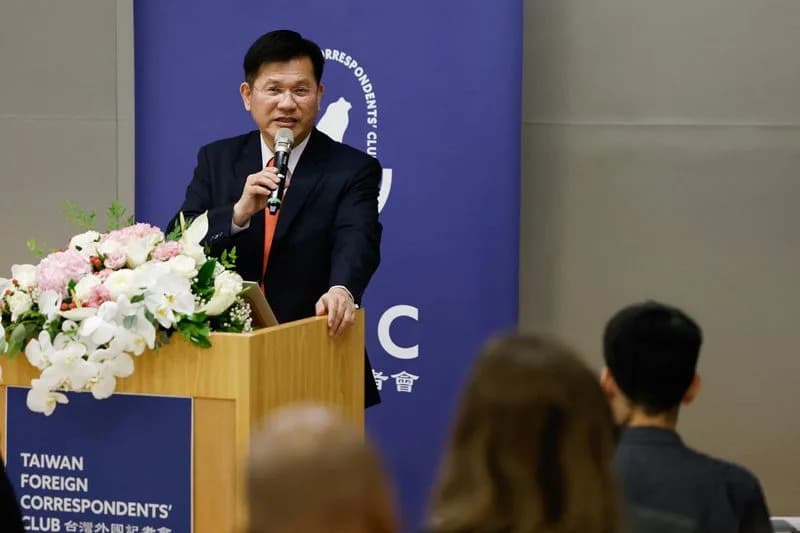
Collectively these efforts reflect a deliberate policy. In 2024 Foreign Minister Lin Chia-lung launched the Diplomatic Allies Prosperity Project to channel Taiwanese capabilities into semiconductors, new energy, smart agriculture, medicine and sustainable tourism. In July, Taiwan opened a Diplomatic Allies Prosperity Economic and Trade Office under its development fund to encourage private Taiwanese firms to enter these markets.
The relationship works both ways: Taiwan’s formal allies amplify Taipei’s calls for participation in international fora from which Taiwan is excluded. That advocacy was visible at the U.N. General Assembly in New York and earlier at the World Health Assembly in Geneva.
Limits and Choices
These programs are not cost-free political choices. China — a major trading partner in the region — conditions diplomatic relations on acceptance of its one-China principle. Each partner government weighs those considerations. Still, the practical gains demonstrate what simple GDP comparisons miss: targeted skills training, improved food systems, health infrastructure and energy projects that yield tangible local benefit.
For Taiwan, the combination of formal diplomatic recognition and allied advocacy in international forums provides influence and visibility that informal partners cannot fully replicate.
About the author: Thomas R. Field is Regional Representative for Latin America of the Global Peace Foundation and president of the Latin America and Caribbean Presidential Mission. He has lived and worked in Latin America for more than four decades, including almost 20 years in Paraguay. The views expressed here are his own.
Help us improve.