Authoritarian tactics are straining the rules-based international order, particularly in the Indo-Pacific where gray-zone pressures risk regional stability. Taiwan, a key hub for global supply chains and advanced technology, remains committed to the status quo and offers expertise in semiconductors, public health, and disaster preparedness. Beijing’s reinterpretation of UNGA Resolution 2758 to bar Taiwan from U.N. participation threatens dangerous precedents. Meaningful inclusion of Taiwan would strengthen collective security, economic resilience, and the credibility of international institutions.
Restoring Trust: Why Taiwan’s Inclusion Matters to the Rules-Based World
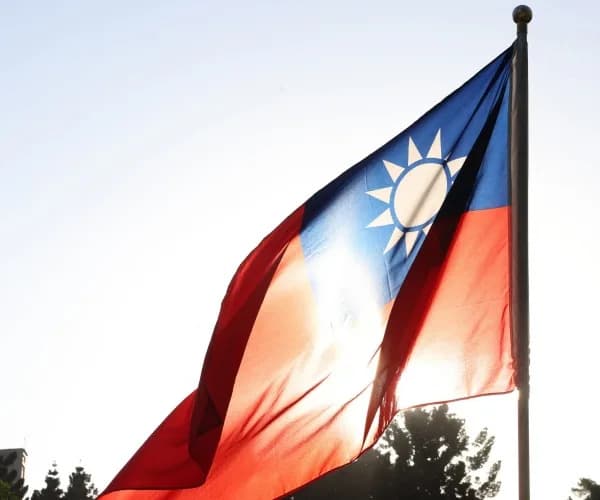
( I-HWA CHENG/AFP via Getty Images)
The rules-based international order is under growing strain as some authoritarian states seek to erode global safeguards and reshape rules to serve narrow interests. The choice before the international community is stark: defend the institutions and principles that preserve peace, self-determination, and democratic governance, or risk their steady decay.
The Challenge to Global Norms
Core principles—the peaceful settlement of disputes and the prohibition on the threat or use of force enshrined in the U.N. Charter—are increasingly challenged. In the Indo-Pacific, pressure on regional security is mounting as China employs gray-zone tactics, including military intimidation, cyber intrusions, and economic coercion, to attempt to unilaterally rewrite norms and facts on the ground.
Why Taiwan Matters
Situated on the front line of this strategic contest, Taiwan is committed to maintaining the status quo and preserving regional peace and stability. The Taiwan Strait is one of the world’s busiest maritime corridors and a critical artery for global supply chains. Stability there is therefore a global concern, reflected in repeated statements from the G7 and ministerial-level meetings among partners including the United States, Japan, the United Kingdom, Australia, and New Zealand.
Misuse of UNGA Resolution 2758
U.N. General Assembly Resolution 2758 (1971) addressed representation of the People’s Republic of China at the United Nations but does not mention Taiwan, determine Taiwan’s political status, or resolve Taiwan’s participation in U.N. bodies. Beijing’s long-standing practice of conflating Resolution 2758 with the "one China" principle to exclude Taiwan from U.N. participation is a deliberate reinterpretation. Left unaddressed, that distortion risks creating a dangerous legal precedent and could be exploited as a pretext for coercive actions.
Taiwan’s Global Contributions
Despite exclusion from many U.N. systems, Taiwan continues to be a constructive global partner. It offers world-class expertise in advanced manufacturing, semiconductors, artificial intelligence, public health, and disaster preparedness. Through initiatives such as the Diplomatic Allies Prosperity Project, Taiwan shares technology and capacity-building resources with partners. Examples include an integrated healthcare information system in Paraguay, a strategic oil reserve facility in Eswatini, and smart healthcare collaboration with Palau National Hospital—projects that strengthen data systems, energy security, local industry, and sustainable development.
Khalilur Rahman, president-elect of the upcoming 81st U.N. General Assembly, has emphasized restoring trust and managing institutional transformation. Taiwan shares these priorities and is ready to contribute constructively to a reformed and more credible U.N.
Call to Action
Rebuilding confidence in the U.N. requires treating every constructive member fairly and inclusively. The rules-based order depends on consistent application of principles: inclusiveness, peaceful dispute resolution, and the prohibition on the threat or use of force. Meaningful participation by Taiwan would strengthen collective security, enhance economic and technological resilience, and improve the international community’s capacity to resist authoritarian coercion.
Ensuring Taiwan’s meaningful inclusion in international forums is not only a matter of justice—it is a practical step to bolster global stability, prosperity, and the credibility of international institutions.
Help us improve.