Hotter, faster wildfires — amplified by climate change and a century of fire suppression — are transforming forests across the U.S. In places such as Yellowstone, California and the Southwest, tree seedlings are struggling to return and shrublands or grasslands are increasingly replacing forests. Florida shows a contrasting success: proactive prescribed burns across ~2–2.5 million acres annually help preserve fire‑adapted ecosystems. Scientists expect many local thresholds rather than a single national tipping point, and future outcomes will depend on climate trends and management choices.
Wildfires Are Reshaping US Forests — Are We Near A Tipping Point?
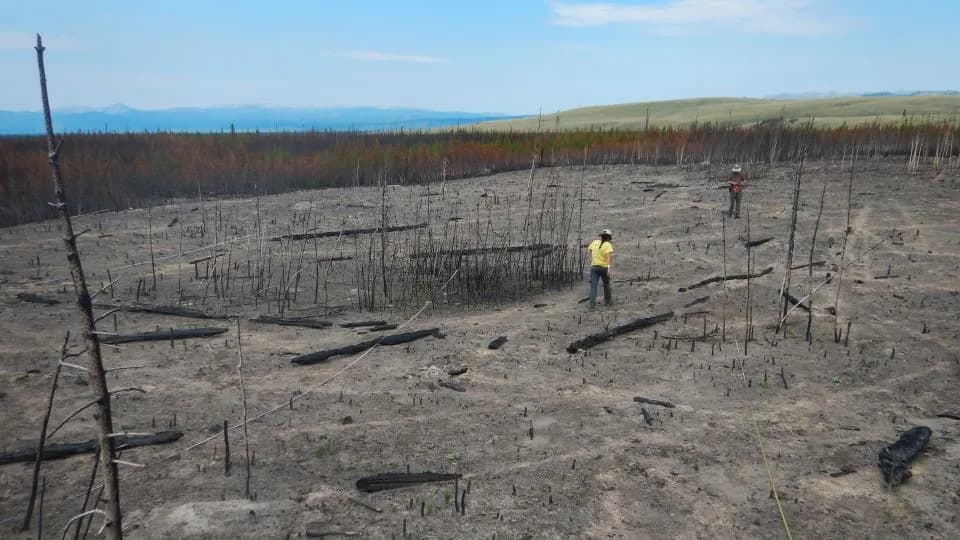
A 2017 photo shows how this field in western Yellowstone, a year into recovery from the 2016 Maple Fire, is still filled with dead trees in an area that used to have flourishing forest land. - Courtesy Monica Turner
Researchers across the United States are documenting a growing pattern: forests that once tolerated periodic fire are now being altered — sometimes permanently — by hotter, faster, high‑intensity wildfires. Scientists warn these shifts could transform familiar woodlands into shrublands or grass-dominated landscapes unless management and climate trends change.
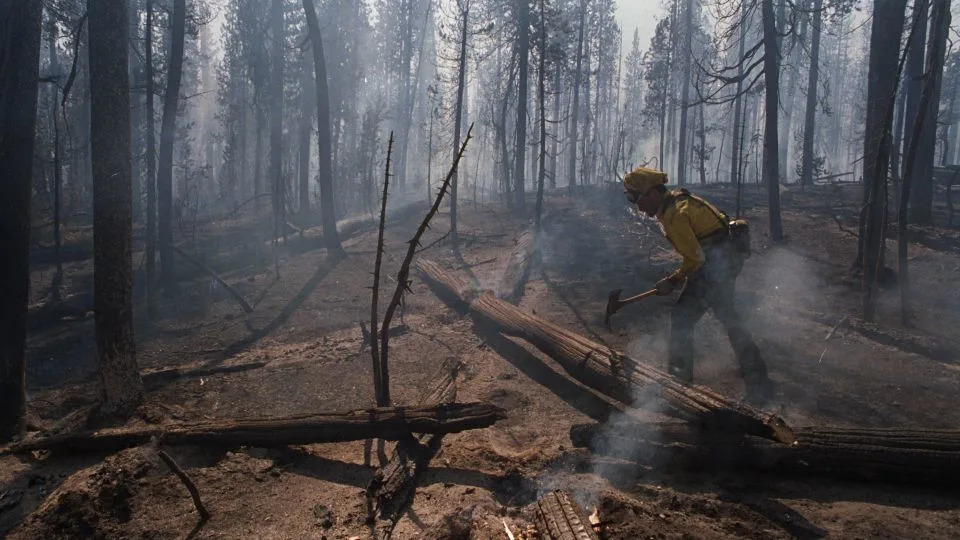
Kim Desiato, a firefighter from Tucson, Arizona, stops to look for hot spots in the aftermath of the Lewis Lake Fire in Yellowstone National Park on August 30, 1988. The fire forced the closure of the south entrance to the park. - Bettmann Archive/Getty Images
Yellowstone: From Cold Rain To Scorched Meadow
Monica Turner, Eugene P. Odum Professor of Ecology at the University of Wisconsin–Madison, remembers trekking through shady, rain‑cooled hills of Yellowstone in 2013. When she returned in 2017 after the 2016 Maple Fire, she found a very different scene: a sun‑baked clearing dotted with a few surviving trees and a sea of thin shoots rising from charred soil. Turner noted "ghost logs" — large fallen trunks that had been completely consumed, leaving only pale ash outlines.
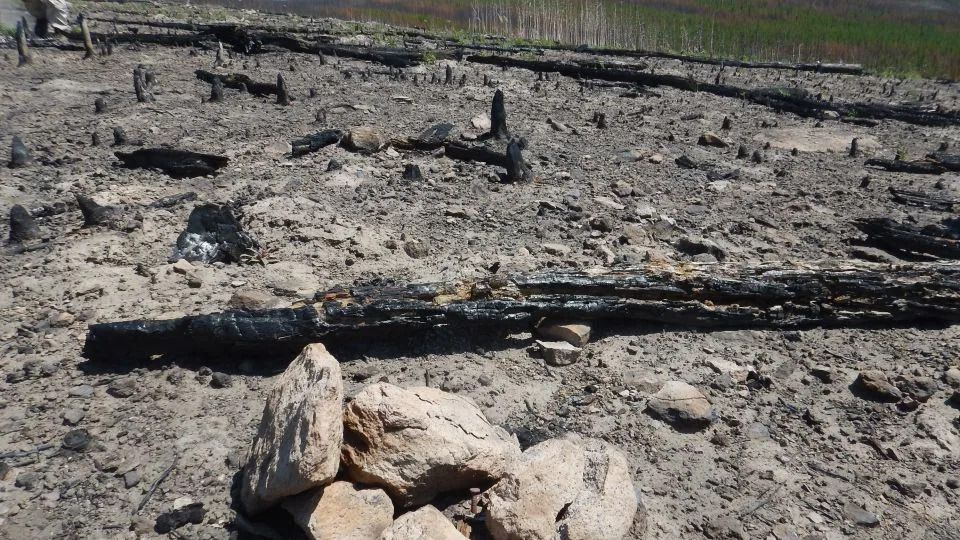
One year after the 2016 Maple Fire that burned through western Yellowstone, a plot marker shows where trees once stood. - Courtesy Monica Turner
So far, only about 5% of the tree seedlings expected to repopulate the 2016 burn area have established. Grasses and fire‑tolerant wildflowers now dominate parts of that landscape, signaling "a slow but detectable shift" toward species better adapted to warmer, drier conditions. These vegetation changes also have practical consequences: reduced riparian shade has contributed to higher stream temperatures and low water levels, prompting a temporary fishing ban in some areas.
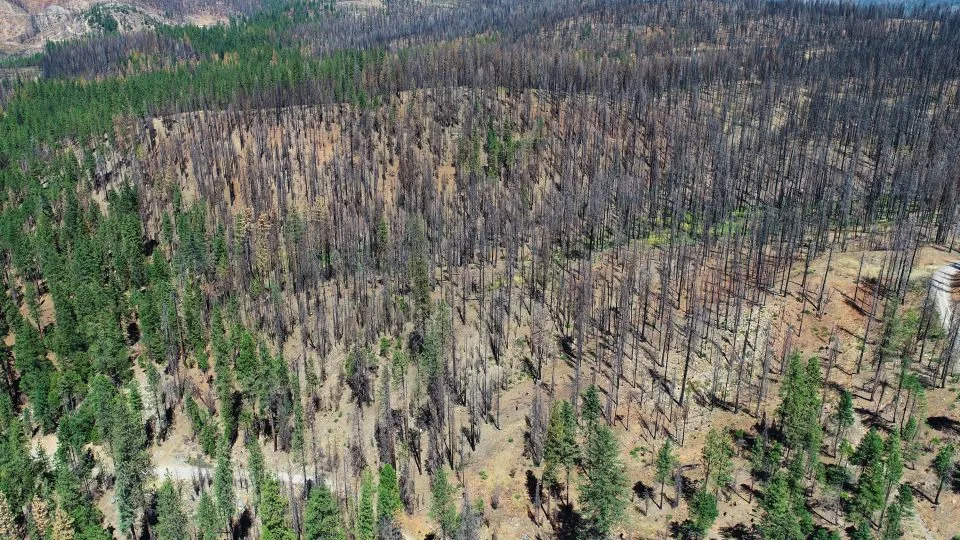
This photo, taken two years after a wildfire in the Shasta-Trinity National Forest, shows how high intensity wildfire makes it difficult for forests to recover. - Courtesy Derek Young
California: Shrub Seas After High‑Intensity Blazes
In Plumas and Tahoe National Forests, researchers such as Derek Young (UC Davis) observe former conifer forests replaced by dense shrub thickets after intense fires like the 2021 Dixie Fire. Shrubs such as deer brush and white thorn can resprout from surviving roots and quickly outcompete tree seedlings. Within a few years, these plants may grow to human height and form impenetrable tangles, preventing tree reestablishment and altering habitat and aesthetics.
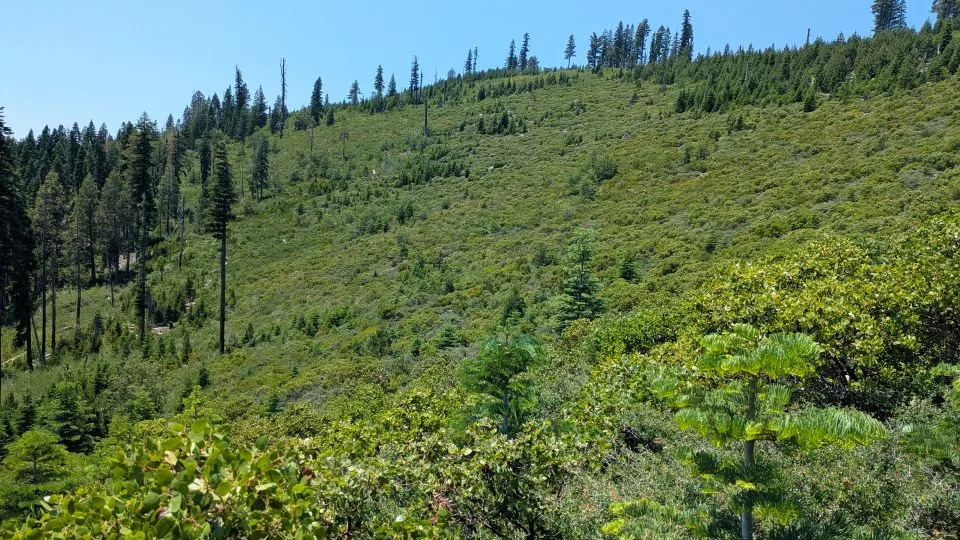
This photo taken in 2026 shows an area in Tahoe National Forest in California burned by the 2001 Star Fire — a prime example of how forested areas are changing to thick shrubs in the years after an intense fire. - Courtesy Derek Young
Southwest: Pine Forests Converting To Oak Shrublands
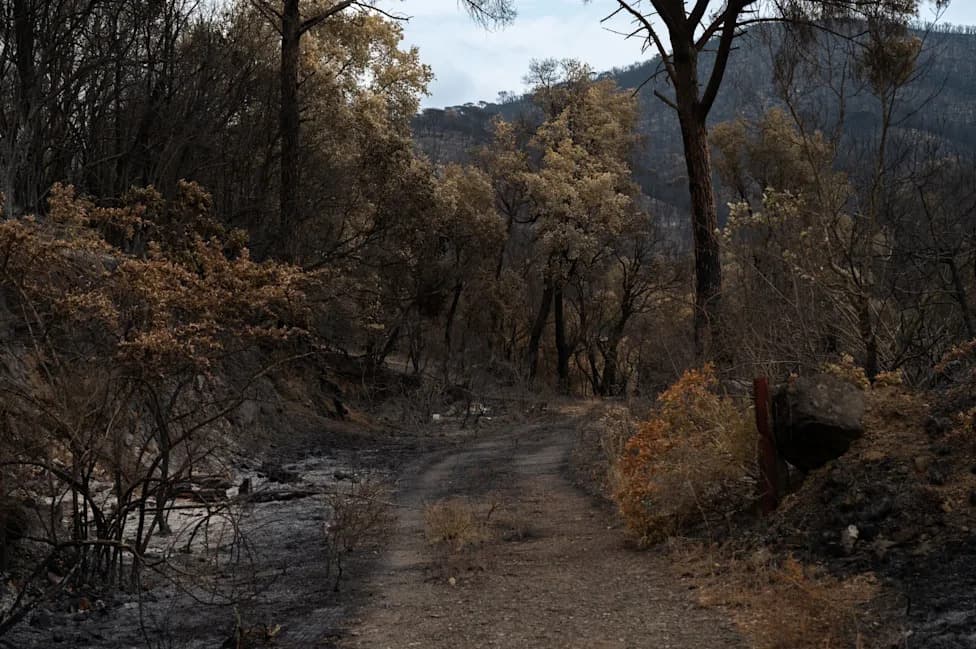
On the New Mexico–Colorado border, Chris Guiterman (CU Boulder) documents similar conversions following fires such as the 2011 Las Conchas and the Track Fire. Many pine‑dominated forests are transitioning to drought‑tolerant oak shrubs and other species. Those shrubs can increase surface fuels, potentially making subsequent fires hotter and further limiting tree recovery. While large fires have occurred historically in the region, researchers say the recent increase in fire intensity is changing the outcome: trees that once survived are now dying.
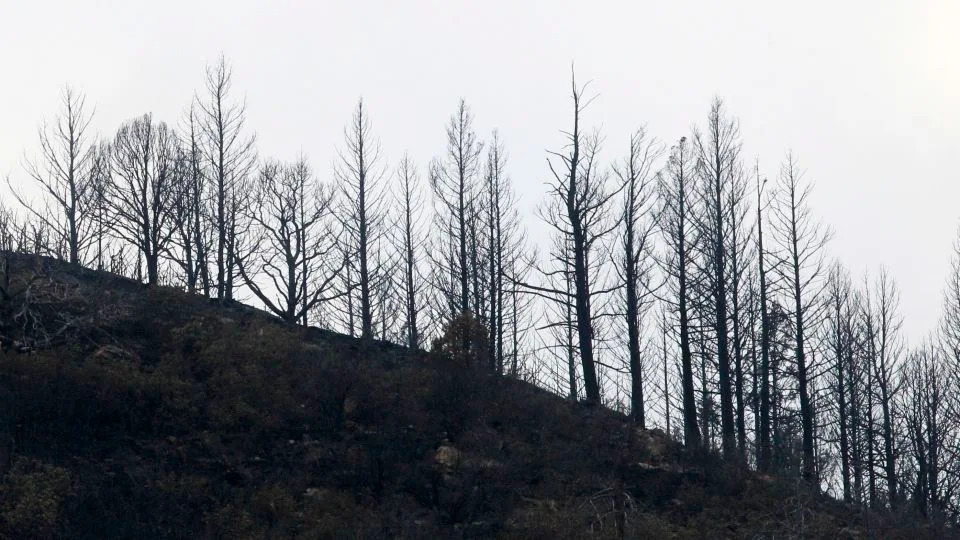
A ridge line of burnt trees are shown following the Track Fire north of Raton, New Mexico, on June 16, 2011. - Rick Bowmer/AP
Florida: A Model Of Prescribed Burning
By contrast, parts of Florida illustrate how proactive management can preserve fire‑adapted ecosystems. Rae Crandall (University of Florida) and Rick Dolan (Florida Forest Service) describe how prescribed burns — applied to roughly 2.0–2.5 million acres per year with about 85,000 burn authorizations annually — promote biodiversity, reduce fuels, and maintain pine savannas and other fire‑adapted landscapes. Florida's climate (distinct wet/dry seasons), flat terrain, and long cultural acceptance of burning make prescribed fire easier to implement there than in many other states. Managers emphasize public education and tailored prescriptions for each site.
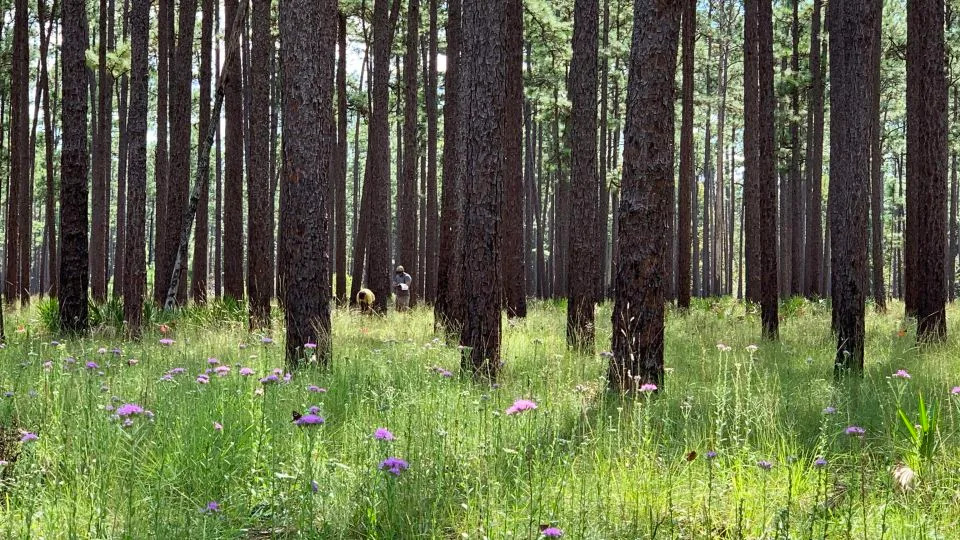
Flowers and grass grow between the trunks of pines in Austin Cary Forest, a scene indicative of what the pine savannah looks like later in the regrowth process, Rae Crandall said. Since she uses this area to conduct research, she sees the cycle from flames to regrowth happen repeatedly over years. - Courtesy Rae Crandall
Why These Changes Matter
Researchers emphasize that fire itself is a natural and often necessary process. The central concern is the change in fire behavior: higher temperatures, more extreme drought, and larger, faster moves of flames driven by climate change are producing conditions that exceed the historic resilience of many tree species. That pattern can create a feedback loop: burning forests release carbon, which contributes to warming and increases the risk of further intense fires.
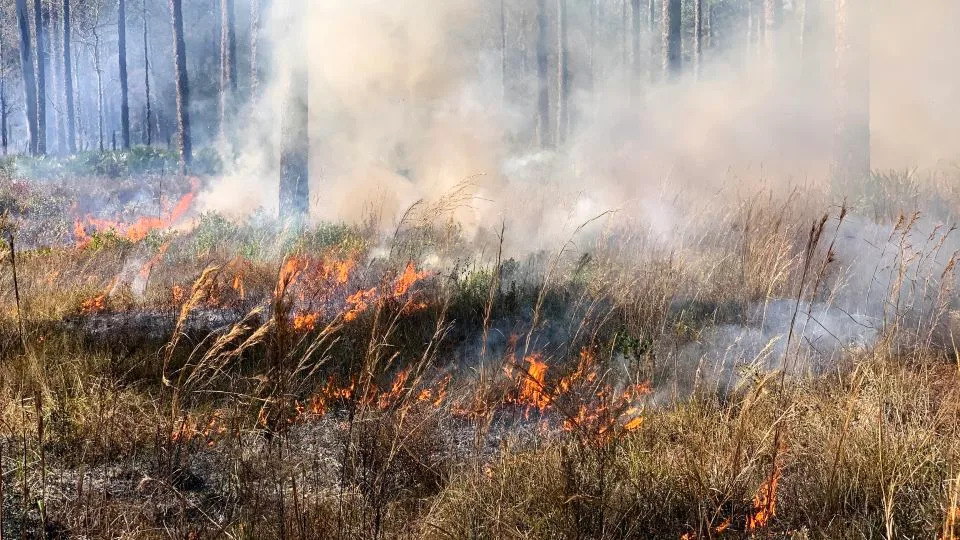
Smoke floats through a pine savanna grove as grasses and other vegetation close to the ground burn during a prescribed fire on January 29, 2021. The fire was done at the Austin Cary Forest, which is owned and managed by the University of Florida. - Courtesy Rae Crandall
Not One Tipping Point — Many Local Thresholds
Scientists do not expect a single, synchronous national collapse. Instead, many landscapes are likely to cross local thresholds at different times, depending on climate, species composition, fire history, and land management. As Turner put it, "The forest is responding to many things at the same time," and managers may be surprised by both losses and unexpected resilience.
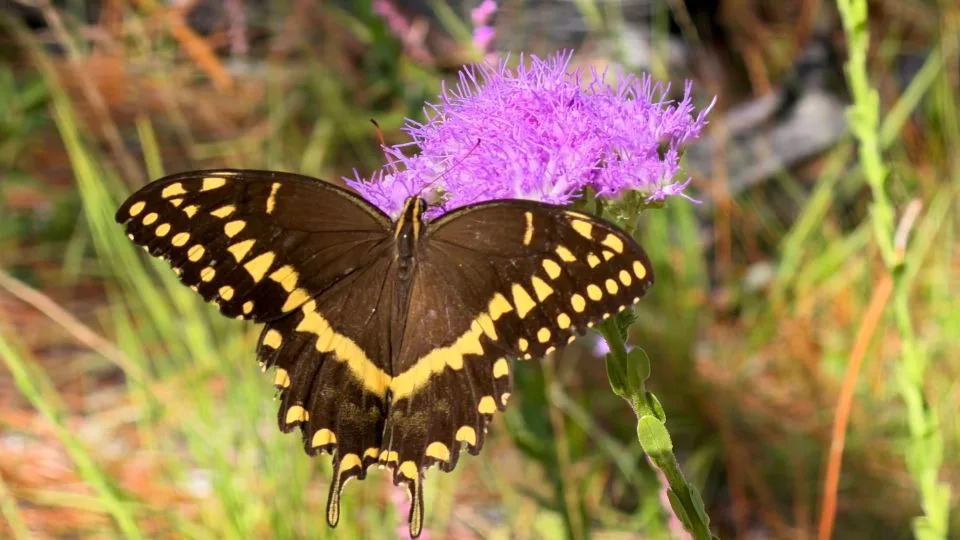
A Palamedes swallowtail butterfly rests on a Florida paintbrush in the pine savannah grove at the University of Florida's Austin Cary Forest on October 12, 2025. The wildflower is one of the many native plants that bloom shortly after fire takes place in the pine savannas, Rae Crandall said. - Courtesy Rae Crandall
Key recent fires referenced: Yellowstone (1988), Maple Fire (2016), Las Conchas (2011, ~156,000 acres), Wallow (2011, ~500,000+ acres), Dixie (2021), Star Fire (2001) — all illustrative of changing outcomes when fire intensity increases.
What Managers And Communities Can Do
Options include restoring more frequent, low‑intensity burns where ecologically appropriate, landscape‑scale fuel treatments, and protecting climate‑refugia sites. Public education about the role of prescribed fire and targeted investments in restoration and monitoring can reduce the probability of permanent conversion from forest to shrubland or grassland.
Conclusion
Hotter, faster wildfires are already reshaping many American forests. Some areas — like parts of Florida — demonstrate that proactive prescribed burning can sustain fire‑adapted ecosystems. Elsewhere, repeated high‑intensity fires and climate stressors make long‑term forest recovery uncertain. The outcome will depend on how climate trends evolve and on the land‑management choices communities and agencies make in the coming decades.
Help us improve.