The Georgia Supreme Court unanimously limited the longstanding rule that broadly shielded government from paying compensation when property was damaged under the "police power." The ruling came after Blue 42 Organics alleged the Georgia Department of Public Safety destroyed about $37,000 of legally registered hemp during a July 2021 exercise. The court overruled McCoy v. Sanders (1966) but preserved narrow exceptions for nuisance abatement and urgent-necessity destruction, leaving the door open for more compensation claims against state action.
Georgia Supreme Court Curbs Police-Power Immunity After $37,000 Hemp Destruction

Midjourney
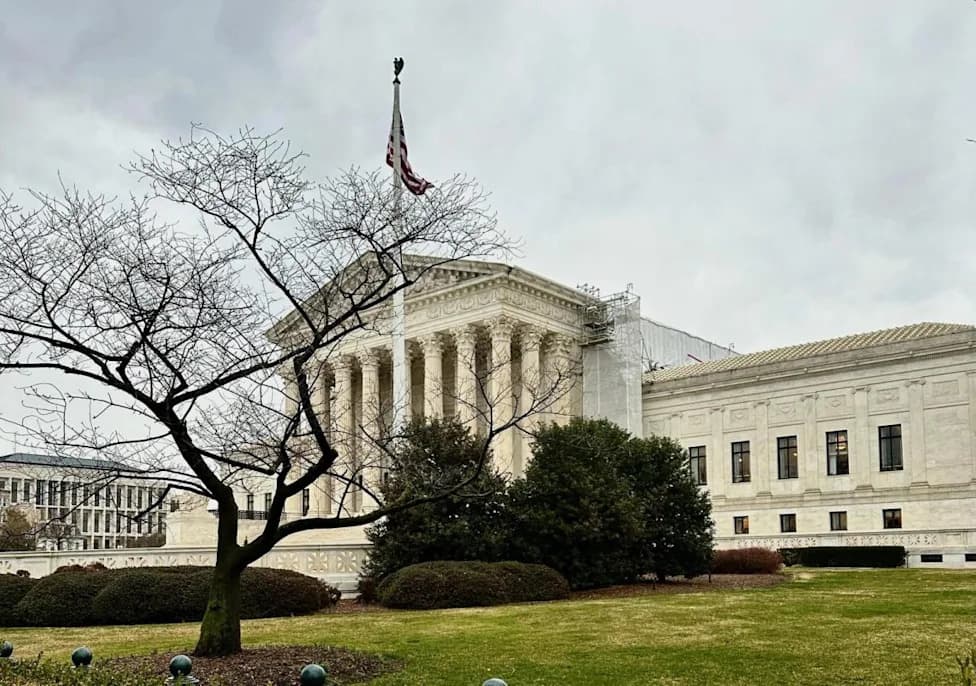
The Georgia Supreme Court delivered a unanimous opinion that narrows decades-old legal immunity for government actions taken under the so-called "police power," reviving the ability of property owners to seek just compensation when state agents damage private property. The case arose after the Georgia Department of Public Safety allegedly destroyed roughly $37,000 worth of legally registered hemp belonging to Blue 42 Organics, LLC during a July 2021 "drug-suppression exercise."
Background
Blue 42 Organics, a licensed hemp grower registered with both the Georgia and U.S. Departments of Agriculture, sued the State seeking compensation under the Georgia Constitution's Just Compensation Clause, which provides that "private property shall not be taken or damaged for public purposes without just and adequate compensation being first paid." The trial court dismissed the claim, holding that actions taken pursuant to the State's police power are categorically exempt from compensation. That ruling was initially affirmed on appeal.
The Supreme Court's Ruling
The Georgia Supreme Court unanimously rejected the broad immunity doctrine. The justices held that allowing the State to avoid compensation simply by invoking the police power would render the constitutional protection meaningless. The court explained that if nearly any government action could be labeled "police power," the Just Compensation Clause would be effectively nullified.
"The Constitution's promise to protect private property rights would be an empty one if the State is permitted to avoid paying just compensation for taking or damaging private property merely by invoking the police power."
In reaching its decision, the court expressly overruled McCoy v. Sanders (1966), a long-standing Georgia precedent that had been interpreted to bar compensation when state agents damaged property while exercising police or governmental power — a rule the court found too broad.
Narrow Exceptions Remain
The court preserved two narrow, well-established categories in which compensation is not required: (1) abatement of nuisances and (2) destruction of property in cases of urgent necessity (for example, demolishing structures to stop a spreading fire, as recognized in Bowditch v. Boston (1879)). Outside those limited contexts, property owners may have a viable takings or damage claim.
National Context and Other Cases
Similar disputes have arisen across the United States. Plaintiffs such as Amy Hadley (Indiana) and Carlos Pena (California) alleged extensive property damage from law-enforcement actions and were denied compensation under comparable doctrines; their cases have reached for higher review. The U.S. Supreme Court has declined to resolve this tension, with Justice Sonia Sotomayor (joined by Justice Neil Gorsuch) noting in 2024 that the issue is complex and warrants further development in lower courts. A notable state-level success occurred in Texas, where Vicki Baker ultimately recovered under the state constitution after her home was destroyed during a law-enforcement operation.
Implications and What Comes Next
The Georgia decision sharply reduces the blanket shield that had insulated government agents from compensation claims tied to police-power actions. It will likely spur new litigation as property owners test the boundaries between legitimate, uncompensated emergency actions and government conduct that requires compensation. Government agencies may revise training and operational protocols to limit collateral property damage and exposure to claims.
Bottom line: The ruling restores a meaningful pathway for Georgians to seek compensation when state action damages private property, while preserving narrow exceptions for urgent emergency actions and nuisance abatement.
Help us improve.