The article reports on a settlement that curbed Humboldt County’s practice of imposing massive code fines on new property owners for alleged cannabis- and building-code violations committed by prior owners. Plaintiffs including Corrine and Doug Thomas, Blu Graham, and Rhonda Olson faced penalties ranging from hundreds of thousands to millions of dollars while awaiting administrative hearings. The Ninth Circuit allowed an Eighth Amendment excessive-fines claim to proceed, and the county agreed to require warning letters, pause fines until hearings conclude, hold hearings within 60 days, and cancel the plaintiffs’ fines.
Humboldt County Agrees To Settlement After New Owners Were Hit With Over $1M In Code Fines
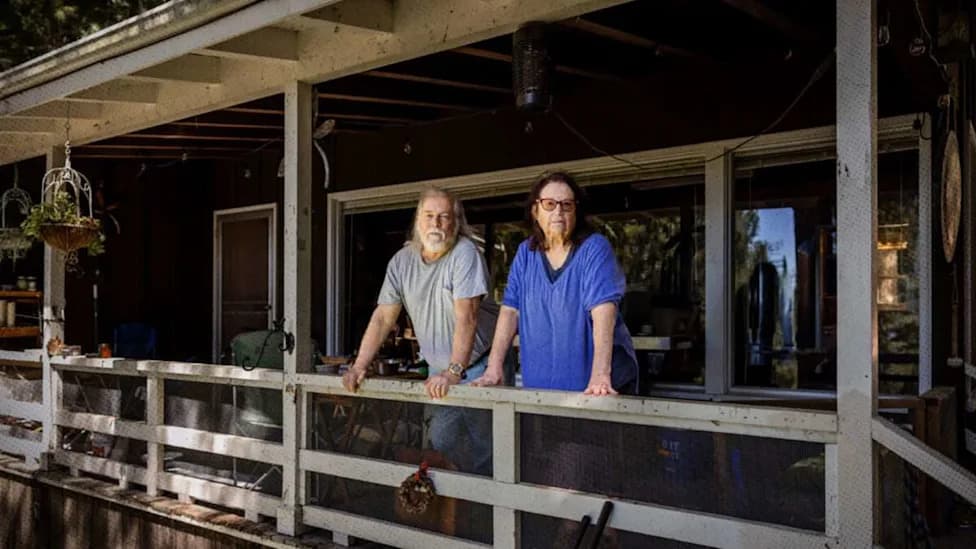
Corrine and Doug Thomas Institute for Justice
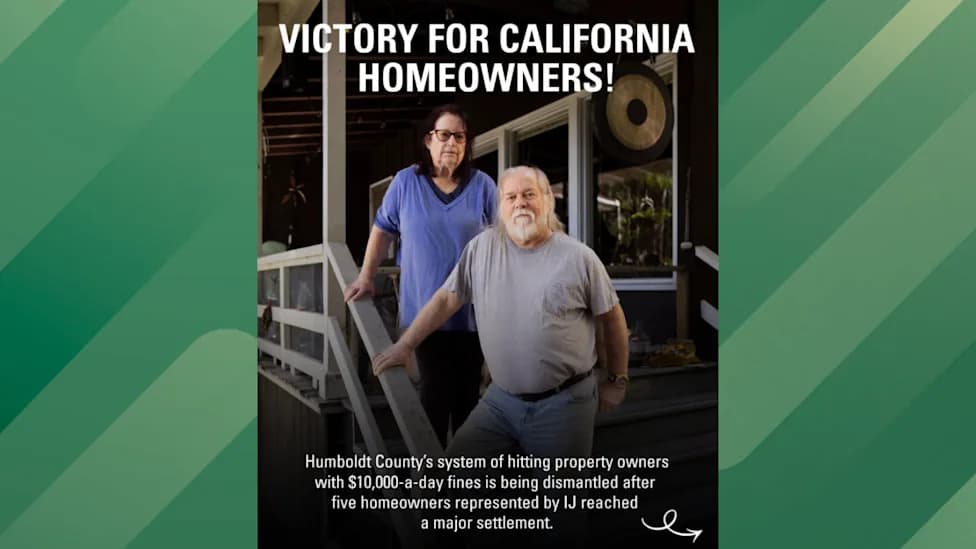
A settlement with several property owners has forced Humboldt County, California, to change a controversial code-enforcement practice that saddled new owners with crippling fines for alleged cannabis- and building-code violations committed by prior owners.
What happened to the plaintiffs? Corrine and Doug Thomas discovered six days after moving onto their rural property that the county had flagged the parcel for "violation of the commercial cannabis land use ordinance," construction "in violation of building, plumbing, and electrical codes," and maintaining "facilities or activities in violation of the commercial cannabis land use ordinance." Under county policy at the time, fines accumulated at $12,000 per day for up to 90 days, and could continue to accrue while owners waited—often years—for hearings. The Thomases were told they could demolish the structure in question, but that would have cost an estimated $180,000 plus ongoing fines and fees.
How did the county identify alleged violations? Attorneys for the Institute for Justice (I.J.) explained in a petition to the U.S. Supreme Court that Humboldt County's code-enforcement officers scan satellite imagery for signs of unpermitted development — greenhouses, sheds, graded land, or tree removal — and then presume, without further investigation, that the current landowner built those structures without a permit and was growing cannabis.
I.J. represented multiple plaintiffs. Blu Graham waited four-and-a-half years for a hearing to prove he was using a greenhouse for vegetables rather than cannabis. Rhonda Olson faced $7.4 million in fines that had been assessed against a prior owner of a parcel she bought for $60,000. The plaintiffs asked the U.S. Supreme Court to recognize a Seventh Amendment jury-trial right for such enforcement disputes; the Court declined to hear the case.
However, the U.S. Court of Appeals for the Ninth Circuit allowed the lawsuit to proceed on Eighth Amendment grounds, finding the plaintiffs plausibly alleged the county's enforcement scheme could amount to unconstitutional excessive fines. After that ruling, Humboldt County reached a settlement.
Terms of the settlement: The county agreed to send a warning letter before imposing penalties, pause fines until administrative hearings are resolved, and hold those hearings within 60 days. The settlement also wiped the plaintiffs' fines and fees. Those changes aim to provide meaningful due process and prevent immediate, ruinous penalties against new owners who did not commit the alleged violations.
Broader implications: Critics say Humboldt’s enforcement approach was at least partly motivated by a desire to capture revenue related to cannabis after legalization. The case highlights a broader national concern about local governments using code enforcement as a revenue source — for example, a Florida homeowner faced more than $165,000 in penalties for relatively minor violations like parking on grass.
Why it matters: The settlement reduces the risk that innocent property buyers will be bankrupted by fines based on presumptions and remote screenings rather than individualized investigations. It also establishes procedural safeguards — warning, prompt hearings, and stayed penalties — that other jurisdictions might adopt to avoid similar legal and public-relations fallout.
Help us improve.