Months of exceptional heat and dry weather have exposed Bessom Bridge, a Victorian stone crossing submerged nearly 50 years ago when Wimbleball Reservoir was created. Dr Lucy Shipley of Exmoor highlighted how the sight illustrates changing landscapes and noted other archaeological reveals, including a Bronze Age barrow. Wimbleball is at about 21.1% capacity (as of 27 September) and authorities say recent rain has not yet ended the drought; roughly 120% of typical rainfall over the next seven months would be needed to restore normal levels.
Victorian Stone Bridge Reappears as Wimbleball Reservoir Falls to 21%
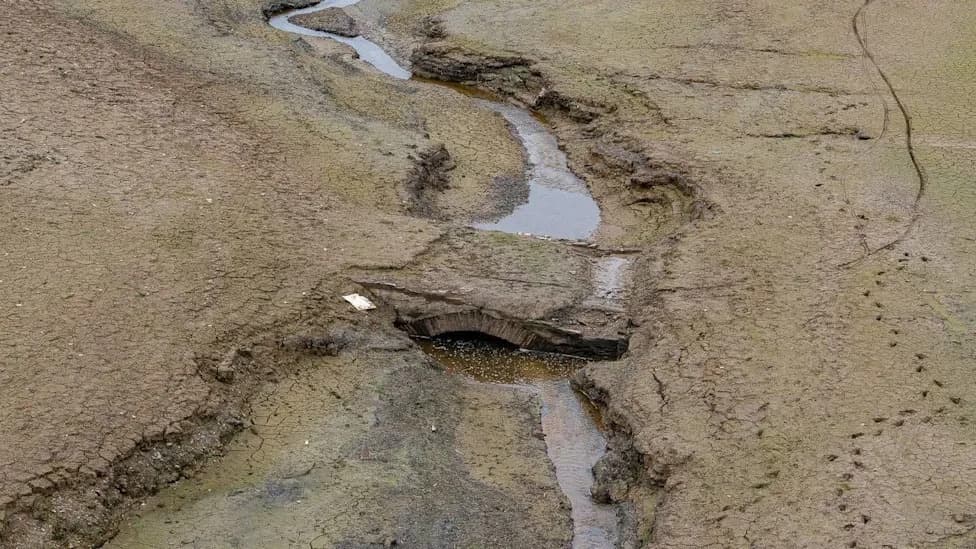
An ancient bridge underneath Wimbleball Lake has resurfaced due to prolonged dry weather [Jim Bray]
Months of prolonged heat and dry weather have revealed a Victorian-era stone bridge that was submerged nearly 50 years ago when Wimbleball Reservoir was created in Exmoor National Park, Somerset.
The original Bessom Bridge, built in the 1800s, was flooded when the reservoir was constructed and later replaced by a newer crossing on the lake’s north side. With water levels unusually low, the old bridge now emerges from silt and can be seen from the modern bridge when conditions allow.
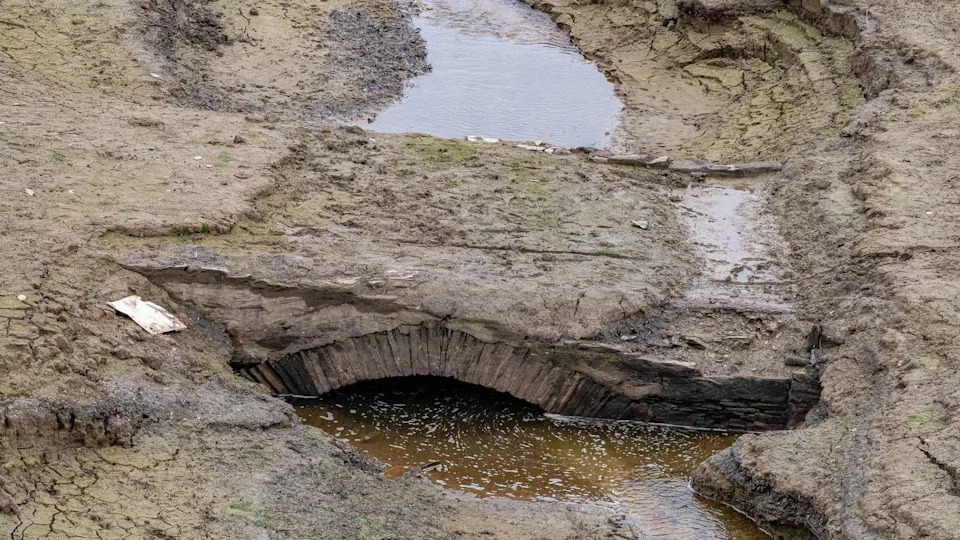
The bridge dates back to the 1800s [Jim Bray]
Dr Lucy Shipley, historic environment record officer for Exmoor, said the reappearance highlights how landscapes continually change.
“We live in an ever-changing world and it's not a fixed point where things stay the same,” she said. “The photographs are incredible — so dramatic, with the bridge poking out from the silt and sediment that has covered it.”
Shipley added that other archaeological features that were not removed before the valley was flooded have also been exposed as levels have fallen, including a Bronze Age barrow. It remains unclear why some buildings and structures were demolished before flooding while others were left in place.
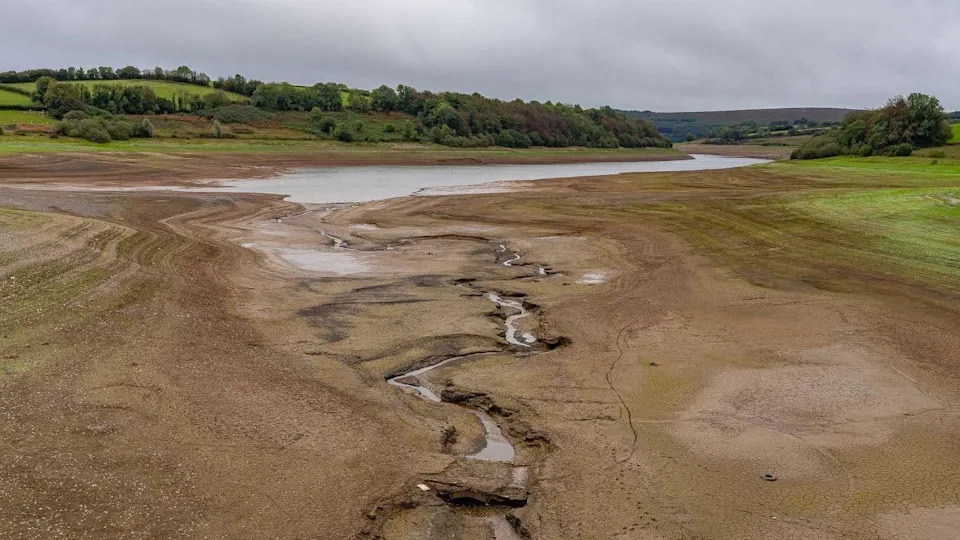
Water levels at the reservoir remain low after prolonged heat and dry weather [Jim Bray]
Wider Impact and Local Finds
Across Somerset, the record summer heat has revealed traces of historic landscapes elsewhere: centuries-old gardens at the Bishop’s Palace in Wells and foundations at Glastonbury Abbey have emerged as the ground has dried and reservoir levels have fallen.
Reservoir Levels and Drought Status
Wimbleball Reservoir, which supplies water to hundreds of thousands of homes across the South West, has a capacity of 21,320 megalitres (one megalitre = one million litres). As of 27 September, South West Water reported the reservoir was at around 21.1% of capacity.
Authorities say recent rainfall has not been sufficient to end the drought. The National Drought Group warned that rivers, groundwater and reservoirs must return to normal levels before drought can be declared over; Environment Agency analysis suggests the country would need about 120% of typical rainfall over the next seven months for all areas to be considered out of drought.
Public Safety and Conservation
Dr Shipley urged visitors to admire the historic bridge from a distance and not to walk on the exposed bed of the reservoir to protect sensitive archaeology and ensure personal safety. Local agencies continue to monitor conditions and appeal for water conservation while supplies recover.
Help us improve.