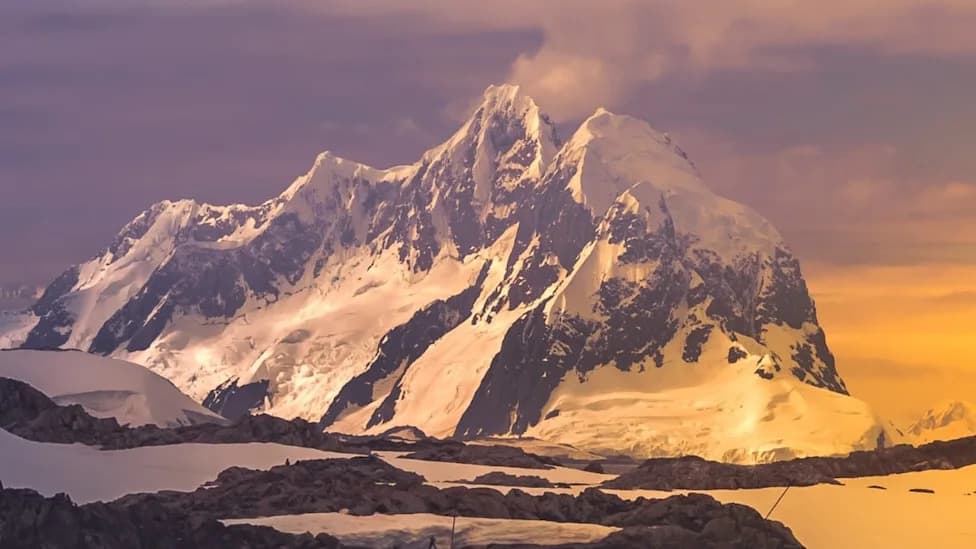
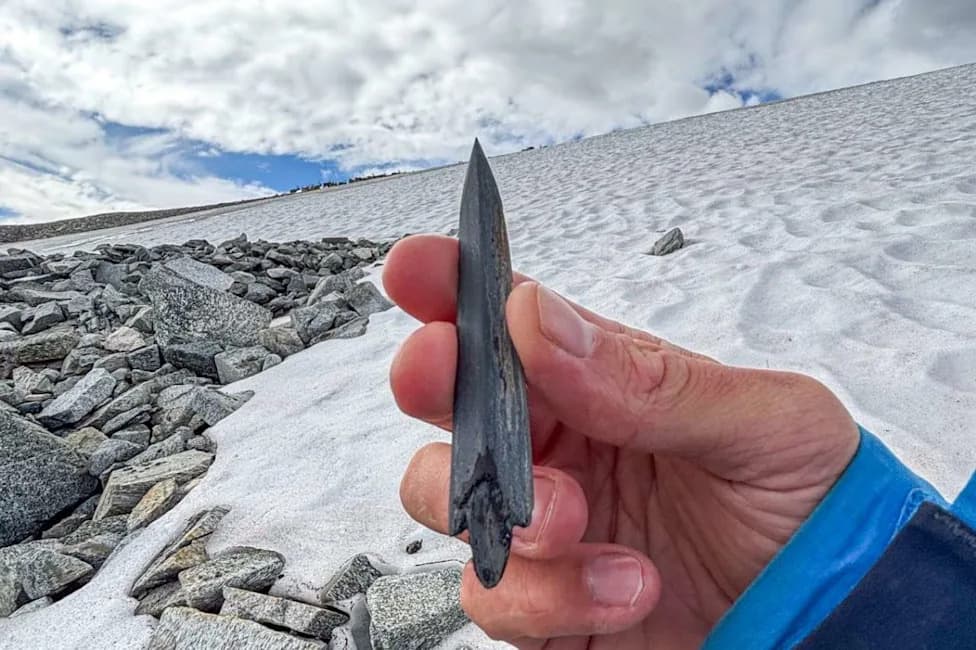
The Guliya Plateau in northwestern Tibet holds ancient ice fragments that extend Earth’s mountain-based glacial record by over 100,000 years, possibly past 128,000 years. Matching oxygen-isotope trends in cores drilled in 1992 and 2015 indicate reproducible climate signals. Researchers used beryllium and chlorine isotopes and identified the Laschamp Geomagnetic Excursion (~41,000 years ago) to build a robust dating framework that challenges prior claims the record ended around 12,000 years ago.
Tibetan Ice From the Last Ice Age Extends Earth’s Climate Record Beyond 128,000 Years
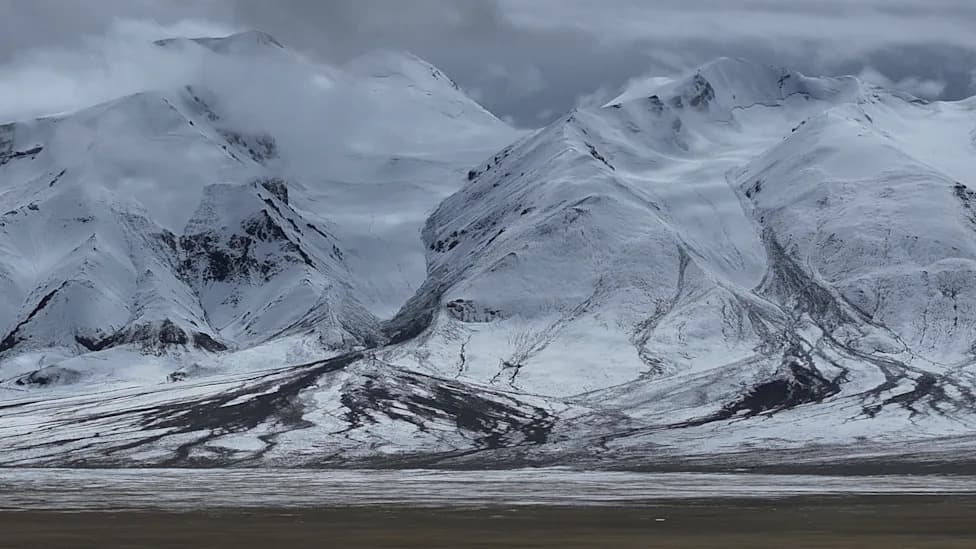
The glacier at Tanggula Pass on the border between Qinghai and Tibet in Nagqu, Tibet, China, on August 7, 2024.
Fragments of ice formed during the last ice age still survive on the Guliya Plateau in northwestern Tibet, buried beneath roughly 98 feet (30 meters) of ice. A new analysis of ice recovered from this ancient cap pushes Earth’s mountain-based glacial record back by more than 100,000 years and suggests some layers may be older than 128,000 years.
What the Study Found
Researchers compared ice cores drilled on the Guliya Plateau (about 19,370–20,340 feet above sea level) in 1992 and again in 2015. Both cores show matching oxygen-isotope trends, indicating that the environmental signals preserved in the ice are consistent and reproducible over decades. Using measurements of radioactive isotopes of beryllium and chlorine, the team detected the chemical signature of the Laschamp Geomagnetic Excursion — a brief reversal or excursion of Earth’s magnetic field that occurred roughly 41,000 years ago — and used it as a chronological marker.
Methods and Dating
The study applied advanced radiochemical dating techniques to identify cosmogenic isotopes (beryllium and chlorine) that are produced in the atmosphere and incorporated into snowfall. These isotopic markers, combined with oxygen-isotope patterns and comparison to nearby cave records, strengthen the interpretation that Guliya’s record extends well beyond 128,000 years.
Why It Matters
Outside polar regions, long continuous ice records are rare. If validated, the Guliya cores provide one of the few mountain-glacier archives that reach back past a full glacial cycle, offering a new window into how high-elevation climates behaved through glacial–interglacial transitions. The findings also challenge earlier interpretations that suggested the Guliya sequence ended around the Mid-Holocene (~12,000 years ago).
“Reproducibility of the records within a given ice cap is extremely important,” said Lonnie Thompson, a co-author and paleoclimatologist at The Ohio State University. “If you get an identical record a quarter of a century later, it can tell you a lot about the behavior of the ice over time.”
Preservation Factors and Next Steps
Guliya’s high elevation, cold temperatures, and rugged topography likely help preserve ancient snow and ice layers that would be lost elsewhere. Continued analysis of trapped gases, dust, and additional isotopic markers in these cores could refine the timeline and reveal how regional and global climates changed across more than 100,000 years.
Bottom line: The Guliya Plateau ice cores offer an unusually long, reproducible mountain-glacier climate record that may extend Earth’s nonpolar ice history to beyond 128,000 years, improving our understanding of glacial cycles and long-term climate change.
Help us improve.