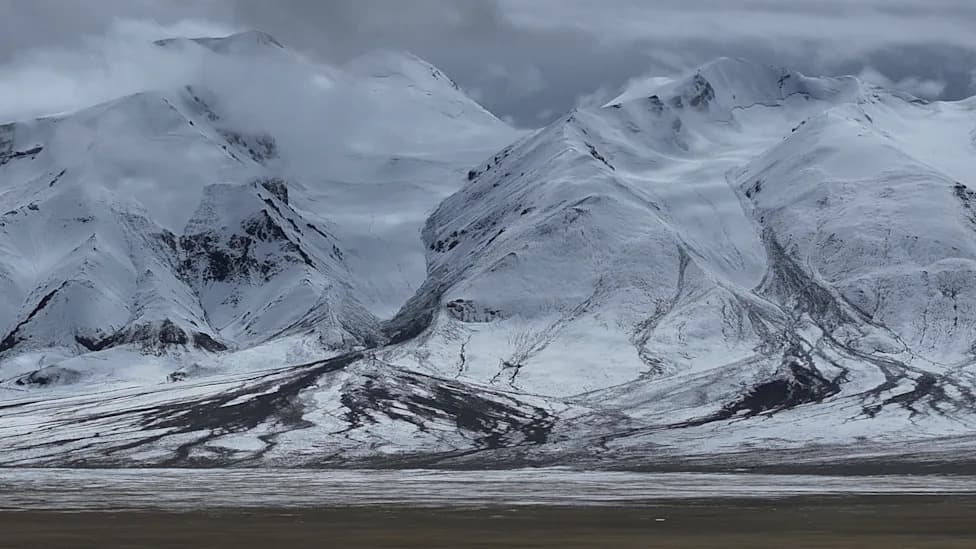
The Glacier Archaeology Program's three-week expedition in Norway's Jotunheimen mountains uncovered a rare Stone Age arrow dated to about 5,000–6,000 years old and many other artifacts as ancient ice patches melt. Since 2006 the program has recorded 73 ice sites and recovered over 5,000 objects. Researchers report an increasing share of finds older than 2,000 years, including Stone Age and Bronze Age items, and warn that many sites may disappear within 20 years, creating a narrow window for recovery.
Rare 5,000–6,000-Year-Old Arrowheads Revealed as Norway's Mountain Ice Rapidly Melts
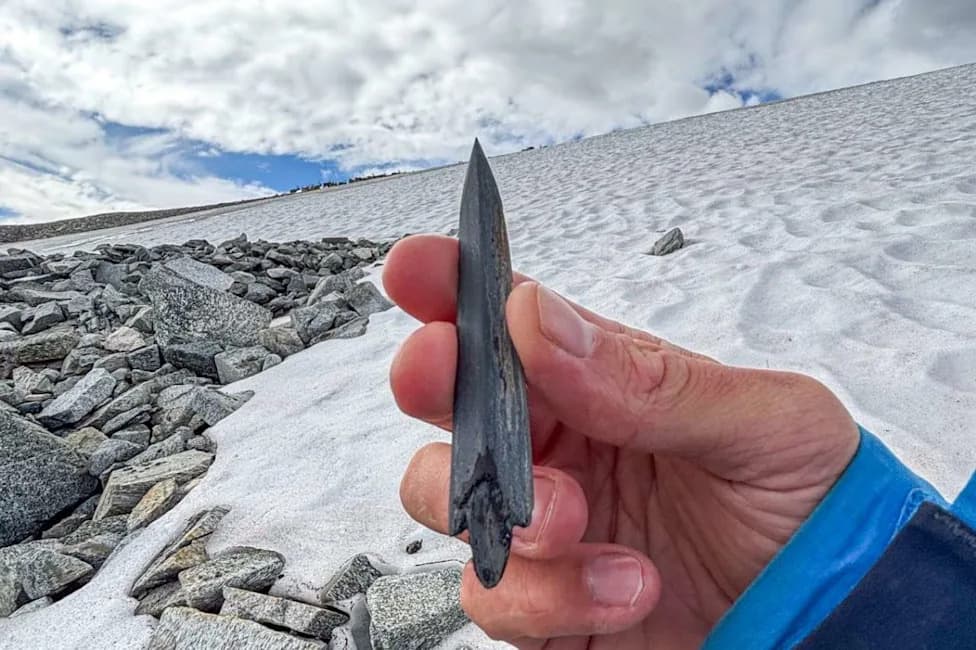
An ancient slate arrowhead, dating to approximately 5,000 years ago, was discovered in melting ice in Norway.Credit: Ã
sa Rommetveit Celius, Innlandet County Municipality, Secrets of the Ice.
After an "intense" three-week field season in Norway's Jotunheimen mountains, archaeologists with the Glacier Archaeology Program reported dramatic finds: Stone Age arrowheads and thousands of other objects emerging as ancient ice patches retreat.
Notable Finds
Field teams working in the Kvitingskjølen area—at Langfonne, Storfonne and Hadklefonne in Innlandet—documented an arrow dated to roughly 5,000–6,000 years ago, complete with its wooden shaft and bindings. Photographs from the expedition show the well-preserved arrow and other artifacts that survived millennia in the ice.
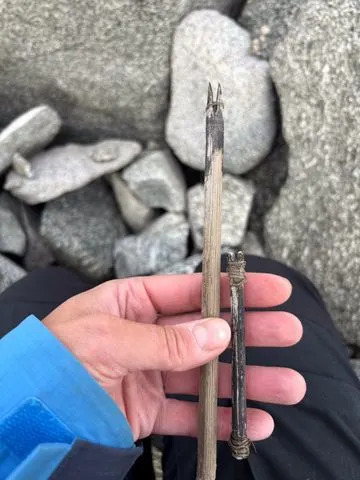
A 5,000 to 6,000 year-old arrow with its wooden shaft and bindings.Credit: Åsa Rommetveit Celius, Innlandet County Municipality, Secrets of the Ice.
Scope of the Program
The Glacier Archaeology Program, a collaboration between Innlandet County Council and the Museum of Cultural History in Oslo, began systematic surveys in 2006. Since then the team has recorded 73 archaeological ice sites and recovered more than 5,000 artifacts, including arrows, bows, hunting equipment, clothing, shoes and pack gear.
"For thousands of years, ancient ice has safely preserved unique objects from the past. Now that ice is disappearing," wrote researcher Espen Finstad, who summarized the recent field season on the program's Secrets of the Ice website.
Why This Matters
As ice patches shrink, older layers are exposed, and the program is increasingly recovering material older than 2,000 years — many items now date to the Stone Age and Bronze Age, and the oldest finds exceed 6,000 years. Several recent discoveries provide direct evidence of reindeer hunting and illustrate everyday life in high mountain environments over millennia.

Archaeologist Espen Finstad hold a prehistoric arrow recovered from melting mountain ice in Norway.Credit: Espen Finstad, Innlandet County Municipality, Secrets of The Ice.
Urgency and Outlook
Finstad warns that many of the archaeological ice sites the team studies could be completely gone within 20 years. "Every field season matters," he emphasizes, because organic objects decay quickly once they emerge from the retreating ice. The shrinking ice therefore creates a narrow window to document and preserve fragile artifacts before they are lost to decay.
What researchers will do next: continue targeted surveys, recover and conserve newly exposed objects, and document sites to build a record of prehistoric mountain use while the ice remains.
Help us improve.