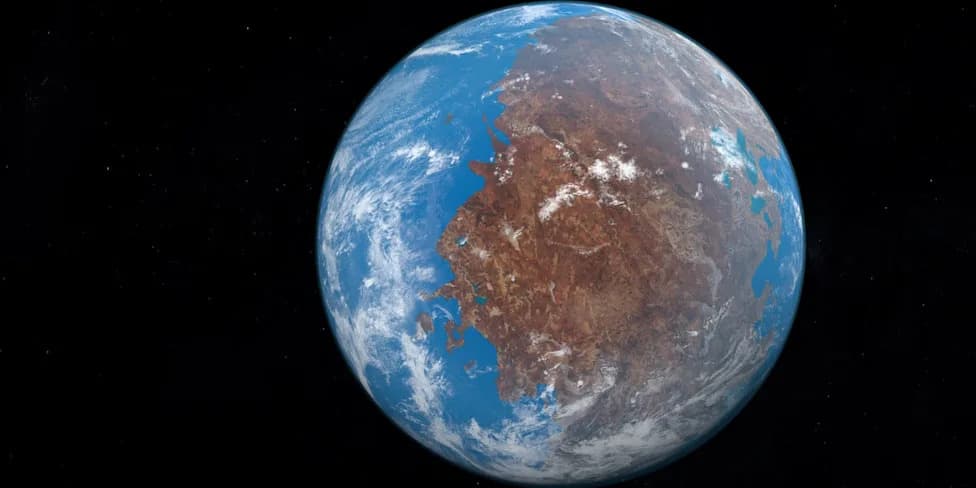
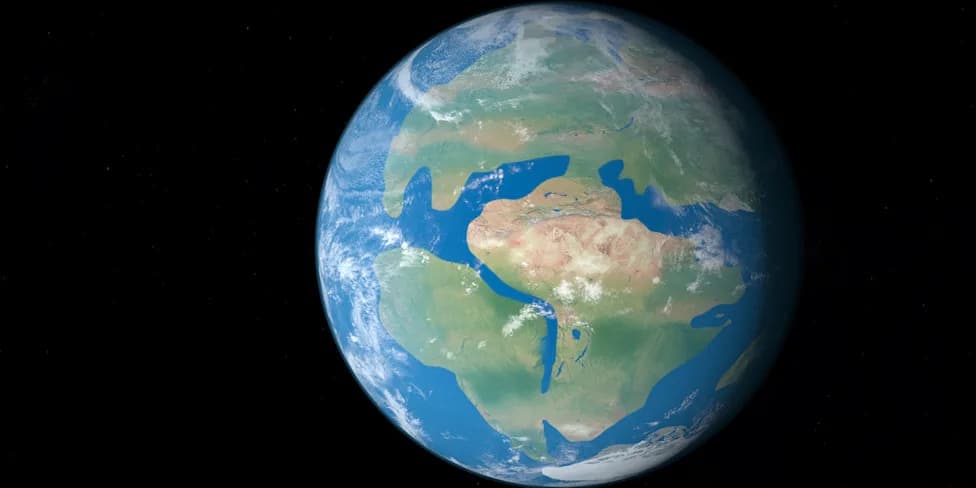
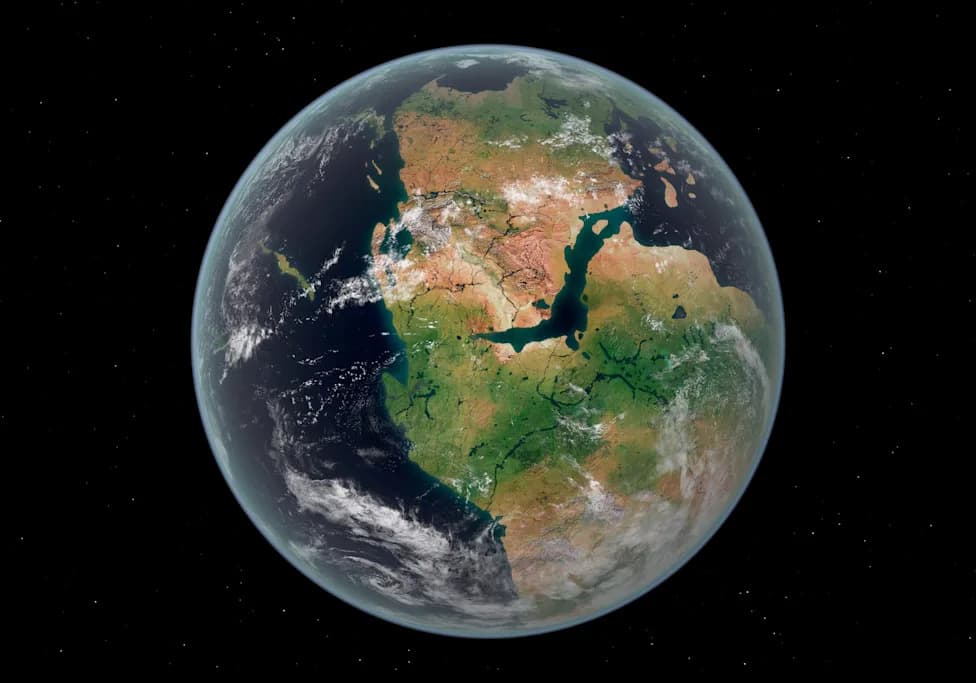
New zircon analyses from Antarctic-derived marine sediments point to large mountain-building during Gondwana assembly between about 650 and 450 million years ago. Some zircons carry chemical signatures of deep crustal roots consistent with Himalayan-scale ranges, and erosion of those mountains could have delivered nutrients to the oceans and enabled rapid burial of organic carbon. The authors argue these processes may have helped raise atmospheric oxygen and created favorable conditions for early animal diversification, though important timing and magnitude uncertainties remain.
Ancient Himalayan-Scale Mountains May Be Buried Under Antarctic Ice — And May Have Helped Fuel Complex Life
(Goinyk Production/Canva)
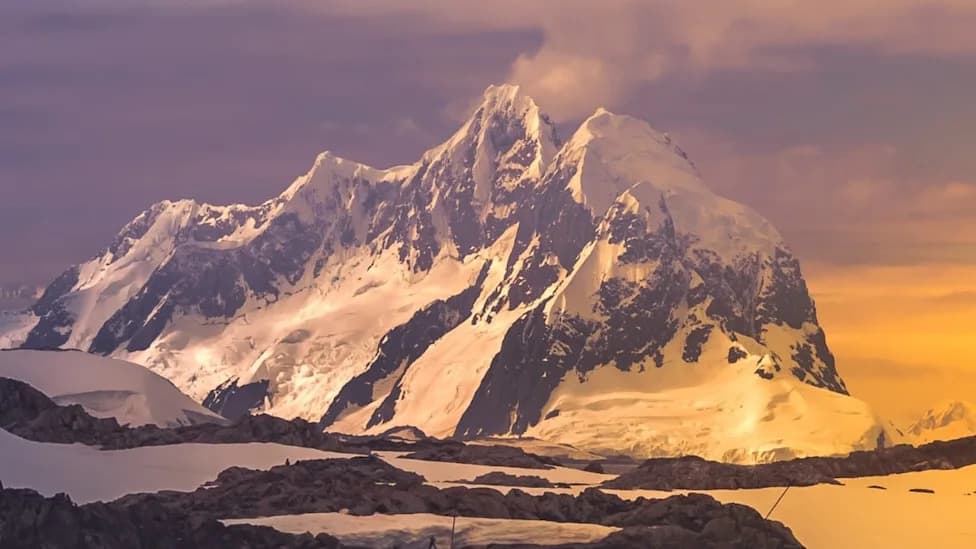
Antarctica is best known as a continent shrouded in ice, but new research suggests that beneath that frozen shell may lie the roots and sedimentary remains of mountain ranges that rivalled today’s Himalayas. Those mountains, formed during the assembly of the supercontinent Gondwana, could have profoundly influenced ocean chemistry, atmospheric oxygen and the environmental stage for early animal diversification.
What The Study Did
Because more than 99.5 percent of Antarctica is covered by ice, direct geological sampling is extremely limited. Two geologists at the Australian National University therefore studied zircon mineral grains carried into marine sediments off Antarctica. They combined 1,712 newly analyzed zircon grains with thousands of previously studied Antarctic zircons and integrated these data into a global compilation.
Key Findings
The zircon age distribution shows a pronounced signal between about 650 and 450 million years ago, the interval when Gondwana assembled. When Antarctic data were area-weighted in the global dataset, the Gondwana orogenic pulse became the largest supercontinent-related mountain-building signal in the compilation.
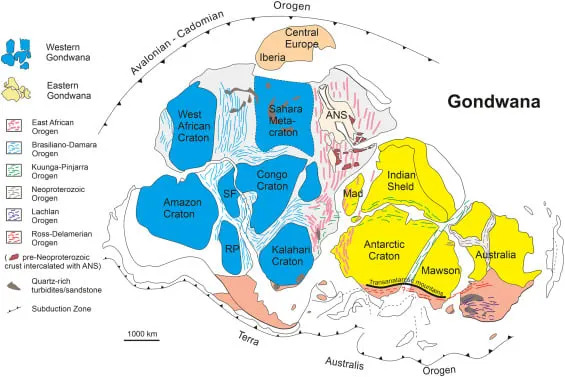
Reconstruction of Gondwana highlighting core blocks, interior orogens, and peripheral orogens. (Chen and Campbell,Earth and Planetary Science Letters, 2026.)
Beyond ages, some zircon grains bear chemical signatures diagnostic of deep crustal or mantle-derived roots consistent with the high pressures found beneath very tall mountain belts. The abundance of these deep-root indicators in the Gondwanan record supports the idea that some belts were Himalayan in scale. The authors infer that collisions among blocks now forming parts of Antarctica, India, Australia and the Kalahari craton created those towering ranges.
From Rocks To Life
As mountains rose they were heavily eroded. The resulting sediments would have been washed into adjacent oceans, possibly producing among the largest turbidite fan systems in Earth history, with older portions now potentially buried beneath Antarctic ice.
Crucially, erosion liberates nutrients such as phosphorus and iron that stimulate marine primary producers like algae and cyanobacteria. Greater primary productivity can boost oxygen production, but a lasting atmospheric rise in oxygen also requires rapid burial of organic carbon and other reduced materials so that newly produced oxygen is not consumed again.

Subscribe to ScienceAlert's free fact-checked newsletter
The researchers propose that sustained nutrient delivery from the eroding Gondwanan mountains, combined with rapid burial of organic-carbon- and pyrite-rich sediments, could have increased net oxygen levels and supplied the food and chemical building blocks needed for biomineralized animals to flourish. They emphasize that this scenario provides favorable environmental conditions rather than proving a direct cause of the Cambrian explosion.
Uncertainties And Caveats
The authors explicitly note important uncertainties: the timing and magnitude of atmospheric oxygen increases remain imperfectly constrained, and their oxygen-budget estimates do not constitute definitive proof. They also acknowledge earlier geochemical changes around 800 million years ago that their model does not fully explain.
In short: continental collisions likely built very high mountains, erosion delivered nutrients to the oceans, organic-rich sediments were buried, and these processes together may have helped create conditions that supported early animal diversification. Much of the geological evidence may still lie hidden beneath today’s Antarctic ice, awaiting future study.
Reference: Chen and Campbell, Earth and Planetary Science Letters, 2026.
Help us improve.