The indri, a large folivorous lemur from Madagascar, produces long, melodic calls that researchers now link to an opera-style mechanism called formant tuning. A team from the University of Turin and the University of Warwick analyzed 83 videos of 19 wild indris and found that mouth opening predicts higher pitch, helping the calls carry across dense forest. With population estimates between roughly 1,000 and 10,000 and major threats from hunting and habitat loss, preserving wild habitat is critical to the species' survival.
Wild Indri Lemurs Use Opera-Style "Formant Tuning" To Project Haunting Calls
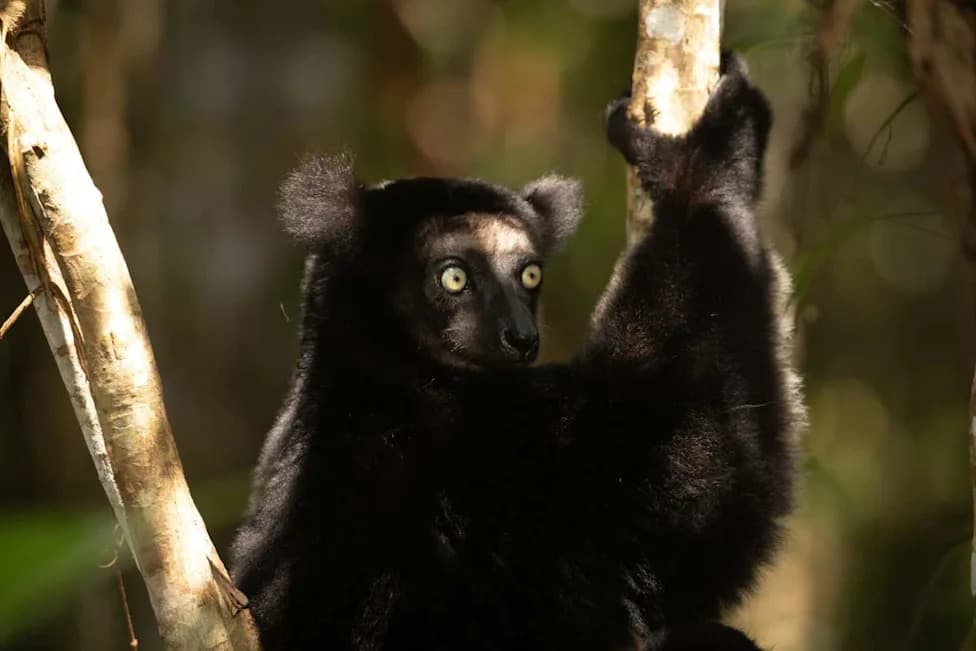
Lemur Indri indri, babakoto largest lemur from Madagascar© Bildagentur Zoonar GmbH/Shutterstock.com
Madagascar is home to more than 100 species of lemur, but the indri stands out for its size, diet and unforgettable vocalizations. Indris (also called babakotos) are large, black-and-white lemurs that move upright through the canopy, live in small family groups, and subsist mainly on young leaves. Their long, melodic calls can carry for miles across dense forest when individuals sing in synchrony.
New Study Links Indri Calls To An Opera Technique
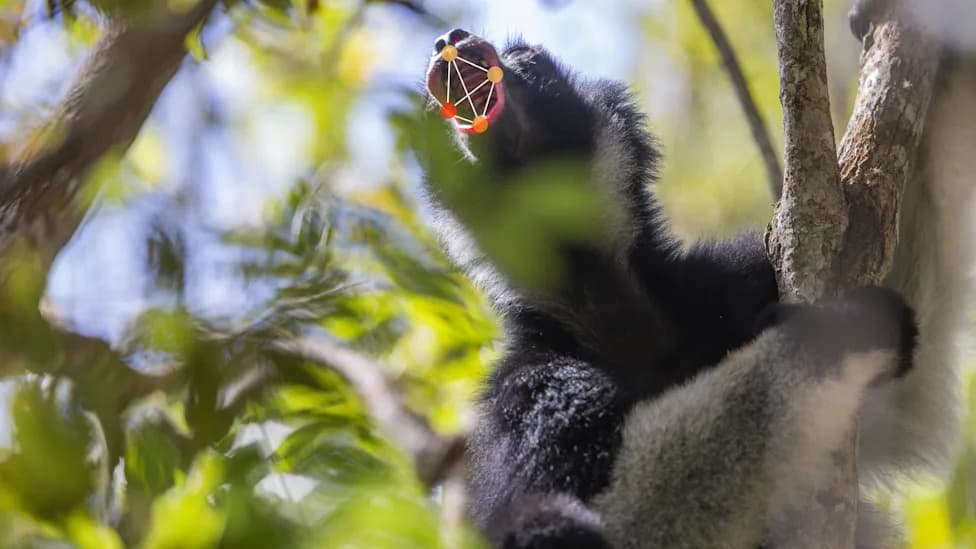
Researchers from the University of Turin, the University of Warwick and partner institutions analyzed field video and audio to uncover how indris produce these powerful calls. The team examined 83 video recordings of 19 wild indris recorded in Madagascar's Maromizaha Forest and the Mitsinjo Reserve, tracking facial and throat movements frame by frame and synchronizing them with sound.
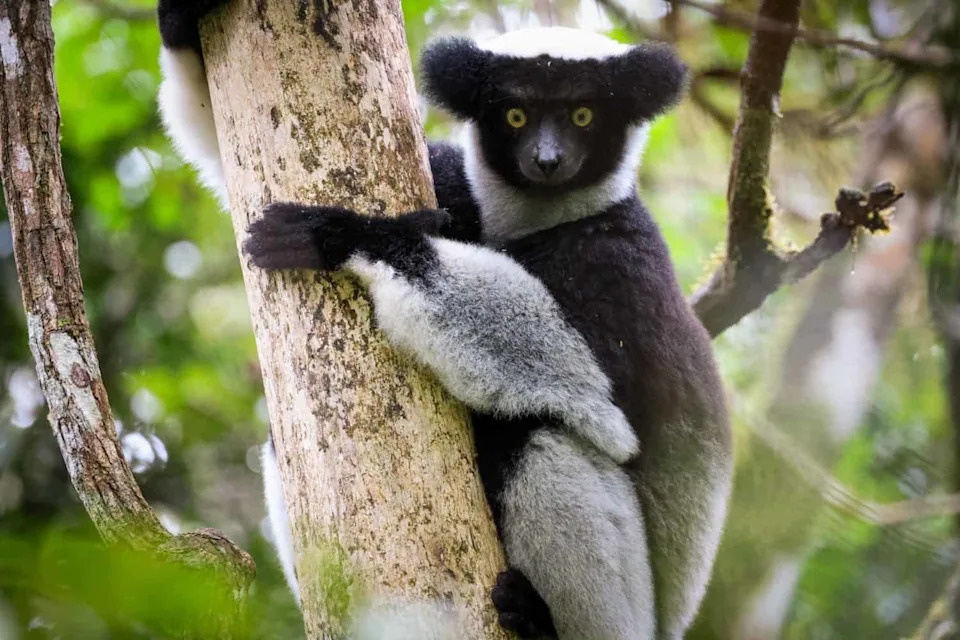
Despite their sacred status in local folklore, indri lemurs are at increasing risk due to hunting, agriculture, and habitat fragmentation.©Dave Primov/Shutterstock.com
The analysis revealed a consistent pattern: indris opened their mouths wider when producing higher-pitched notes. That relationship resembles a vocal strategy used by opera singers called formant tuning, in which subtle changes to the mouth and throat reshape resonant frequencies and help a voice carry farther.
Filippo Carugati, the study's lead author, described the calls as often "something between a wail and a siren: long, loud, rising and falling notes, quite haunting and almost mournful to human ears, but highly structured, sung as a duet with male and female phrases interlocking rather than simply overlapping."
Carugati and colleagues explain the effect with a simple analogy: the mouth and throat act like a tube whose shape determines which frequencies are amplified. Opening the mouth alters that tube and shifts the resonant frequencies, allowing higher notes to project more effectively through dense vegetation.
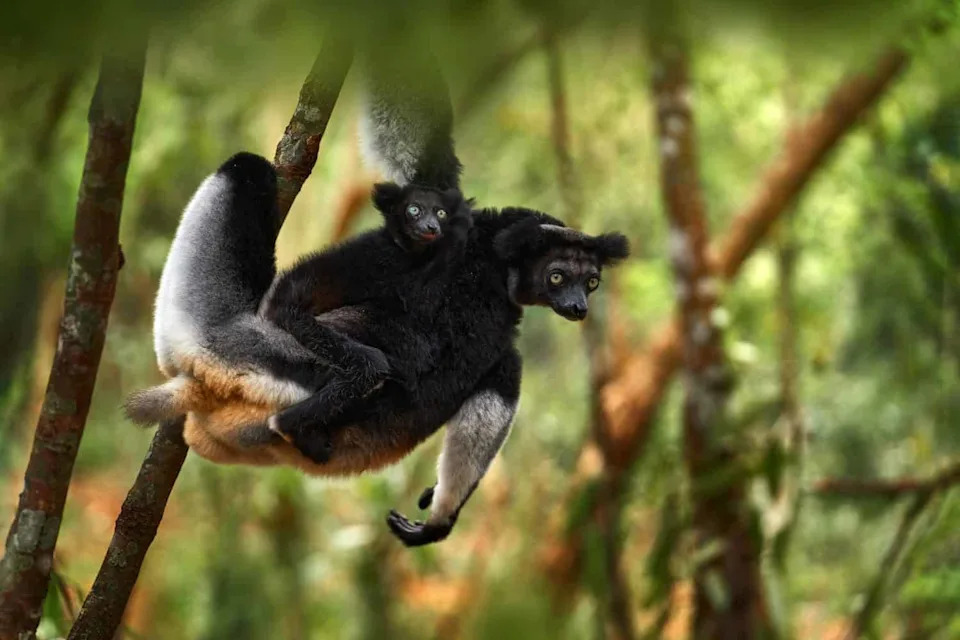
Indri lemurs' haunting songs are integral to their survival in the wild.©Ondrej Prosicky/Shutterstock.com
Social and Conservation Implications
Indri songs serve multiple roles: they reinforce territorial boundaries, coordinate between groups, and maintain social cohesion. The researchers observed that calls often lengthen when neighboring groups are nearby, underlining the songs' importance in intergroup communication.
Despite the indri's revered status in local folklore, the species faces growing threats from hunting, agricultural expansion and habitat fragmentation. Population estimates vary widely—commonly cited figures fall between about 1,000 and 10,000 individuals—and some models predict declines up to 80% over the next three generations without effective protections.
Co-author Chiara De Gregorio emphasized the conservation stakes: "Unlike many other species, indris have so far proved extremely difficult to maintain and reproduce in captivity. Their survival ultimately depends on protecting them in the wild."
The study not only sheds light on a striking example of vocal adaptation in primates but also highlights how behavioral research can inform conservation priorities: understanding how and why indris communicate helps make the case for preserving the forests they depend on.
Study details: 83 videos of 19 wild indris in Maromizaha Forest and Mitsinjo Reserve; analysis linked mouth opening to higher pitch, consistent with a formant-tuning–like mechanism. Reporting includes quotes to Reuters from lead authors.
Help us improve.