New research using probabilistic modelling finds that vocal sequences from three primate species — the common marmoset, olive colobus and bonobo — sometimes fit patterns better explained by nested (supra‑regular) grammars previously thought unique to humans. The study, posted as a preprint on bioRxiv, validated models on human recordings before applying them to primate calls. Results are probabilistic, from small datasets, and the authors stress the need for larger, context‑rich studies to determine whether these structures reflect language‑like meaning or formal organization akin to music or birdsong.
Primate Calls May Use Nested (‘Supra‑Regular’) Grammar Once Thought Uniquely Human
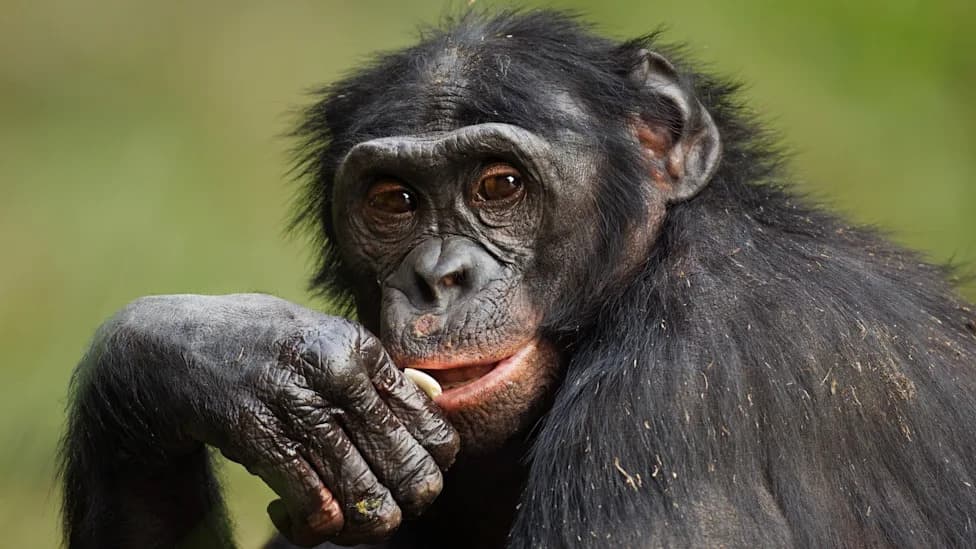
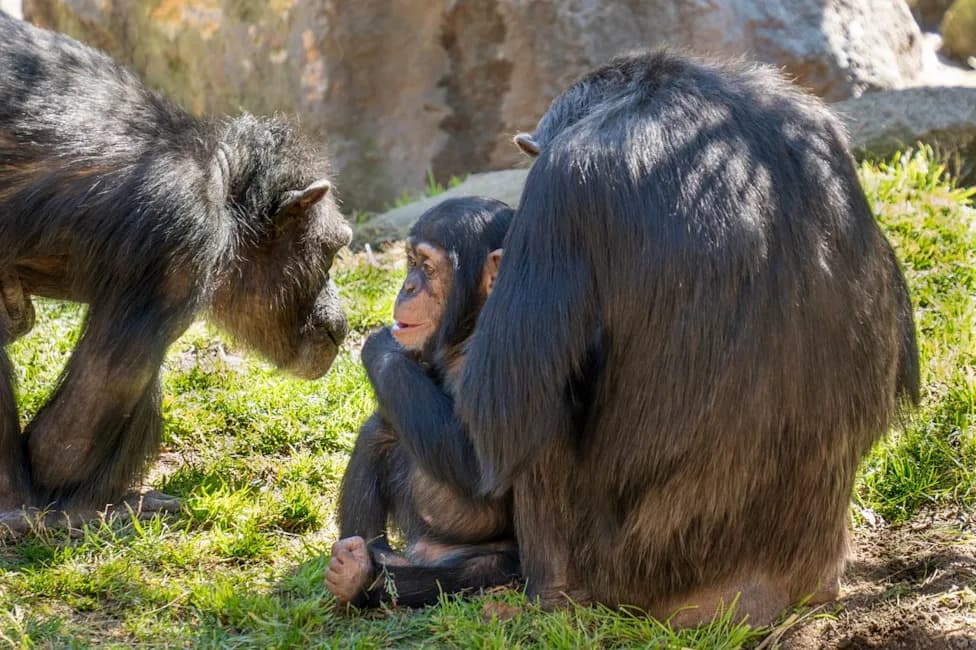
(Anup Shah/Stone RF/Getty Images)
Human language is highly flexible and builds complex meaning by nesting smaller grammatical units inside larger sentence structures. For decades, deeply nested — or "supra‑regular" — recursive grammar has been treated as a defining feature of human language. A new preprint suggests that elements of this kind of structure may also appear in the vocal sequences of some nonhuman primates.
Study and Methods
Researchers led by Remo Nitschke at the University of Zurich analyzed audio recordings from humans and three primate species: the common marmoset (Callithrix jacchus), the olive colobus monkey (Procolobus verus), and the bonobo (Pan paniscus). Because the meanings and combinatorial rules of primate call components are not yet known, the team used mathematical, probabilistic modelling to probe the underlying structure of call sequences.
They compared two probabilistic models: one representing a linear progression of elements (probabilistic regular grammar) and another allowing nested, hierarchical structure (probabilistic context‑free grammar). After validating the approach on human recordings, they applied both models to the primate datasets to see which model better explained the sequences.
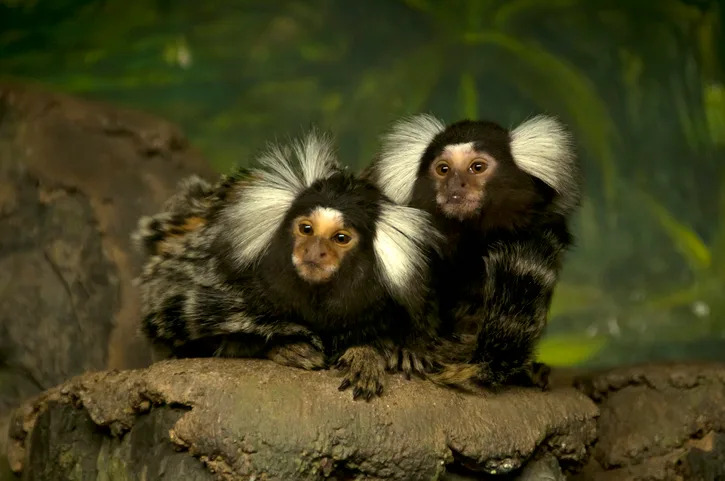
A pair of common marmosets. (Mark Newman/The Image Bank/Getty Images)
Key Findings
The analysis indicated that, for the datasets studied, the call sequences of all three primate species were sometimes better captured by models that permit nested (supra‑regular) structure rather than strictly linear sequences. If upheld by further work, this would narrow a long‑standing putative gap between human syntactic capacity and nonhuman primate communication.
"We show for the first time that animals generate call sequences that can be captured by supra‑regular recursive grammars and hence share more similarities with human language than previously thought," the authors write.
Limitations And Cautions
The authors emphasize several important caveats. The paper is a preprint on bioRxiv and has not yet been peer reviewed. The conclusions are probabilistic in nature: the models infer which structure best fits the data, but they do not reveal whether call elements carry the kinds of semantic compositionality found in human language.
Other explanations remain plausible. The apparent groupings might reflect formal organization similar to musical syntax or birdsong rather than language‑like meaning. The primate datasets were also relatively small and drawn from limited contexts, so larger and more diverse recordings — combined with behavioural and contextual analyses — are needed to test how robust and communicatively meaningful these patterns are.
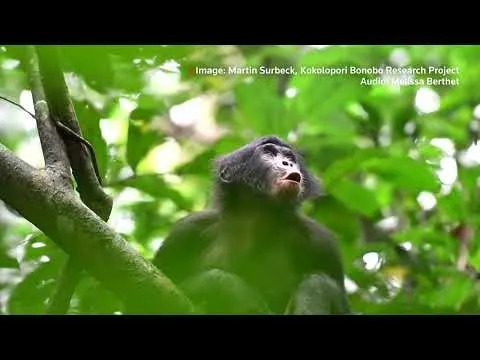
YouTube Thumbnail
What This Means
While preliminary, the results invite researchers to rethink the evolutionary steps that led to human language. If supra‑regular structure appears in some nonhuman primates, the critical evolutionary shift that enabled modern language may lie not in the emergence of nested grammar per se but in other capacities — for example, richer semantics, intentional use, or more complex social transmission.
Note: The preprint is available on bioRxiv. Because it has not been peer reviewed, the findings should be treated as provisional pending independent confirmation.
Image caption: A pair of common marmosets. (Mark Newman/The Image Bank/Getty Images)
Help us improve.