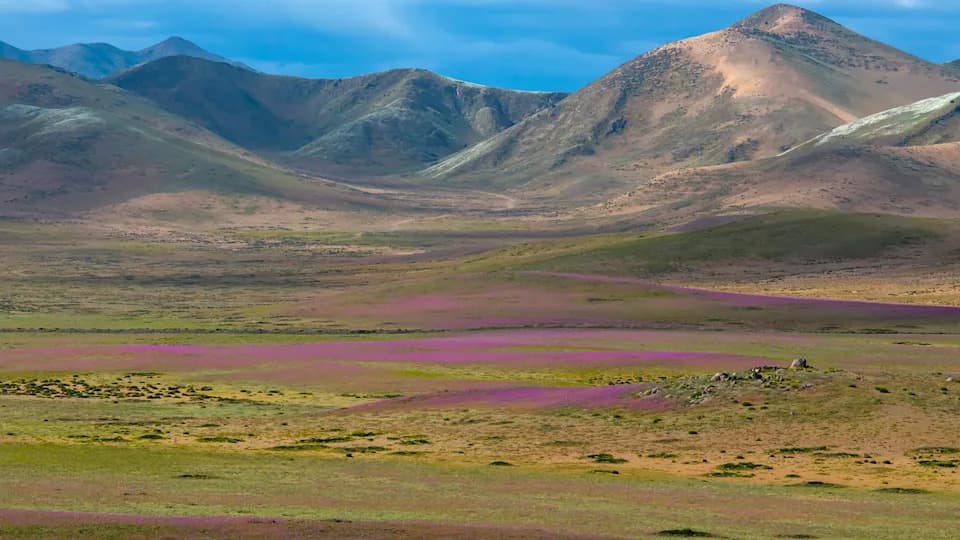
Chile's Atacama Desert has experienced a rare and extensive bloom after heavy rains tied to a "super El Niño," awakening seeds and bulbs that had lain dormant for decades. CONAF estimates roughly 17,000 sq km are covered and reports more than 200 plant species in flower. The event, possibly the strongest Desierto Florido since 1997, has drawn tourists and underscores the broad impacts of extreme weather linked to El Niño.
Atacama Desert Bursts Into Bloom: 17,000 Sq Km Carpeted After 'Super El Niño' Rains
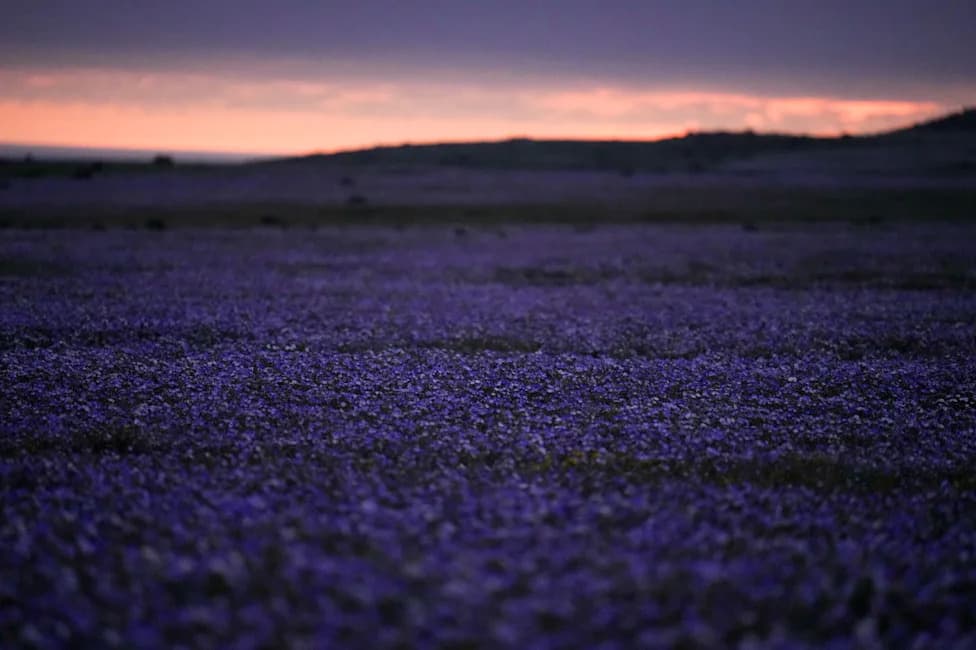
A carpet of flowers covers the Atacama Desert after rains near Copiapo, Chile, Thursday, Sept. 24, 2026. (AP Photo/Esteban Felix)(AP Photo/Esteban Felix)
Spring has arrived in the Southern Hemisphere, and Chile's normally stark Atacama Desert has erupted in color after unusually heavy rains earlier this year.
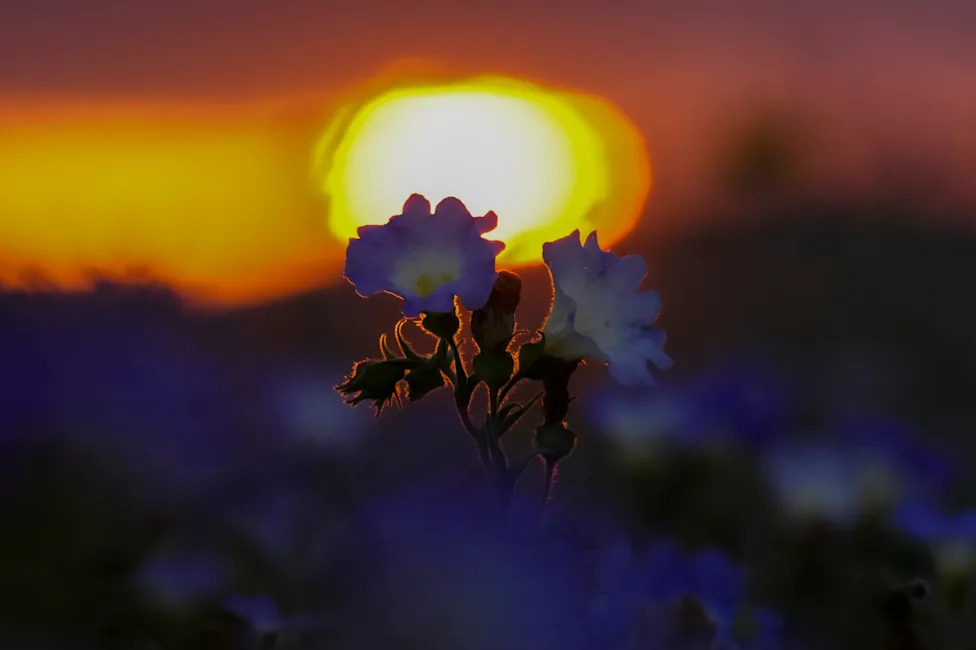
The sun sets behind flowers in a carpet of blooms covering the Atacama Desert after rains near Copiapó, Chile, Thursday, Sept. 24, 2026. (AP Photo/Esteban Felix)(AP Photo/Esteban Felix)
Historic Bloom Fueled by Record Rainfall
Recognized as the driest nonpolar desert on Earth, large swaths of the Atacama are now covered with wildflowers following precipitation linked to a strong "super El Niño." The downpours—measuring roughly 160–190 millimeters (6–7 inches) in some locations between July and August—have awakened millions of long-dormant seeds, bulbs and other biological material stored in the soil.
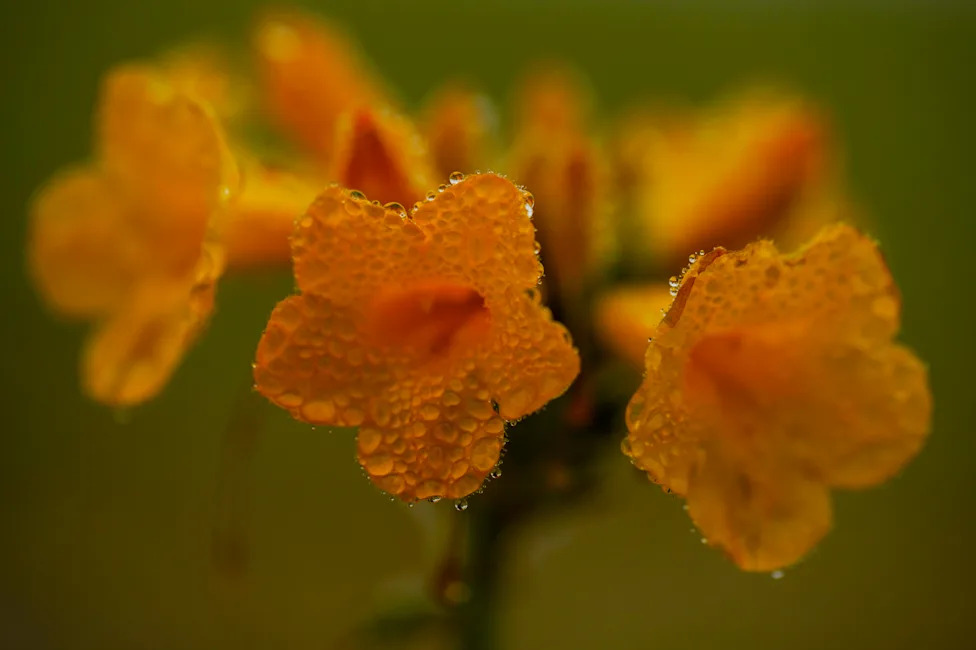
Dew droplets cling to a flower among a carpet of blooms covering the Atacama Desert near Copiapo, Chile, Friday, Sept. 25, 2026. (AP Photo/Esteban Felix)(AP Photo/Esteban Felix)
"It is a unique phenomenon; there are more than 200 plant species," said Jorge Carabantes, head of the Protected Areas Department at the National Forest Corporation (CONAF). "This is a flowering event that is obviously extraordinary and unusual."
Scope and Species
CONAF estimates the bloom covers about 17,000 square kilometers (6,560 square miles)—an area similar in size to the Santiago Metropolitan Region. Biologist César Pizarro, head of CONAF Atacama's Biodiversity Conservation Section, said this could be the most intense Desierto Florido since 1997. More than 200 plant species have emerged, including red and yellow ñañucas, purple rock purslane, white suspiros, orange terciopelos and the native garra de león.
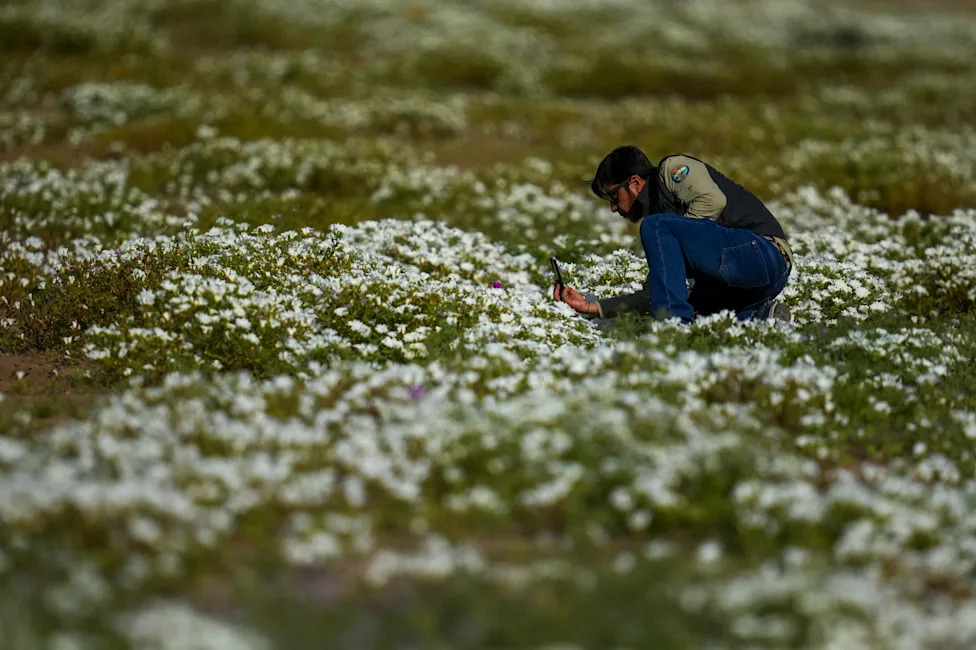
César Pizarro, head of conservation for the National Forestry Corporation (CONAF), takes photos of flowers in a carpet of blooms covering the Atacama Desert after rains near Copiapó, Chile, Thursday, Sept. 24, 2026. (AP Photo/Esteban Felix)(AP Photo/Esteban Felix)
Pizarro explains that the desert's germplasm—seeds, bulbs, tubers and even eggs of some invertebrates and reptiles—can remain dormant for decades and then spring to life after sufficient rain. In some hills and mountain ranges no greenery had been seen for 30 to 40 years until this season.
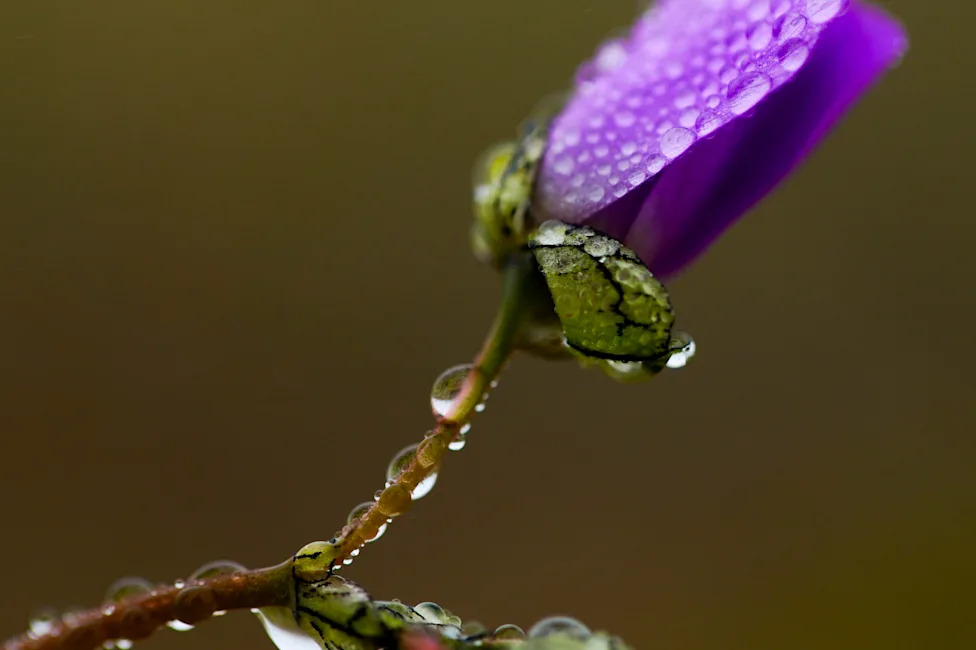
Dew droplets cling to a flower among a carpet of blooms covering the Atacama Desert near Copiapo, Chile, Friday, Sept. 25, 2026. (AP Photo/Esteban Felix)(AP Photo/Esteban Felix)
Tourism, Impacts and Context
Tourists from Chile and abroad have traveled into remote parts of the Atacama to witness the spectacle. The National Tourism Secretariat projects nearly 300,000 overnight trips to the region by the time the phenomenon ends in November, making Desierto Florido a major seasonal draw.
While the blooms are a visual and ecological marvel, the heavy storms also caused flooding and significant disruption in parts of Chile. Scientists link this extreme precipitation to the unusually strong El Niño event, which has broader implications for global weather and temperatures.
Visitor Voices: "I always thought it was just going to be brown," said Felix Banda, visiting from Australia. Chef Franco Moya, who drove nearly 1,000 kilometers from central Chile for his birthday, called it "a truly surprising moment."
Sources: Associated Press reporting and statements from CONAF officials.
Help us improve.