The Senate recessed Sept. 30 and will not reconvene until Nov. 9, sending lawmakers to campaign across the country ahead of the midterms. Democrats are cautiously optimistic amid falling Trump approval and concerns about the war in Iran, but Senate math still favors Republicans in many races. Republicans used the final day to press bills on data centers, voter ID and a ban on lawmaker stock trading; Democrats mostly blocked those measures, though four Democrats defected on the data center vote.
Senate Pauses Work Ahead Of Midterms As Control Fight Intensifies
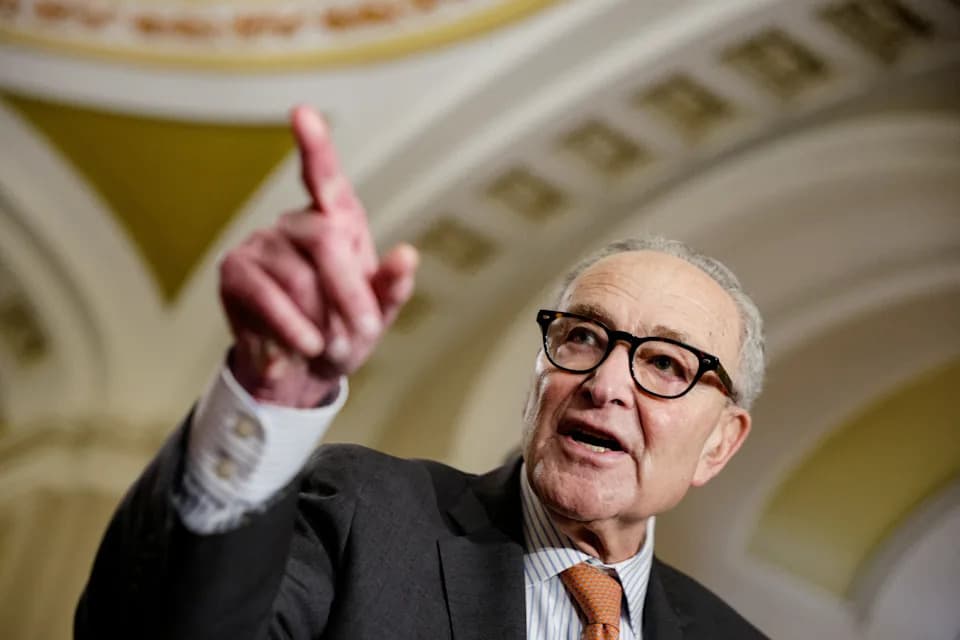
Senate Minority Leader Chuck Schumer, D-New York, takes questions during a news conference on Sept. 29, 2026.
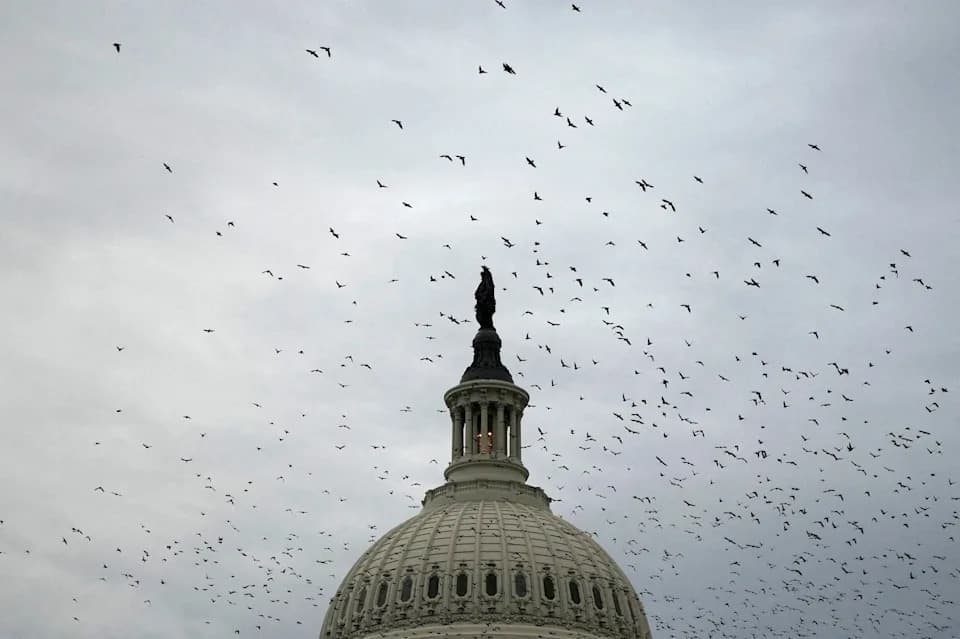
WASHINGTON — On Sept. 30 the Senate recessed and sent members back to their states to campaign, pausing floor business until after the Nov. 8 midterm elections. Lawmakers from both parties are scrambling for control of the chamber for the final two years of President Donald Trump’s term.
With Trump’s approval ratings slipping and ongoing concerns about the war in Iran affecting public opinion, Democrats left Washington cautiously optimistic. Yet the arithmetic in the Senate remains more challenging for Democrats than in the House, where Republicans look more vulnerable to losing their majority by several measures.
Final Day In Session: Senate Spotlight
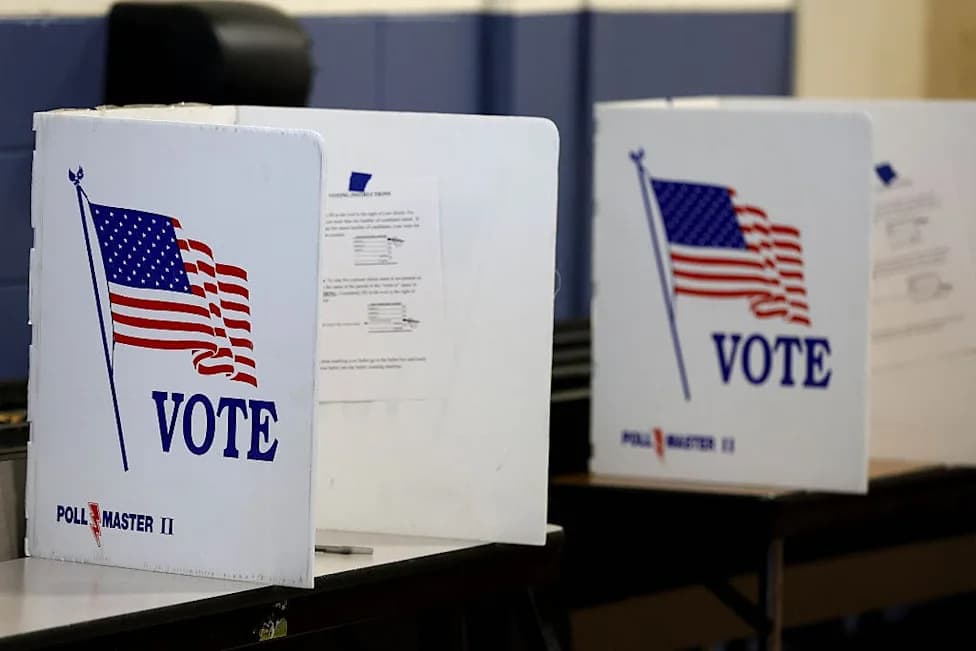
On the chamber’s last day before the recess, Republicans used the schedule to spotlight several high-profile issues — energy costs tied to data centers, election reform and congressional ethics. The GOP offered three measures: a bill aimed at shielding consumers from energy costs associated with data centers, a voter ID requirement, and a ban on stock trading by members of Congress. Democrats largely blocked those proposals and criticized them as largely symbolic "show votes."
"We do not want to be overconfident," Senate Minority Leader Chuck Schumer said before the recess. "But what we're seeing, in state after state after state, is that people are sick of Trump. They're sick of the Republican Senate going along with him, and they see the clear divisions we have drawn between what we stand for and what they stand for."
Senate Majority Leader John Thune countered that Republicans used the final hours to draw a contrast for voters. "Given the overwhelming support for this measure in the House," he said of the data center bill, "it's difficult to conclude that Senate Democrats blocked this bill for any reason other than the desire to deny Republicans another win in an election year."
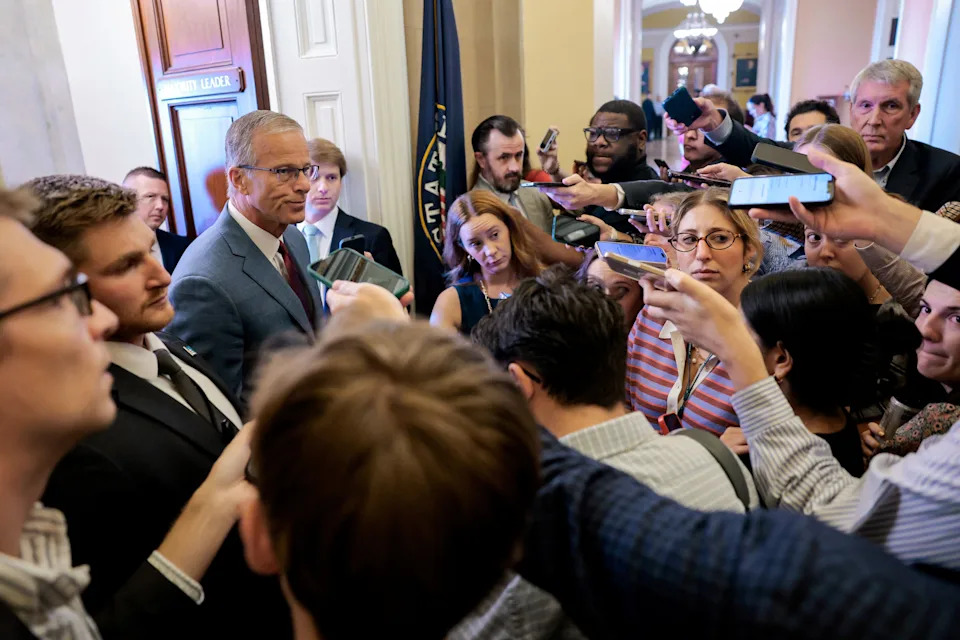
Senate Majority Leader John Thune, R-South Dakota, speaks with reporters on Capitol Hill on Sept. 30, 2026.
Divisions, Defections And Limited Lawmaking
The push to advance the data center measure exposed divisions within the Democratic caucus: four Democrats broke with party leadership and voted with Republicans to proceed. That late vote offered a modest political lift to GOP Senate hopeful Jon Husted in Ohio, where data center policy has become a campaign issue.
Rather than moving broad affordability legislation that some Republicans and voters said they wanted before the election, the Senate’s most consequential recent actions included passing an overhaul of college sports governance, holding messaging votes on Wednesday and confirming a new secretary of Labor. Some senators expressed skepticism that last-minute floor activity would be enough to change what retiring Sen. Thom Tillis described as an outcome that might already be "baked in."
"If people are doing it under the assumption that it creates a sea change," Tillis said, "I just don't buy it."
The Senate is scheduled to return to session on Monday, Nov. 9.
Zachary Schermele is USA TODAY’s congressional correspondent. Reach him at [email protected] and on X at @ZachSchermele.
Help us improve.