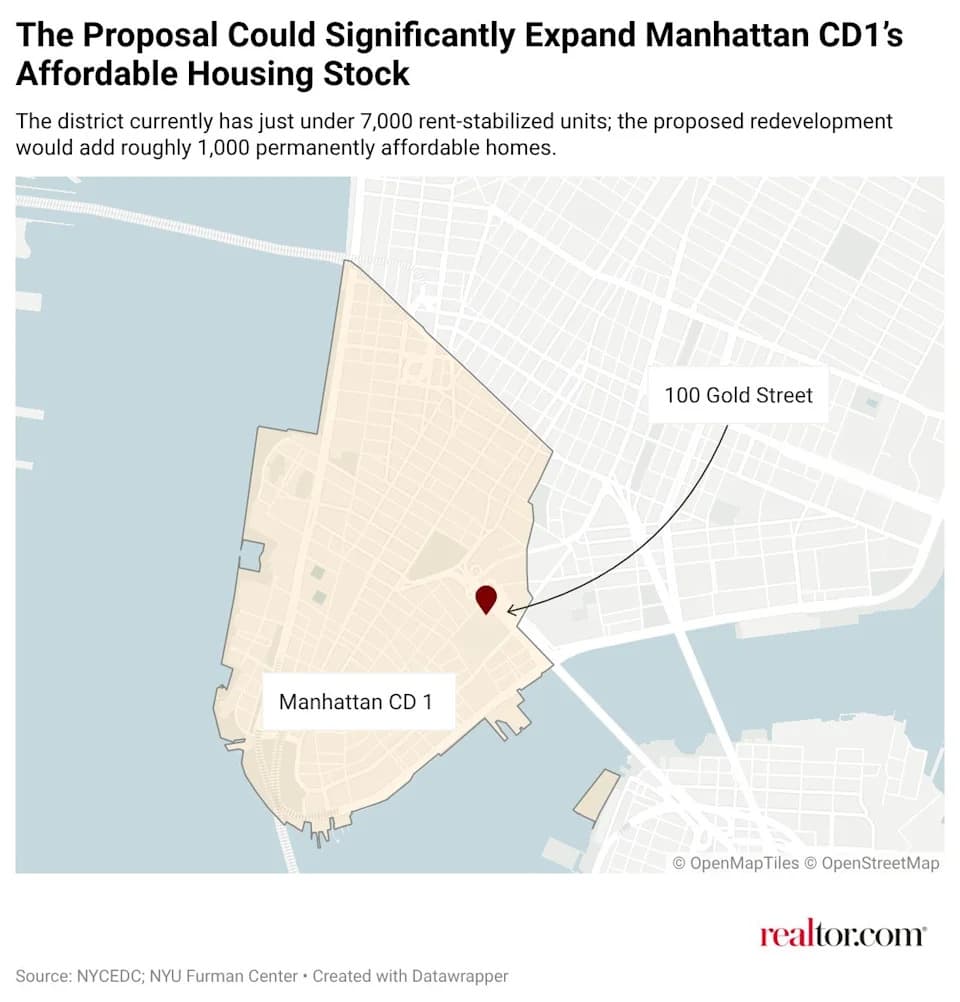
New York City has launched a formal review to transform the aging municipal office building at 100 Gold St. in Lower Manhattan into nearly 4,000 apartments, a redevelopment that could almost double the number of permanently affordable homes added to the neighborhood over the past decade.
The winning proposal from GFP Real Estate would replace existing municipal uses — including the Department of Housing Preservation and Development and an older-adult center — and deliver roughly 40,000 square feet of public-realm improvements plus a 40,000-square-foot publicly accessible fitness center.
How the project will be funded: Rather than relying on city capital, the plan uses a cross-subsidy model: about 3,000 market-rate apartments would underwrite roughly 1,000 permanently affordable, rent-stabilized units. City officials say this approach avoids new appropriations while accelerating delivery.
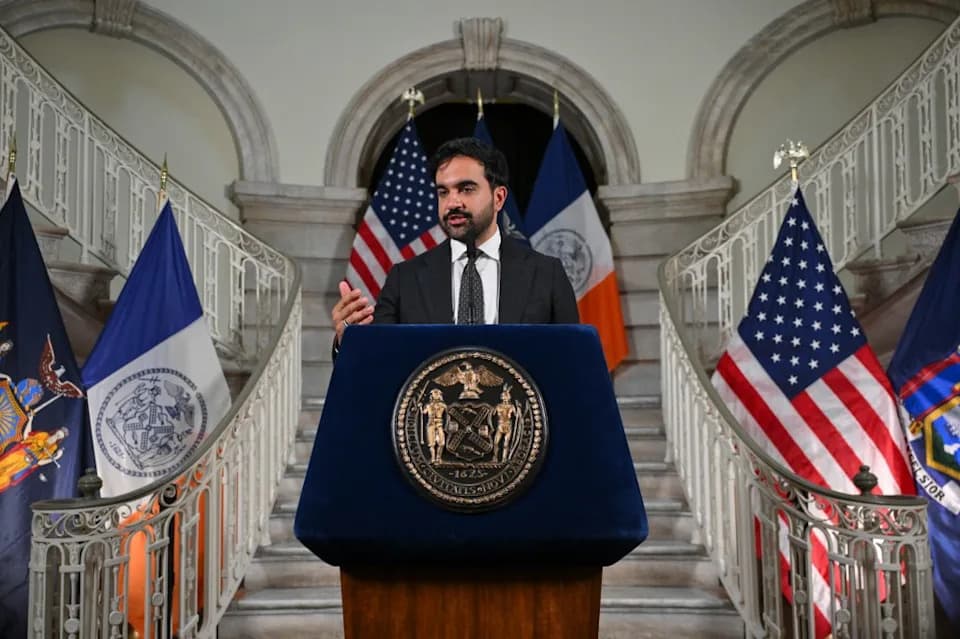
Mayor Zohran Mamdani described 100 Gold as a natural candidate for housing under his "block-by-block" agenda, which aims to build 200,000 new affordable homes and preserve another 200,000 over the next decade. The administration has identified more than 100 city-owned parcels that could produce over 50,000 homes.
Scale and impact: The revised plan adds roughly 300 homes compared with earlier proposals. Once complete, the project's roughly 1,000 permanently affordable apartments would equal nearly twice the number of permanently affordable units built in Manhattan Community District 1 over the last ten years.
Support and concerns: Proponents highlight speed and fiscal efficiency. "The redevelopment of 100 Gold will be a major step forward in creating the housing New Yorkers need — including permanently affordable, rent-stabilized homes — in addition to new community space, with no funding from the City," said Leila Bozorg, deputy mayor for housing and planning.
But the project has drawn criticism. Community Board 1 members objected to the pace of planning and limited early community input. Board Chair Tammy Meltzer criticized an earlier plan that set aside roughly one-quarter of units as affordable. The revised proposal keeps approximately a 75% market / 25% permanently affordable split, but at a much larger scale.
Market context and risks: Manhattan's median asking rent reached $5,117 in Q2 2026, up 9% year over year, and Community District 1 has among the city's highest household and renter incomes — factors that make a cross-subsidy model feasible here. "Higher earners can shoulder the burden of high market rents, and that revenue helps offset the lower rents collected from affordable apartments," said Joel Berner, senior economist at Realtor.com.
However, Berner cautioned that dependence on market-rate revenue exposes the project to rental-market downturns. A weakening of market rents or incomes could put financial pressure on the affordable units. The plan must also contend with a temporary rent freeze that maintains rent-stabilized and controlled rents for the next two years.
Not a one-size-fits-all solution: City officials note that 100 Gold is unusually large and centrally located; other city-owned sites may not command comparable market rents or produce the same unit counts. Smaller or less central parcels likely will require direct subsidies to achieve similar affordable shares.
Next steps: The project is entering the city's environmental review process, with a scoping hearing expected in October. The proposal is slated to enter the Uniform Land Use Review Procedure (ULURP) in 2027, which will give Community Board 1, the borough president, the City Planning Commission and the City Council formal opportunities to weigh in before the redevelopment can proceed.
Key voices: Leila Bozorg (Deputy Mayor for Housing & Planning); Mayor Zohran Mamdani; Joel Berner (Realtor.com senior economist); Tammy Meltzer (Community Board 1 Chair).