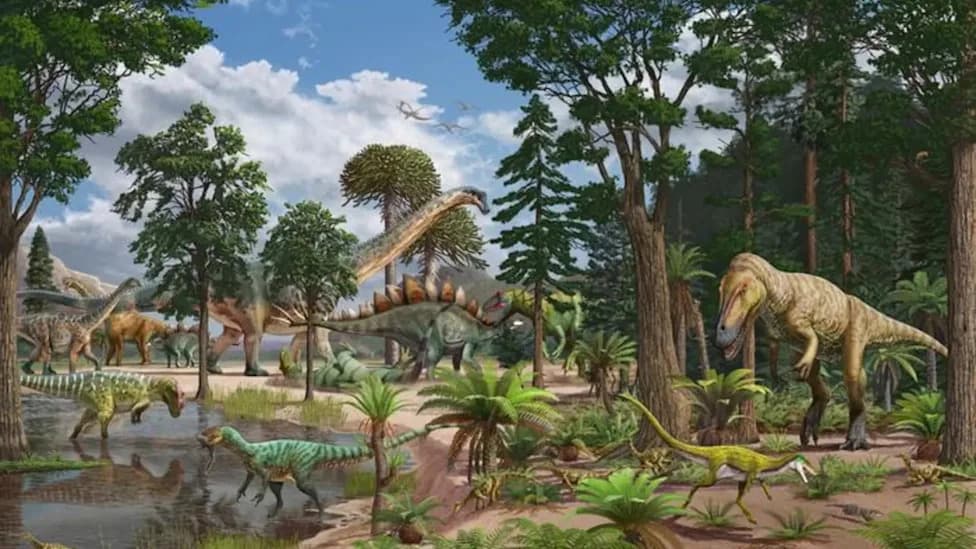
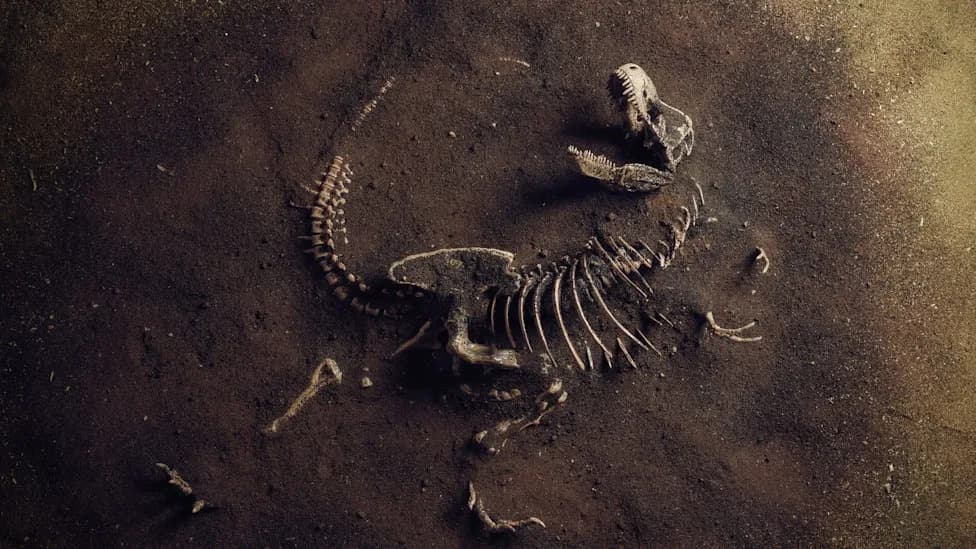
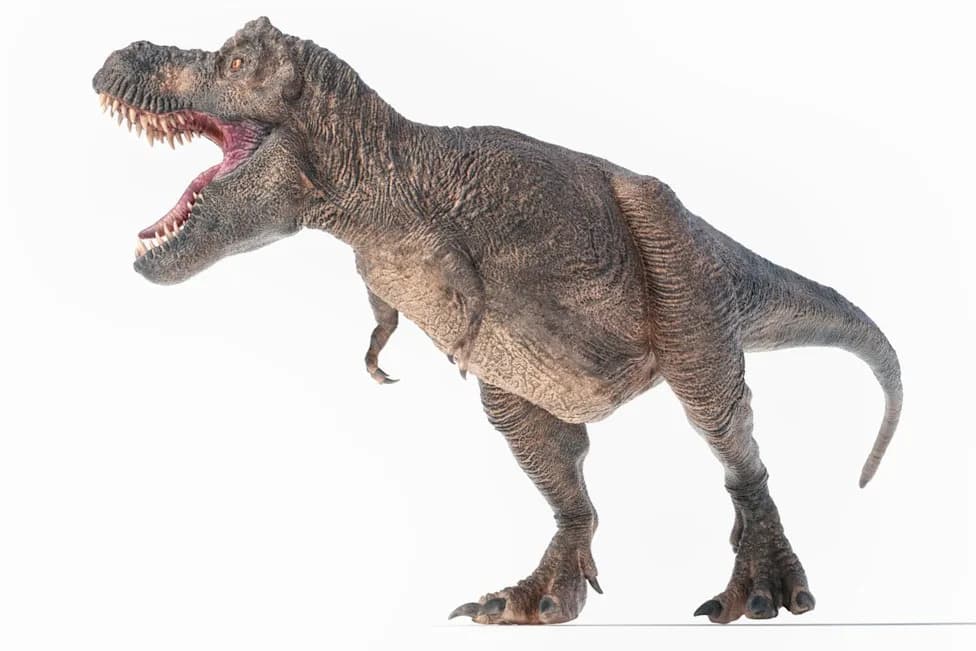
A 23-foot trackway of four mud-preserved T. rex footprints was found near Marmarth, North Dakota, by teacher and volunteer researcher Kent Hups. The Hell Creek Formation prints are dated at about 66½ million years old and form a rare continuous trail. With roughly 13-foot spacing between prints, researchers estimate a walking speed near 1.6 mph — slower than the average human walk — a result reported Sept. 8 in the Journal of Vertebrate Paleontology. The discovery provides a rare behavioral snapshot that complements skeletal evidence.
Could You Outrun a T. rex? North Dakota Trackway Suggests an Average Person Could — If It Was Walking
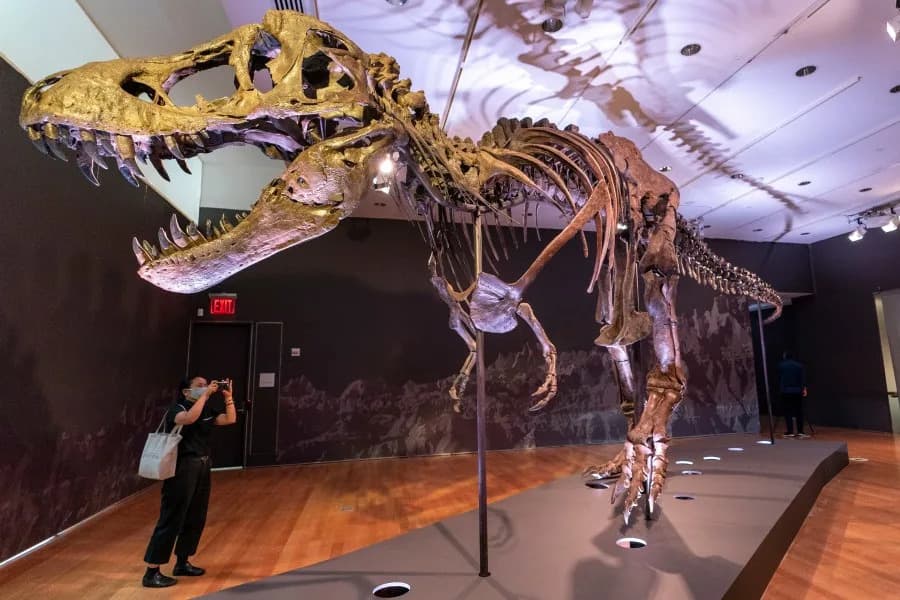
If you've ever wondered whether an average person could outrun an adult Tyrannosaurus rex, a newly documented set of fossil footprints offers an intriguing answer: possibly — at least when the animal was moving at a walk.
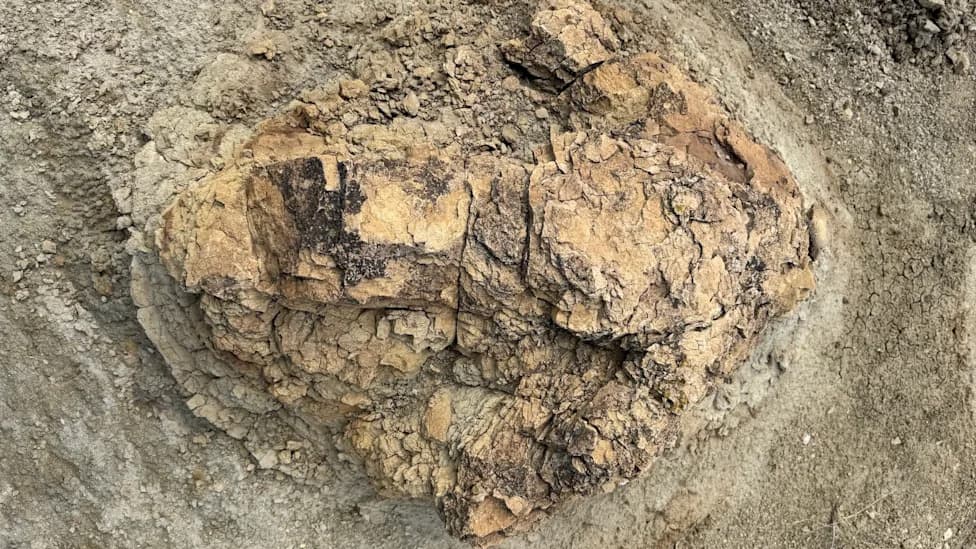
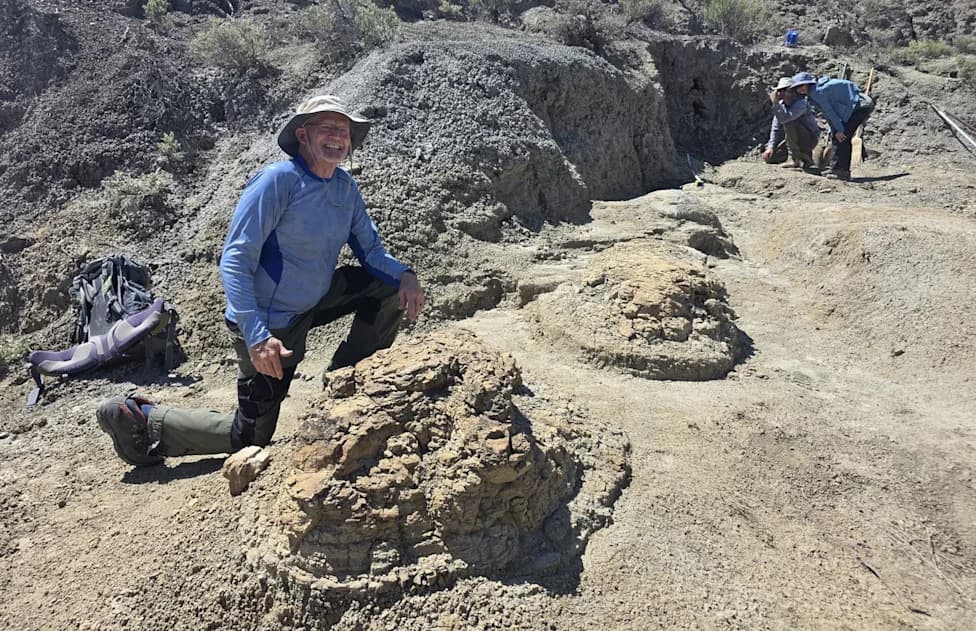
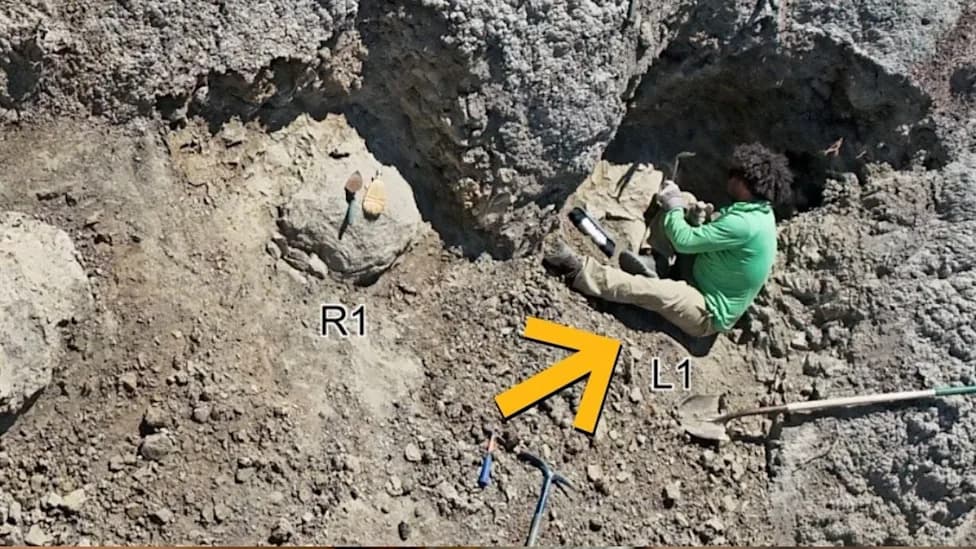
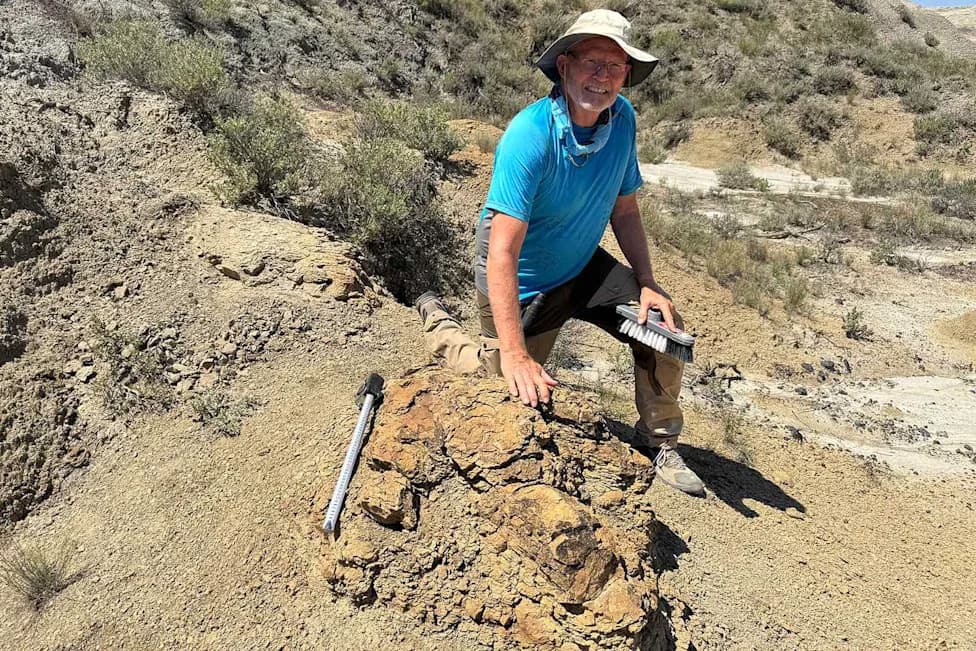
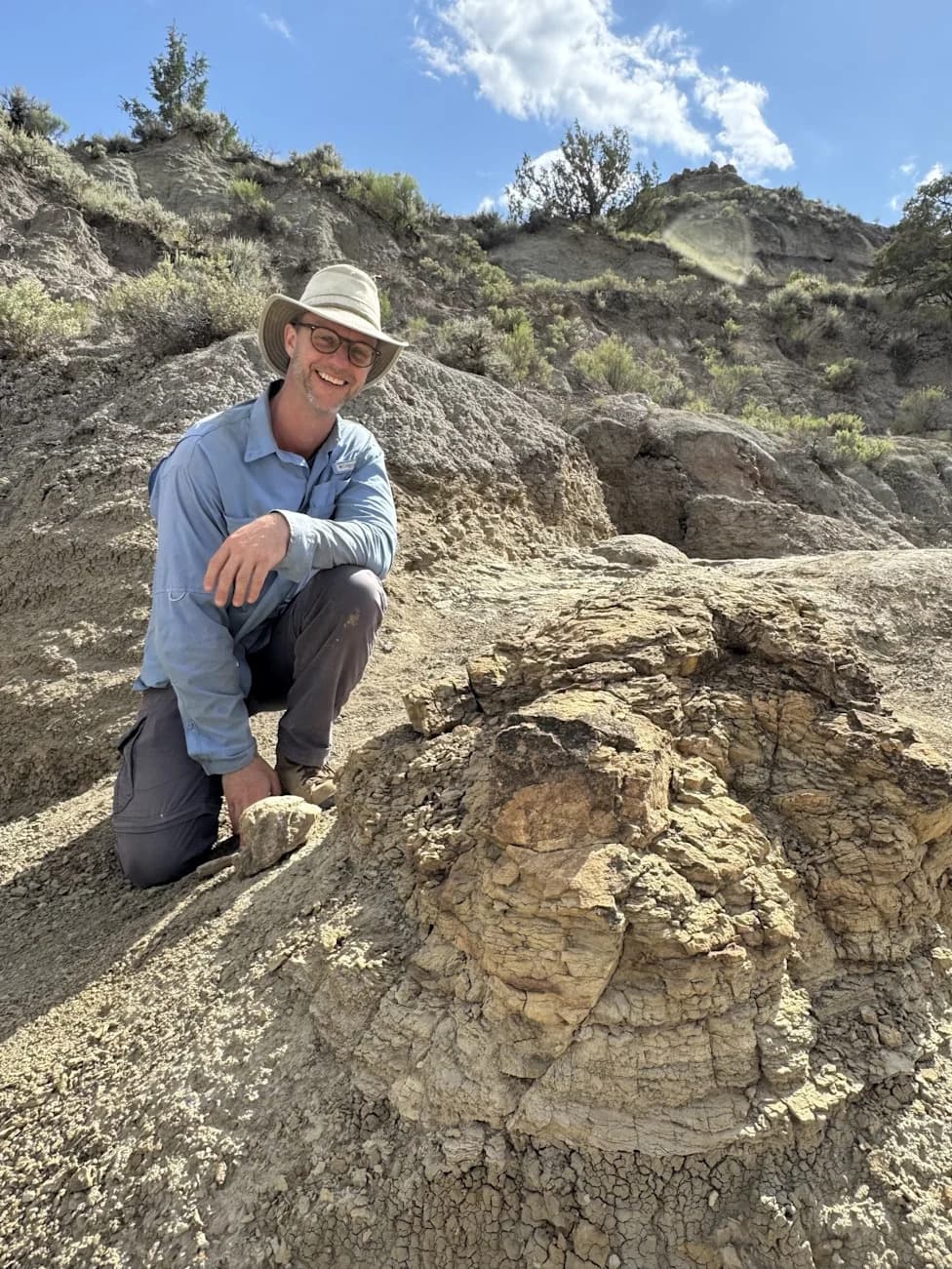
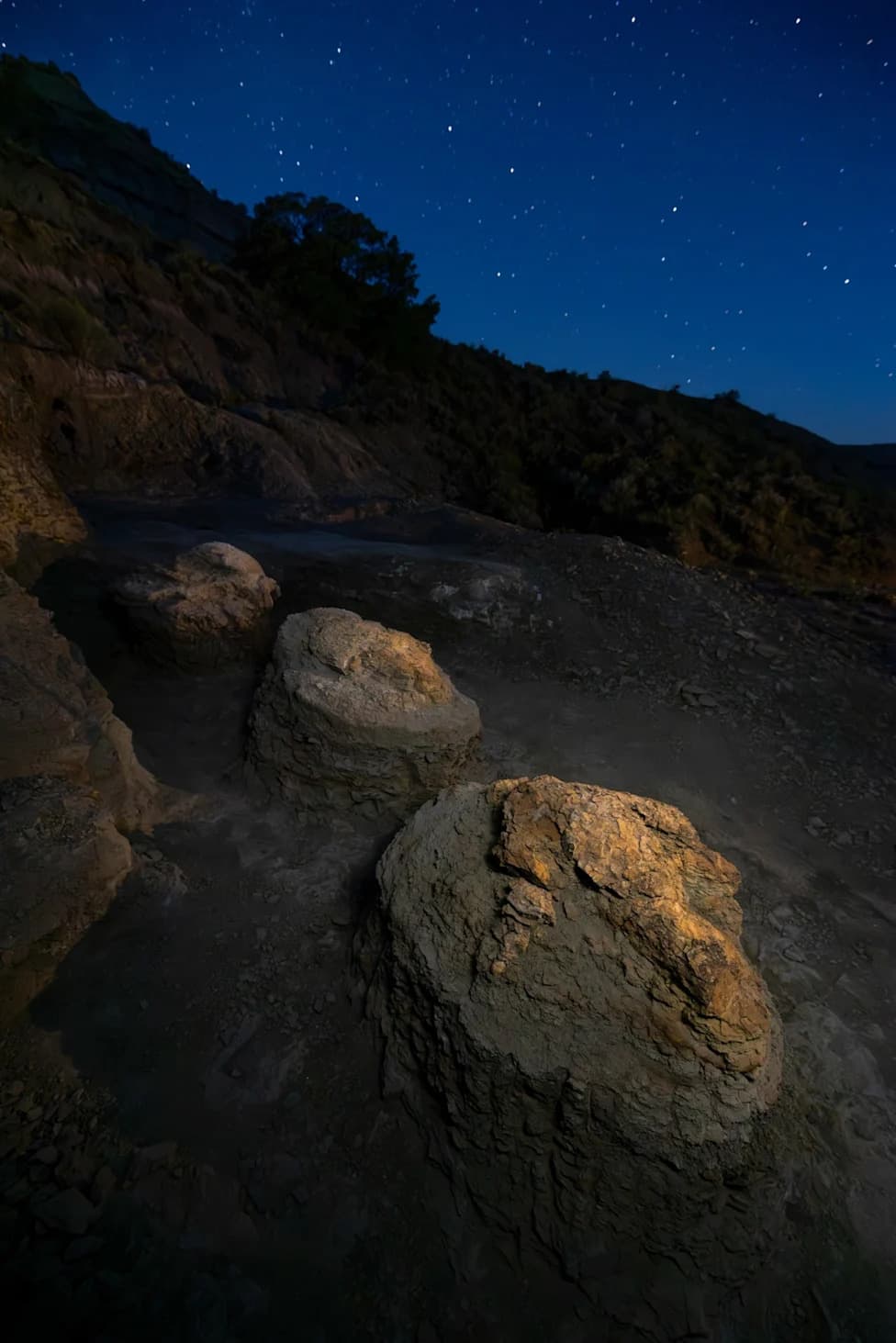
The short trackway spans roughly 23 feet and contains four mud-preserved T. rex footprints dated to about 66½ million years ago. The prints were uncovered on a slope near Marmarth, North Dakota, in the Hell Creek Formation by Kent Hups, a Colorado high school science teacher and volunteer research associate at the Denver Museum of Nature & Science, during a July 2025 expedition.
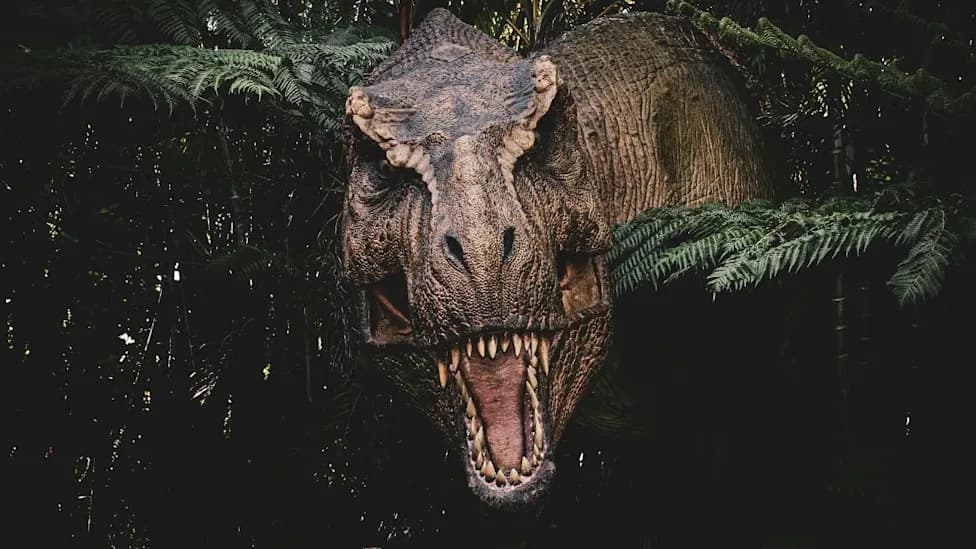
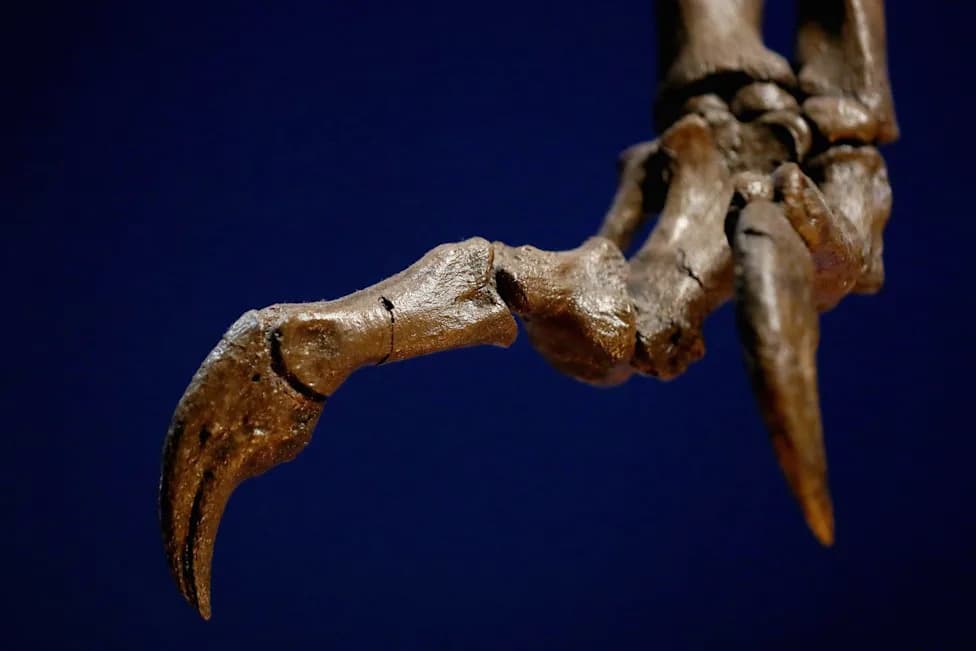
These fossilized prints form a continuous trail — a configuration that is rare for this species — and provide a direct snapshot of behavior rather than anatomy alone. The three-toed, long and narrow impressions made the trackmaker unmistakable as a large tyrannosaur.
What the Tracks Reveal
Researchers measured the spacing between successive prints at about 13 feet and, using standard formulas that relate stride length to leg height, estimated the animal's walking speed at nearly 1.6 miles per hour. That pace is slower than a typical modern human walking speed (around 3 mph), meaning an average person could outwalk the T. rex implied by this trackway.
"My first reaction was total disbelief," Kent Hups told CNN. "I sat and looked at it for a period of time before I was convinced it was a track at all."
"Having a trail of tracks is important," paleontologist Scott Persons told BBC Wildlife Magazine. "With it, you can calculate an estimate of how fast the tyrannosaur was walking." Dr. Tyler Lyson, senior curator of vertebrate paleontology at the Denver Museum of Nature & Science, added: "Bones tell us an enormous amount about these animals, but footprints capture a moment of behavior. With a trackway, we can actually follow an animal as it moved across the landscape. That is incredibly rare for T. rex."
Context and Cautions
These findings document a walking-speed snapshot, not the animal's top running speed. Estimates of T. rex sprinting ability vary widely and depend on the individual, age, and terrain. Still, trackways like this one are valuable because they record behavior in place and time — information skeletal remains alone cannot provide.
The research was reported in an entry published Sept. 8 in the Journal of Vertebrate Paleontology.
Why this matters: The Marmarth trackway adds to a small but growing set of footprint-based evidence that helps paleontologists reconstruct how giant theropods moved and interacted with their environment.
Help us improve.