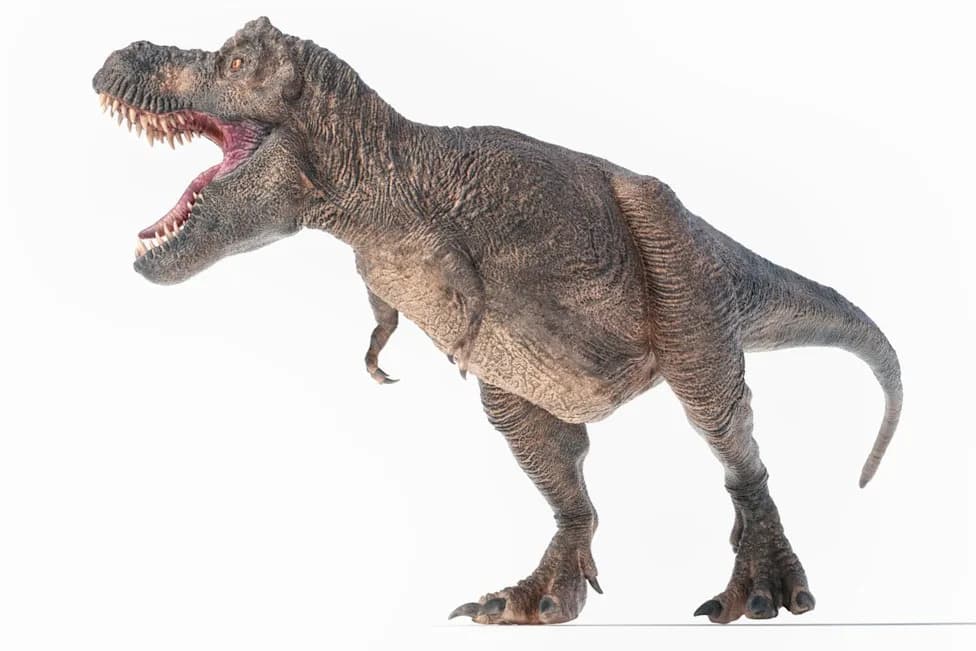
This find documents what appears to be the first multi-print trackway attributable to an adult Tyrannosaurus rex, discovered in the Hell Creek Formation of North Dakota. Four three-toed casts preserved as calcium-carbonate–cemented concretions span nearly 23 ft (7 m), with individual prints about 3 ft long and 23–31 in wide. Digital reconstructions indicate ~13 ft strides and a walking speed near 1.5–2.0 m/s (5.4–7.2 km/h). The site dates to ~66.5 million years ago, but heavy overburden makes further excavation unlikely.
Scientists Uncover First Multi-Print Adult T. rex Trackway — Revealing Size, Gait and Speed
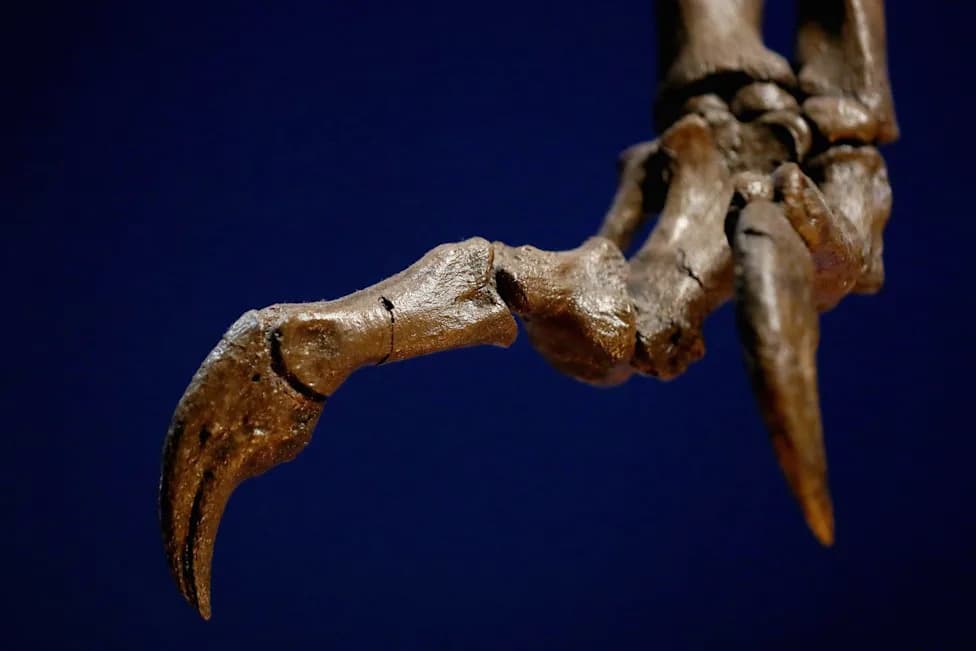
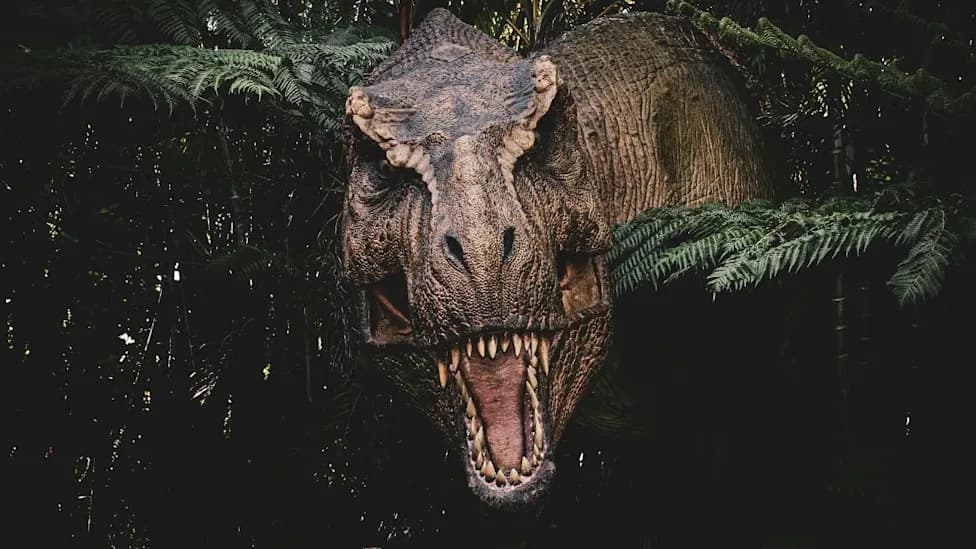
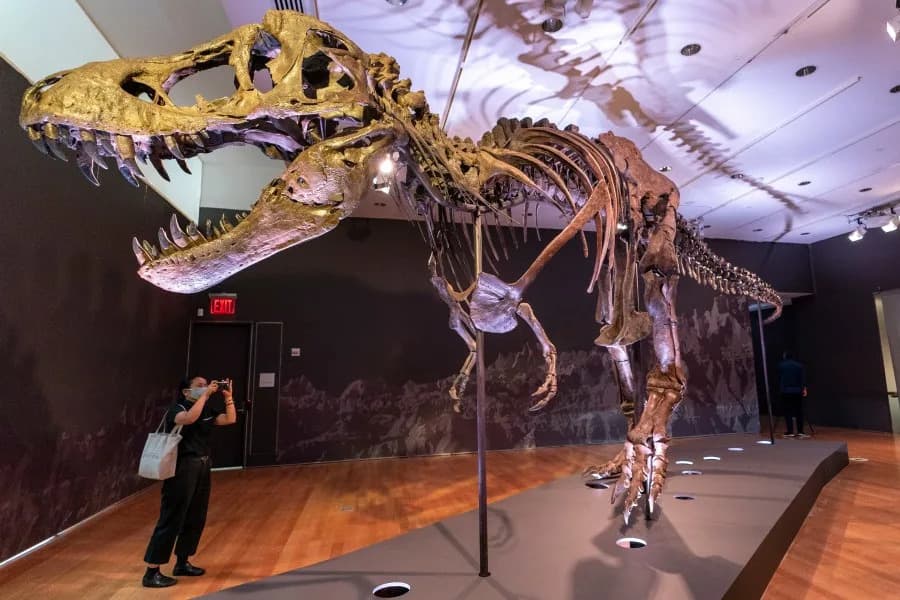
Scientists Solved a Huge T. Rex Footprint MysteryDean Mouhtaropoulos - Getty Images
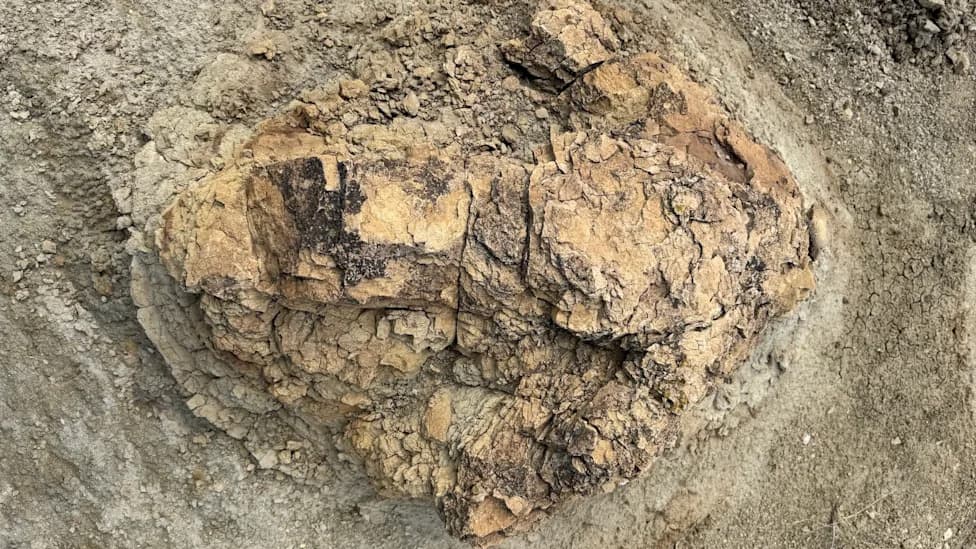
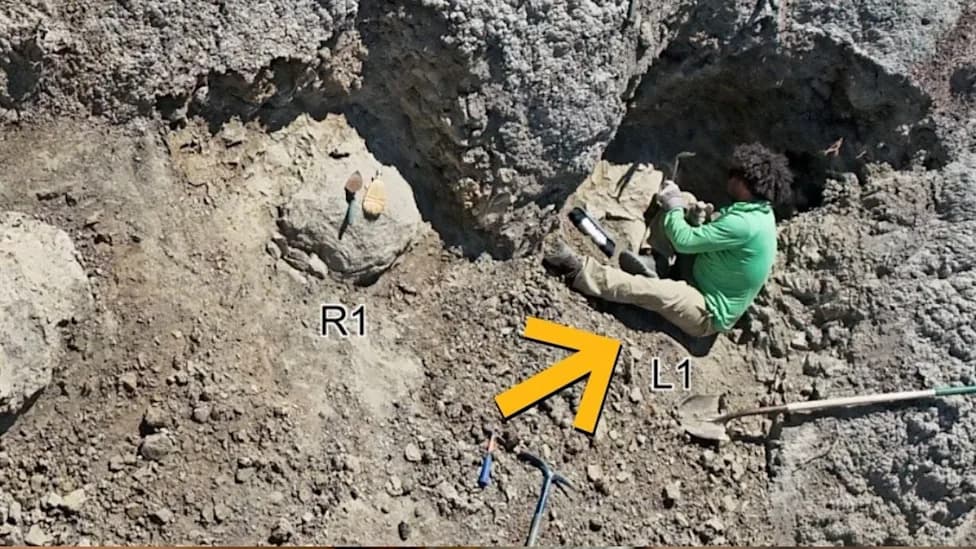
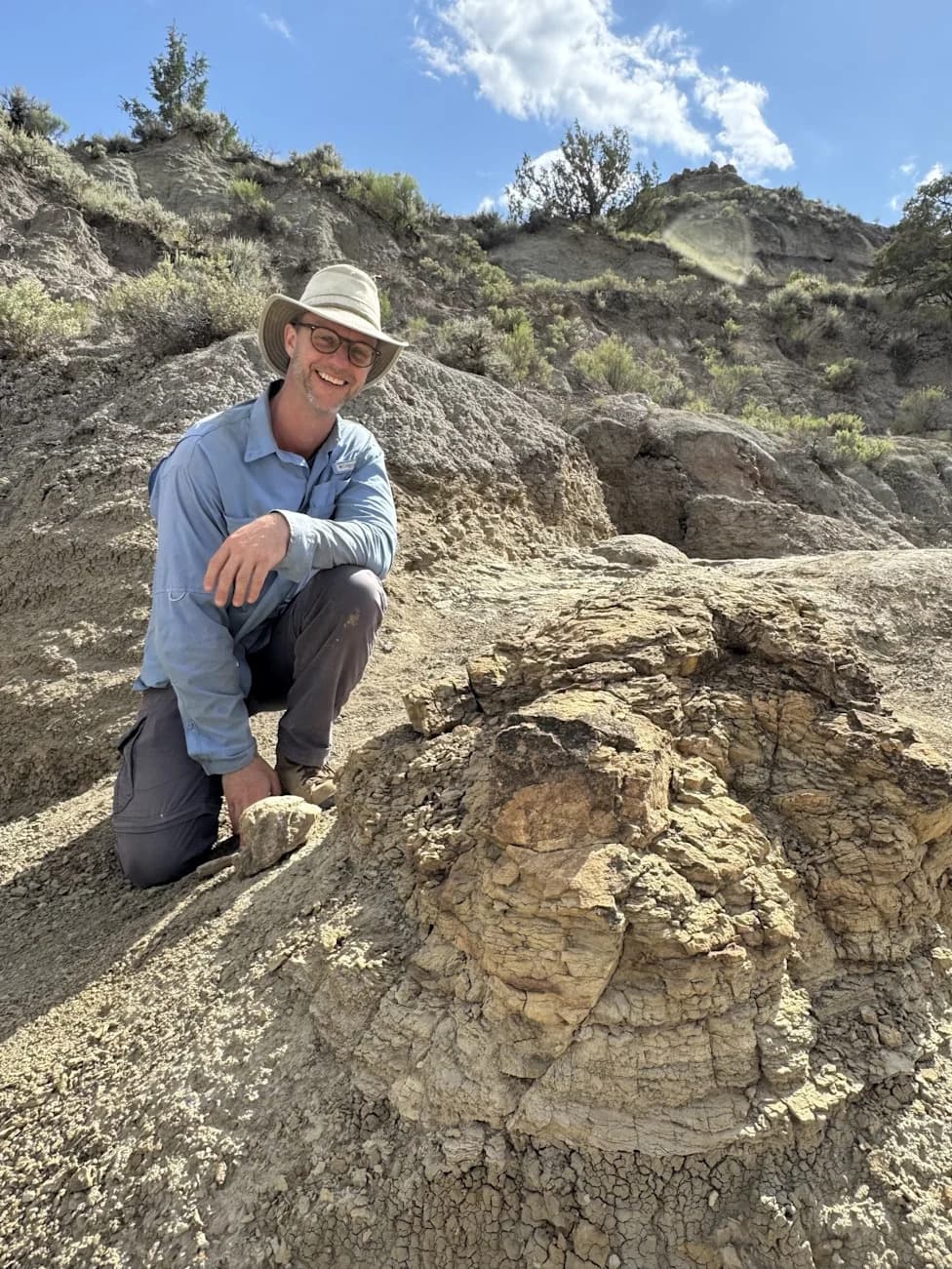
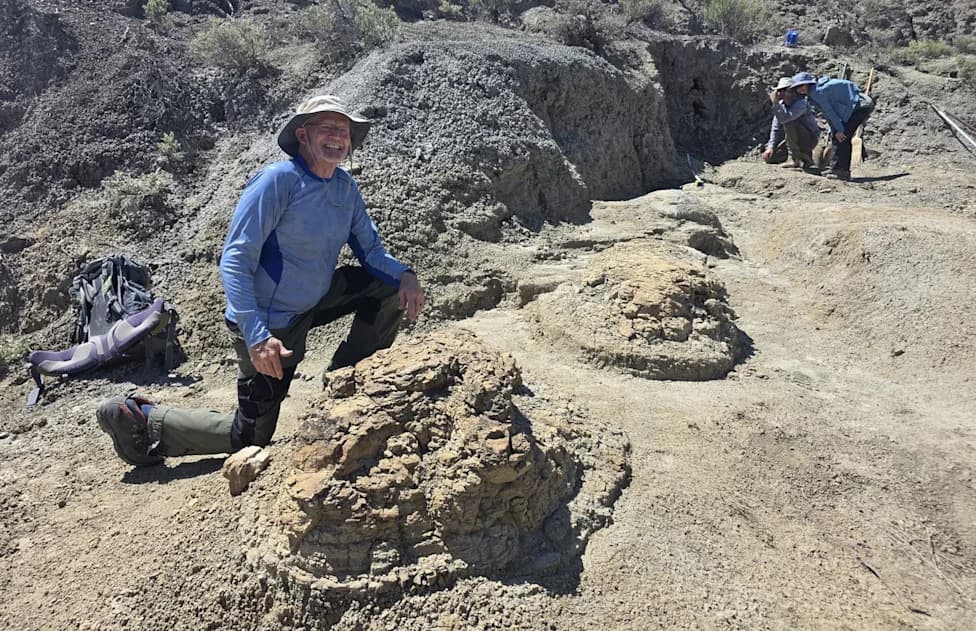
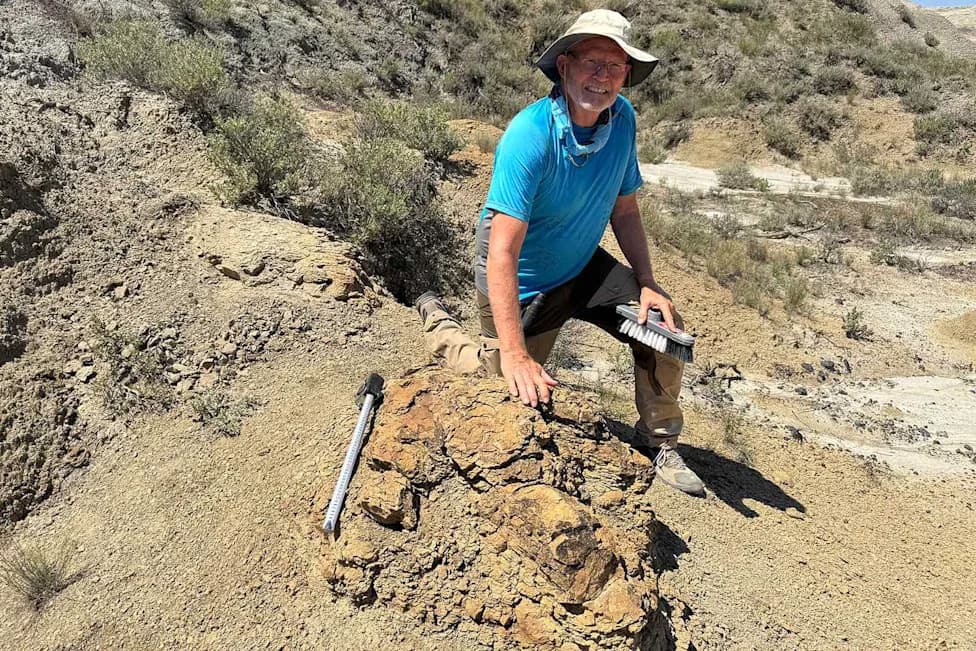
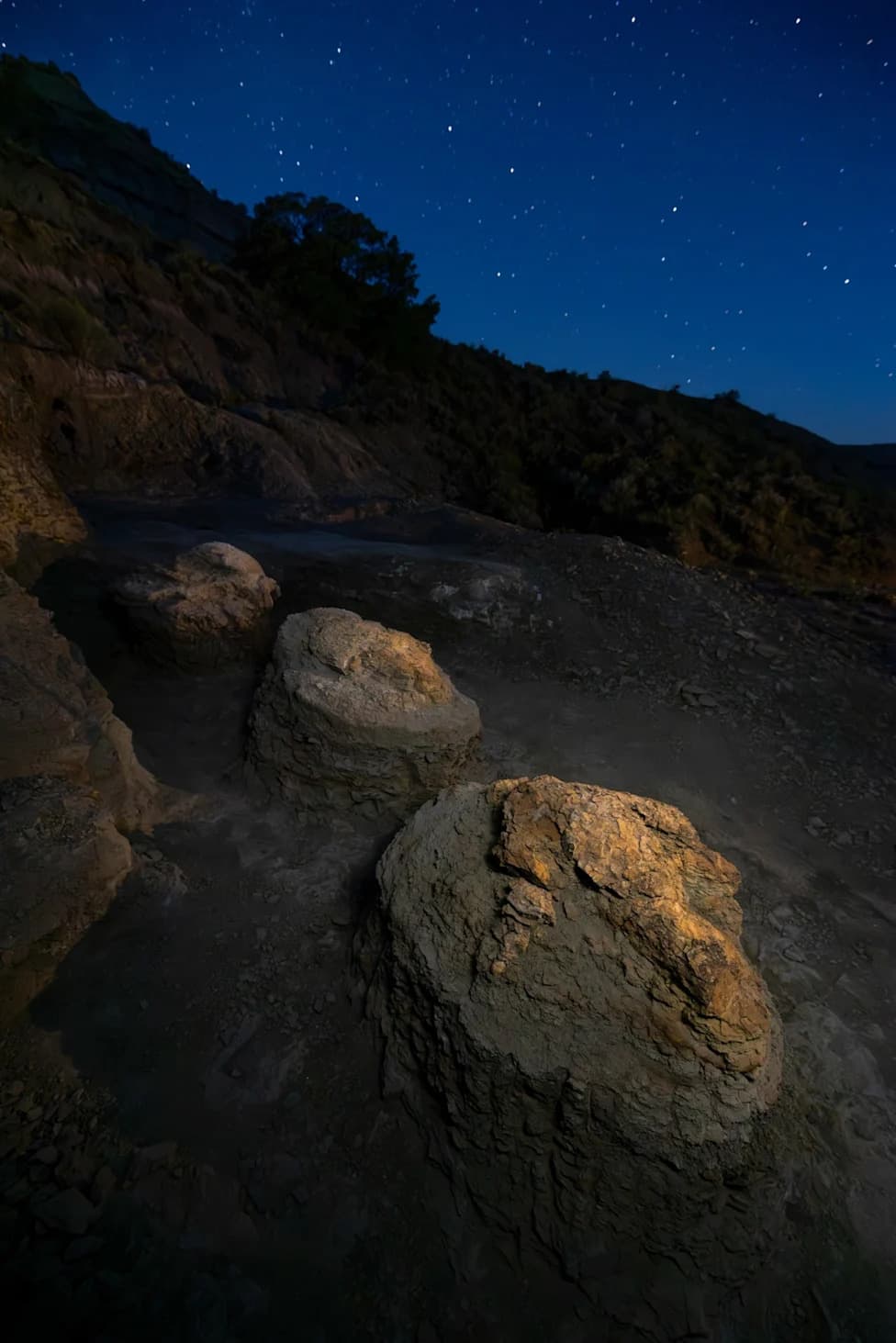
Paleontologists have uncovered what appears to be the first multi-print trackway attributable to an adult Tyrannosaurus rex. The discovery—four enormous three-toed casts preserved as sand-filled, calcium-carbonate–cemented concretions—was made in the Upper Cretaceous Hell Creek Formation in the badlands of North Dakota and offers rare direct evidence of how a full-grown T. rex moved across soft ground that later lithified into mudstone and sandstone.
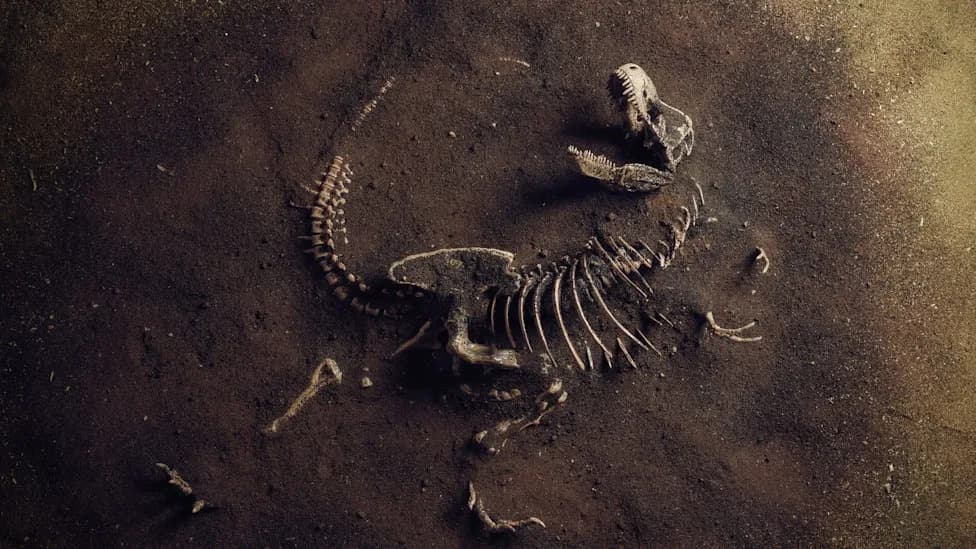
The prints were found in the same locality and formation as T. rex bones, raising the possibility they were produced by the same individual. Because the animal sank into soft sediment, sand later filled the depressions and cemented into harder concretions that outlasted the surrounding rock. Although the impressions are badly eroded and cracked, modern scanning and digital reconstruction allowed researchers to recover measurements and locomotor data that would otherwise have been lost.
Why Footprints Matter
Tracks are ichnofossils—traces of behavior rather than body fossils—and capture animals in motion. Trackways can reveal stride length, walking speed, foot shape and relative weight, providing insights that bones alone rarely deliver. As lead researcher Tyler Larson and colleagues note, assigning a specific species to a track is challenging because "footprints are not feet": recorded shapes depend on foot movement, sediment response and preservation quality (Journal of Vertebrate Paleontology).
"The task of assigning trackmakers to tracks is only made more difficult by the fact that 'footprints are not feet,' and apparent track morphology may differ substantially from foot morphology either due to foot movement and sediment response or due to preservation." — Tyler Larson, Journal of Vertebrate Paleontology
Measurements and Age
The preserved trackway spans nearly 23 feet (about 7 meters). Individual three-toed prints measure roughly three feet (≈1 m) long and between 23 and 31 inches (≈58–79 cm) wide. Digital models show a stride of about 13 feet (≈4 m) and an estimated walking speed of roughly 1.5–2.0 meters per second (about 5.4–7.2 km/h, or 3.4–4.5 mph).
Geologically, the trackway dates to roughly 66.5 million years ago—around 500,000 years before the Chicxulub impact that ended the age of non-avian dinosaurs. Previous claims of adult T. rex footprints were limited (a single footprint from New Mexico and an incomplete impression in siderite from Hell Creek), so this continuous multi-print series is unprecedented for an adult specimen.
Interpretation and Limits
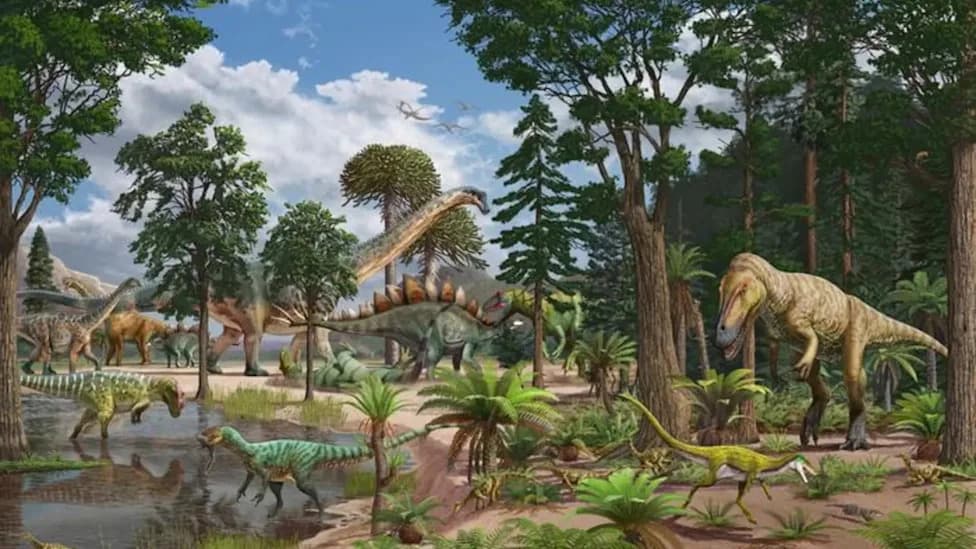
Although hadrosaurs such as Edmontosaurus left three-toed prints and shared the landscape, the prints' enormous size and the presence of T. rex bones nearby make a tyrannosaurian origin the best-supported interpretation. One of the preserved prints may be slightly larger than the animal's actual foot because the heavy animal sank and spread the impression in soft substrate.
The researchers emphasize that further excavation could uncover more of the trackway or reveal anatomical details that clarify foot anatomy and locomotion. However, a large overburden of rock and sediment covers much of the site, so extensive additional excavation is unlikely without substantial effort and resources.
Significance: This rare trace fossil provides direct, quantitative clues about the gait, stride and walking speed of a full-grown T. rex, helping to fill a long-standing gap in our understanding of tyrannosaur locomotion and behavior.
Help us improve.