UCLA researchers used refined isotope analysis of tooth enamel to estimate T. rex's body temperature at about 36 °C (97 °F). The measurement — taken from two teeth of the museum specimen "Thomas" and published September 16 in Science Advances — supports a warm-blooded physiology. A crocodilian fossil from the same site returned a much cooler value, strengthening the conclusion that the signal is biological. The finding suggests T. rex could remain active across wide latitudes.
T. rex Was Nearly Human Warm: UCLA Measures Dinosaur's Body Temperature at ~97°F

Scientists finally took T. rex’s temperature, and it ran almost as warm as you
For the first time, scientists have attached a concrete body-temperature estimate to Tyrannosaurus rex. A UCLA team measured isotopes preserved in tooth enamel and found that T. rex ran at roughly 36 °C (about 97 °F) — a temperature much closer to mammals than to modern cold-blooded reptiles.
A Direct Thermometer From Fossil Teeth
The study, published September 16 in Science Advances, analyzed tiny enamel samples from two teeth of "Thomas," one of the most complete T. rex specimens at the Natural History Museum of Los Angeles County. The researchers used a refined isotope technique developed at UCLA that examines rare carbon-oxygen bonded isotope pairs that form inside tooth enamel. Because those bonded pairs form more frequently at lower temperatures, their abundance provides a thermometer of the animal's internal body heat.
How the Measurement Was Made
UCLA scientists drilled microscopic amounts of enamel, dissolved the powder in phosphoric acid to release CO2 gas, and then measured the isotope ratios with a mass spectrometer. A decade of method development reduced the required sample size by about 90 percent, making destructive sampling of valuable museum specimens feasible.
What the Numbers Mean
The team estimates a T. rex core temperature near 36 °C (≈97 °F). For context, living cold-blooded reptiles typically operate between about 28–30 °C (82–86 °F), while many modern birds — the evolutionary descendants of dinosaurs — often maintain temperatures above 40 °C (104–109 °F). The measured value places T. rex well above typical reptile temperatures and somewhat cooler than most birds.
Biological Signal Confirmed
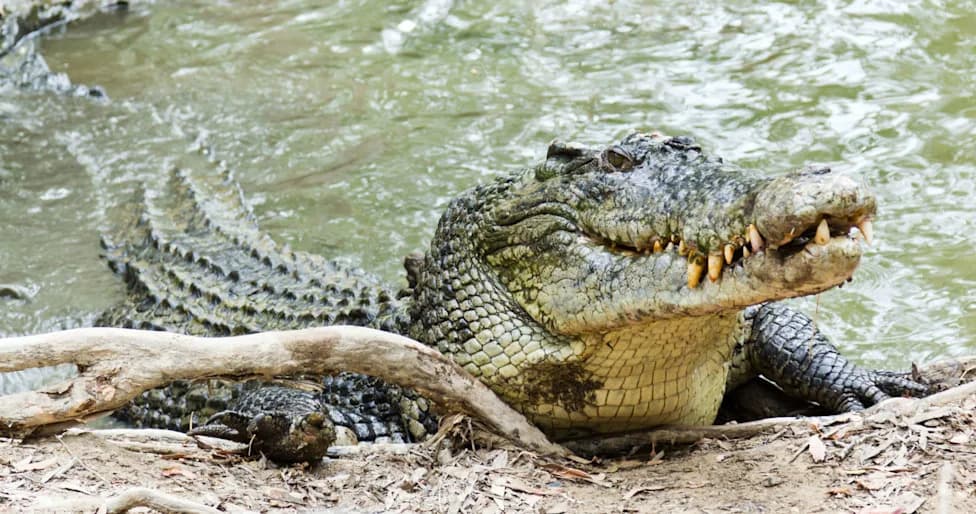
To rule out a geochemical artifact from the fossil site, the researchers analyzed a crocodilian fossil from the same Hell Creek, Montana locality. That specimen returned a markedly cooler value (about 86 °F), consistent with a cold-blooded physiology and confirming that the T. rex result reflects biology rather than fossilization effects.
Implications
Internal thermoregulation would have allowed T. rex to remain active across a wide range of latitudes and climates — from Mexico to Alaska — even in the Cretaceous world. The result supports interpretations of T. rex as an active predator or scavenger capable of sustained movement rather than a sluggish, sun-basking reptile.
Conservation Note: Museum curators weigh requests for destructive sampling carefully. The Natural History Museum allowed only tiny portions of two teeth to be used; researchers and curators judged the scientific payoff justified the minimal loss.
Funding: The research was supported in part by the National Science Foundation.
Help us improve.