A Colorado high school teacher, Kent Hups, discovered a sequence of four adult-sized Tyrannosaurus rex footprints while volunteering in the Hell Creek Formation in 2025. The tridactyl impressions, each about 1 meter (3 feet) long and spanning roughly 23 feet, date to approximately 66.5 million years ago. Scientists estimate the animal was walking at about 3.4–4.5 mph; the study, led by Peter Falkingham and published in the Journal of Vertebrate Paleontology, will be showcased at the Denver Museum of Nature & Science this winter.
High School Teacher Unearths First Confirmed Adult T. rex Trackway — A 66.5-Million-Year-Old Trail
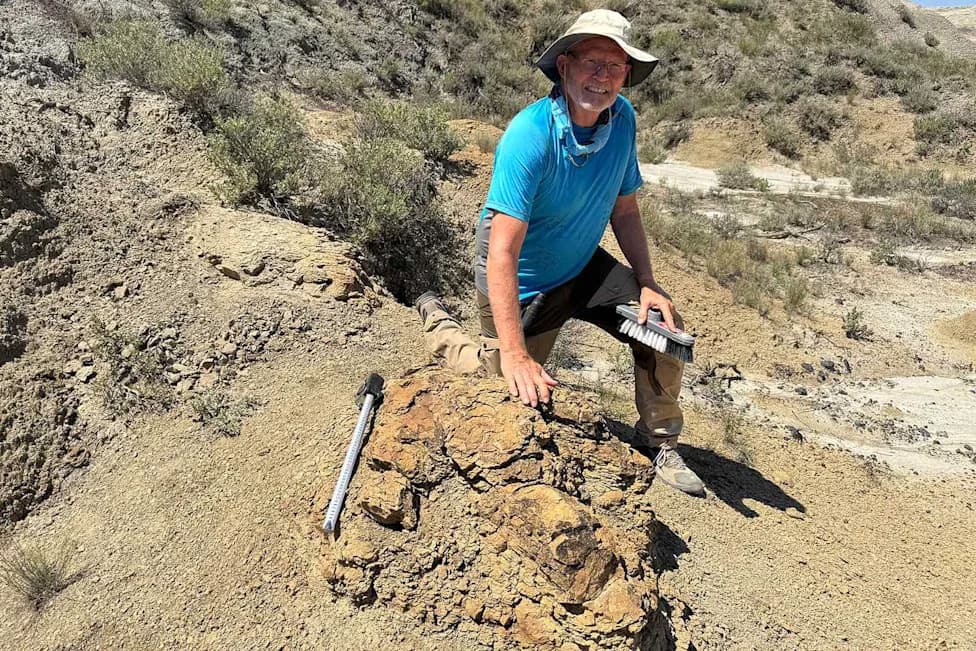
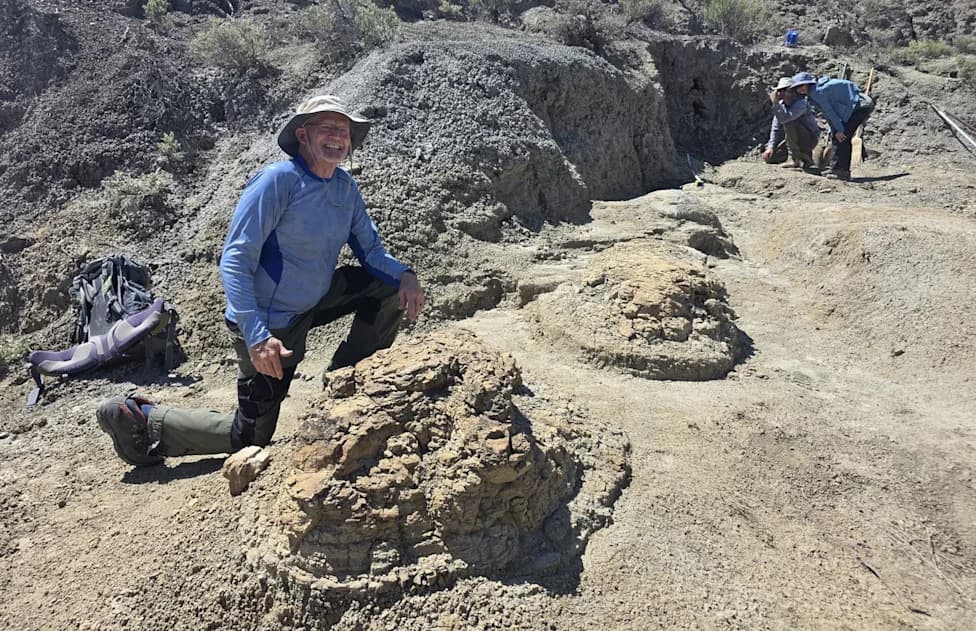
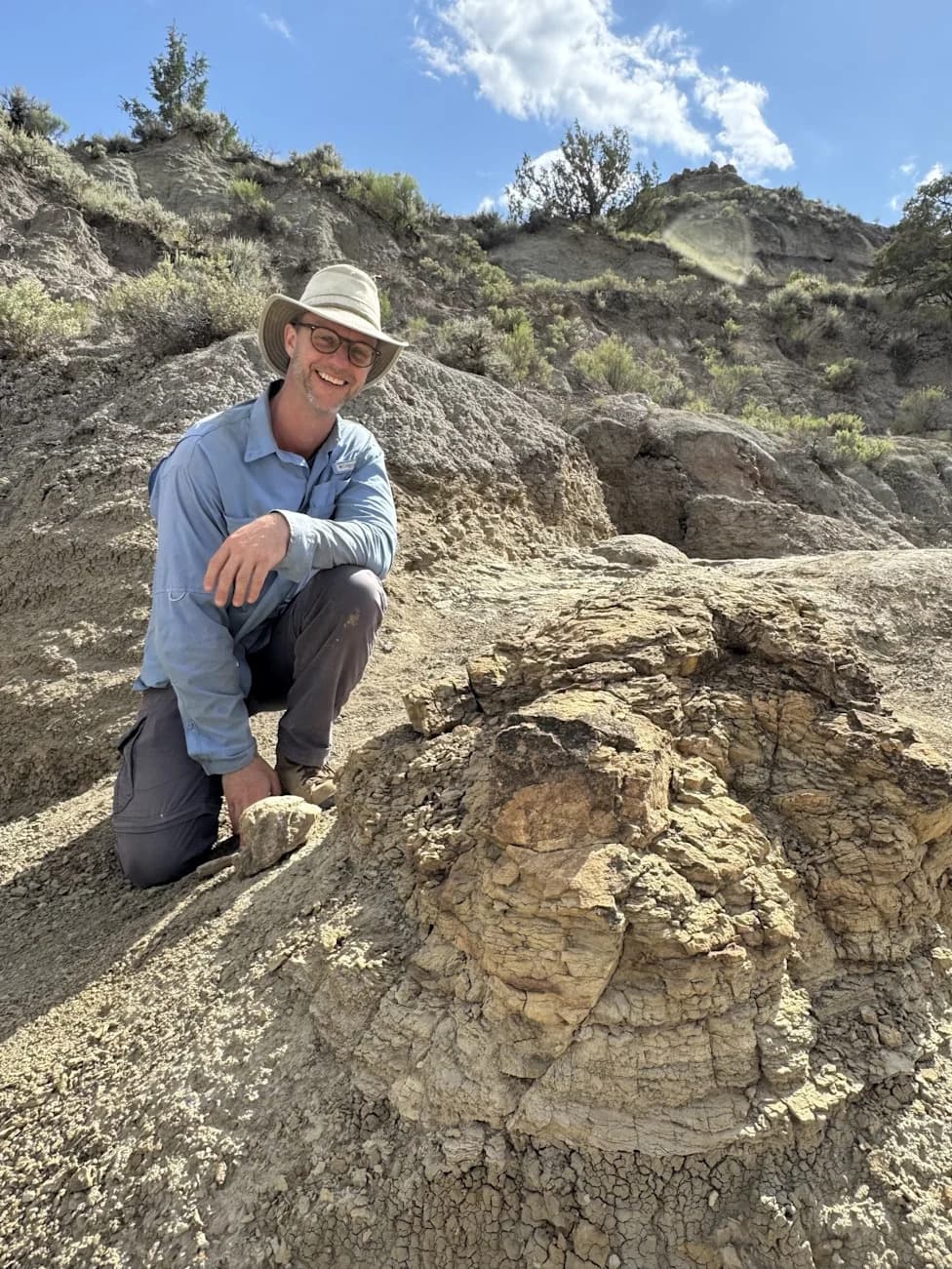
Kent Hups with T. rex trackCredit: Tyler Lyson
A Colorado high school teacher volunteering on a paleontology dig in North Dakota has helped uncover what researchers say is the first documented trackway likely made by an adult Tyrannosaurus rex. The discovery — four consecutive, adult-sized footprints preserved in the Hell Creek Formation — provides a rare behavioral snapshot from the very end of the Cretaceous.
Discovery and Context
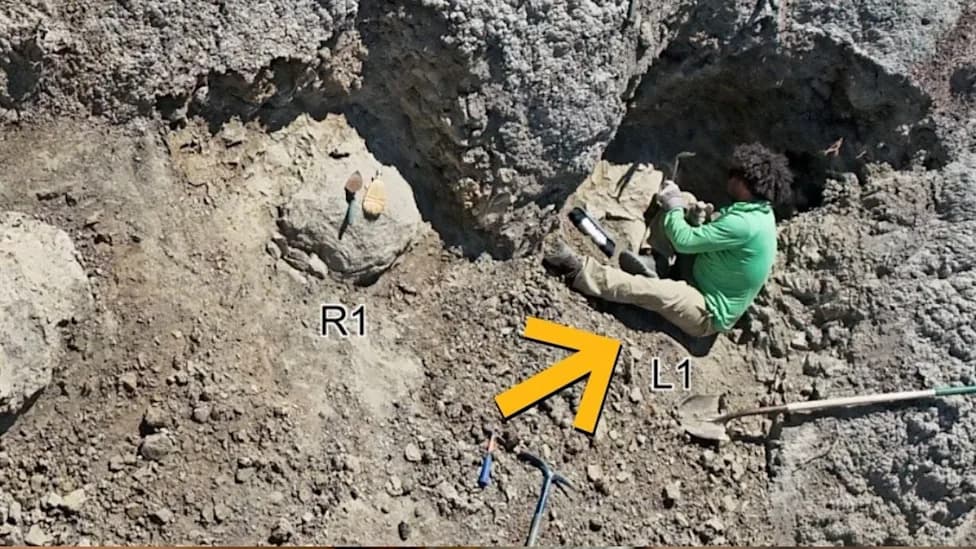
In 2025, Kent Hups, a teacher at Northglenn High School and an amateur fossil hunter, was volunteering on an excavation of the Upper Cretaceous Hell Creek Formation in southwestern North Dakota led by Tyler Lyson of the Denver Museum of Nature & Science. Hups initially noticed what he thought was a single footprint; when the team returned the following day they confirmed a sequence of four tridactyl impressions roughly 1 meter (about 3 feet) long each, spanning approximately 23 feet.
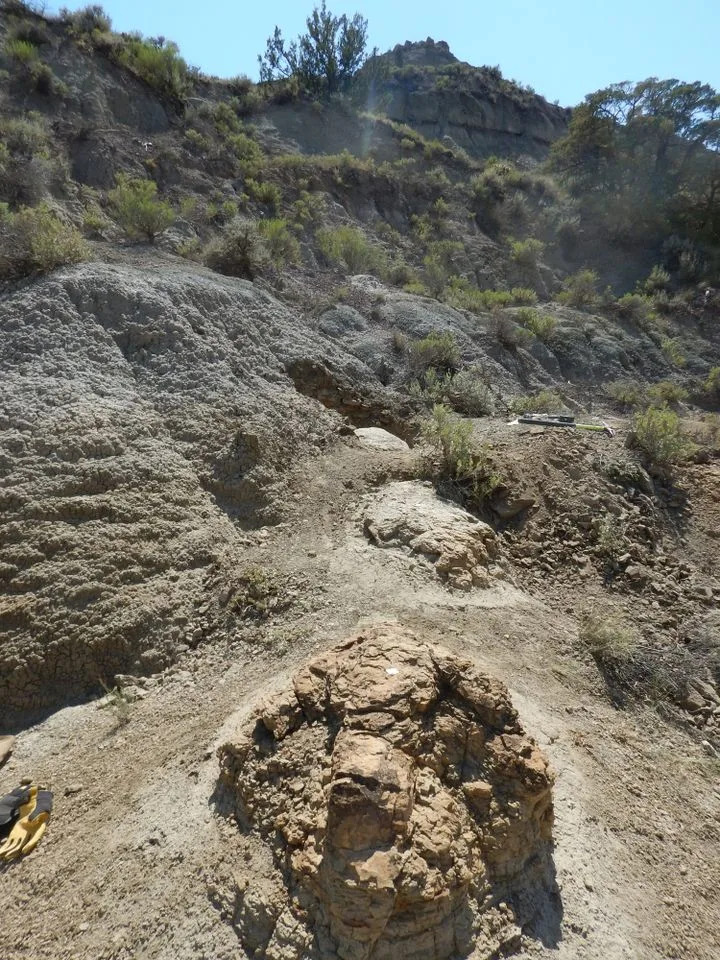
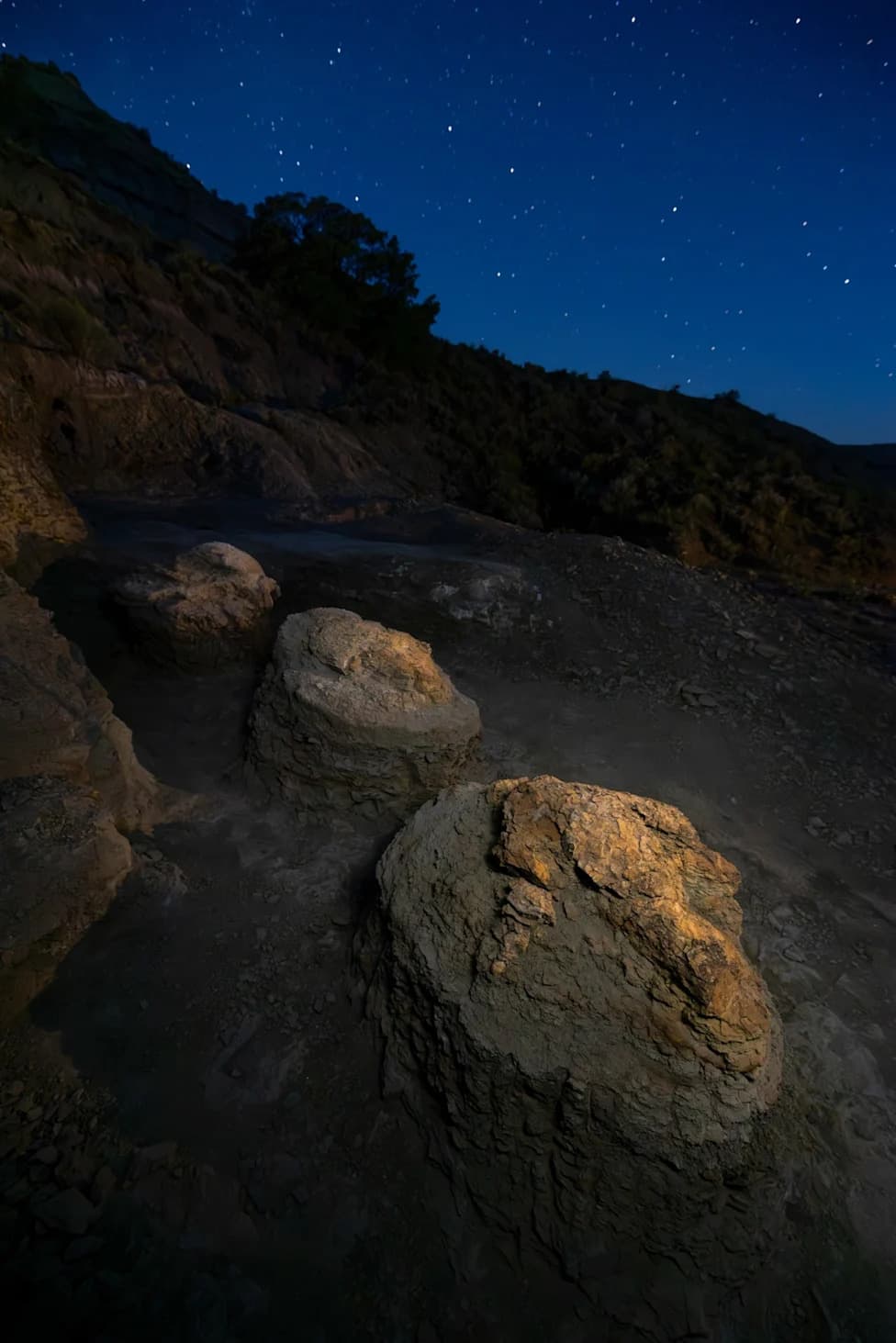
Drone of T. rex trackwayCredit: Kent Hups
Scientific Significance
Researchers estimate the trackway was made about 66.5 million years ago. Based on the spacing and size of the prints, the team calculated the animal was walking at an estimated 3.4–4.5 miles per hour. While isolated adult-sized footprints attributed to T. rex have been reported previously from places such as New Mexico and Montana, this is the first time scientists have described a likely adult T. rex trackway — a sequence of prints that captures movement across the landscape.
Preservation and Analysis
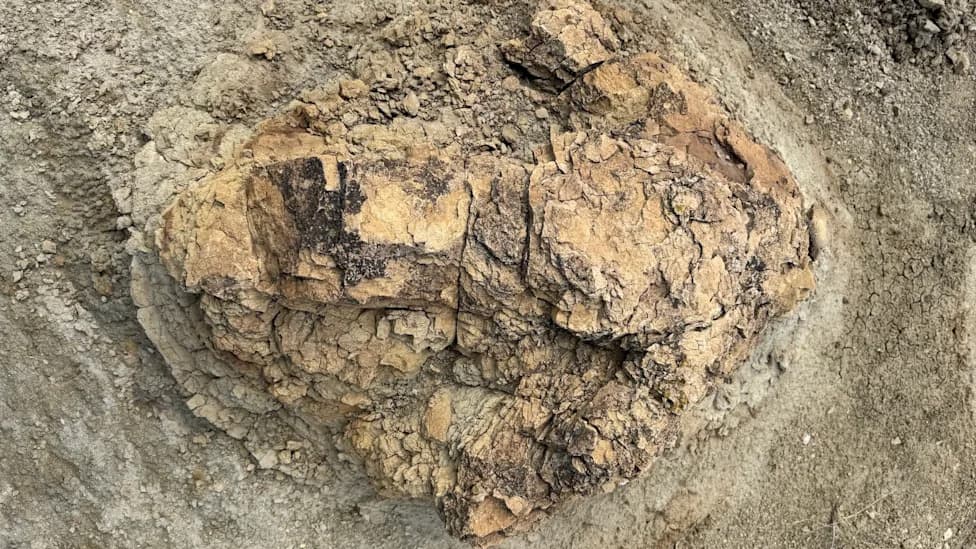
The footprint casts are preserved as fine-grained sandstone concretions cemented with calcium carbonate that nucleated around footprint depressions, producing casts harder than the surrounding rock. Although the casts are now heavily fractured and show damage accumulated since the Cretaceous, they remain scientifically valuable as direct evidence of locomotion and behavior.
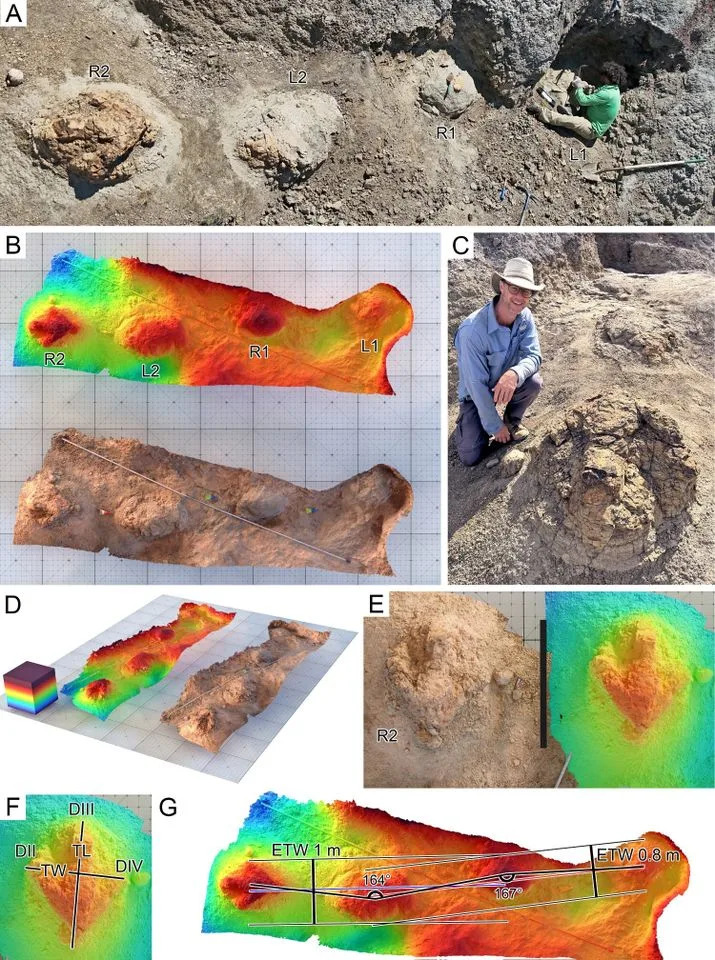
A large tridactyl trackway from the Upper Cretaceous Hell Creek Formation of North DakotaCredit: Falkingham, P. L., Hups, K. M., Tamez-Galvan, E. M., Bercovici, A. D., & Lyson, T. R. (2026). A large tridactyl trackway from the Upper Cretaceous Hell Creek Formation of North Dakota, likely attributable to an adult Tyrannosaurus rex. Journal of Vertebrate Paleontology.
"As a teacher, I'm always telling my students that science starts with curiosity, passion and careful observation. I never imagined that could lead me to a discovery like this," said Kent Hups in a statement released by the Denver Museum of Nature & Science.
Lead author Peter Falkingham, a palaeobiologist and track specialist at Liverpool John Moores University, led the study. Co-authors include Evan Tamez-Galvan, Antoine Bercovici and Tyler Lyson. The findings were published in the Journal of Vertebrate Paleontology.
Museum Display
The Denver Museum of Nature & Science will conserve and exhibit the trackway, with plans to put the specimens on public display this winter. Curators say the display will offer visitors a rare chance to 'follow' an individual T. rex across an ancient landscape — a moment in time that bones alone cannot capture.
Why It Matters: Trackways provide unique behavioral data — such as gait and speed — that skeletal remains cannot. This find adds an important, tangible data point to our understanding of T. rex movement and ecology during the final days of the dinosaurs.
Help us improve.