The California two-spot octopus (Octopus bimaculoides) used mirror reflections to locate hidden prey in a study published in Current Biology (2026), marking the first evidence of mirror-guided problem solving in an invertebrate. After 10–12 training attempts, individuals learned to translate mirror images into real-world locations and chose the correct side about 70% of the time. Many trials (59% of correct attempts) featured an efficient shortcut in which octopuses climbed over a box wall, highlighting their three-dimensional spatial skills. The work suggests convergent evolution of mirror-guided cognition, while stopping short of claiming self-recognition.
Mirror, Mirror in the Tank: Octopuses Use Reflections to Locate Hidden Prey
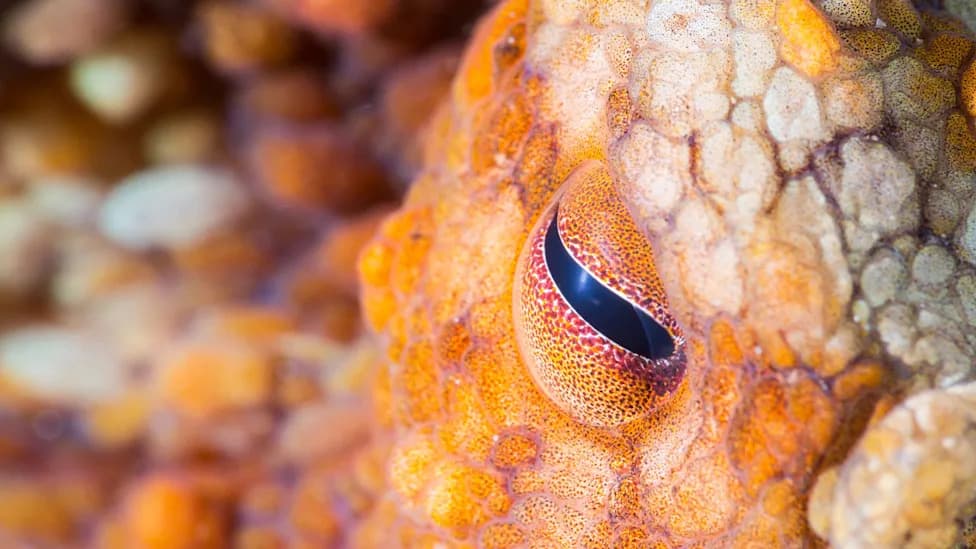
Octopuses can solve complex puzzles, use tools, and escape secure aquariums.
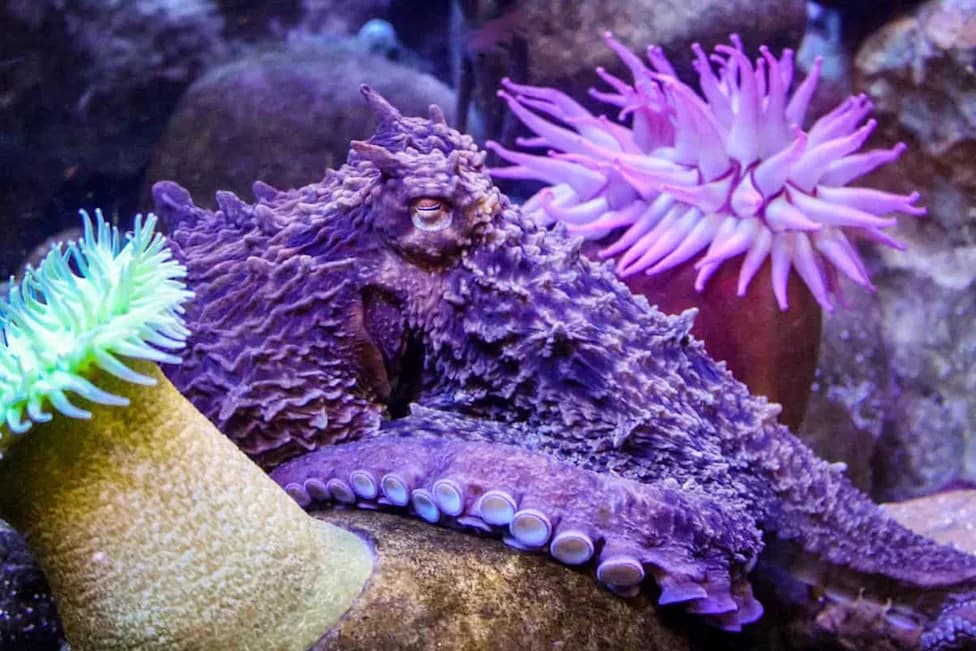
Octopuses combine striking anatomy with sophisticated problem solving: portions of their nervous system run through their arms, their skin can detect light and patterns, and without an internal skeleton they can squeeze through any opening larger than their beak. These unusual traits have led scientists to call them almost 'alien' — but recent research shows some cognitive abilities may have arisen independently in both octopuses and vertebrates.
New Study: Mirrors as Tools
A study published in Current Biology (2026) reports that California two-spot octopuses (Octopus bimaculoides) used mirror reflections to locate hidden prey — the first documented case of mirror-guided problem solving in an invertebrate. Co-author Dr. Mary Kieseler says this behaviour suggests convergent evolution of the perceptual and cognitive mechanisms needed to use reflected information.
Why Not The Classic Mirror Self-Recognition Test?
Instead of immediately attempting a standard self-recognition test (where an animal is marked and observed to see whether it inspects or removes the mark after seeing its reflection), the researchers first asked a simpler question: can octopuses treat a mirror as a tool to find food? Octopus skin contains sensory cells that could let them feel a mark, and underwater marking presents practical problems, so a stepwise approach was more practical.
Habituation and Training
Researchers first habituated the octopuses to the mirror until they behaved normally in front of it — a key milestone was when animals began to eat while facing their reflection, which this species typically avoids in the presence of conspecifics. For training, a live crab was placed inside a glass jar the octopuses already knew how to open and hidden around a corner. The crab's location could only be determined via the mirror.
Initially the animals approached the mirror itself, but after roughly 10–12 training attempts each, they learned to translate the reflected image into the crab’s actual location and go directly to the jar.
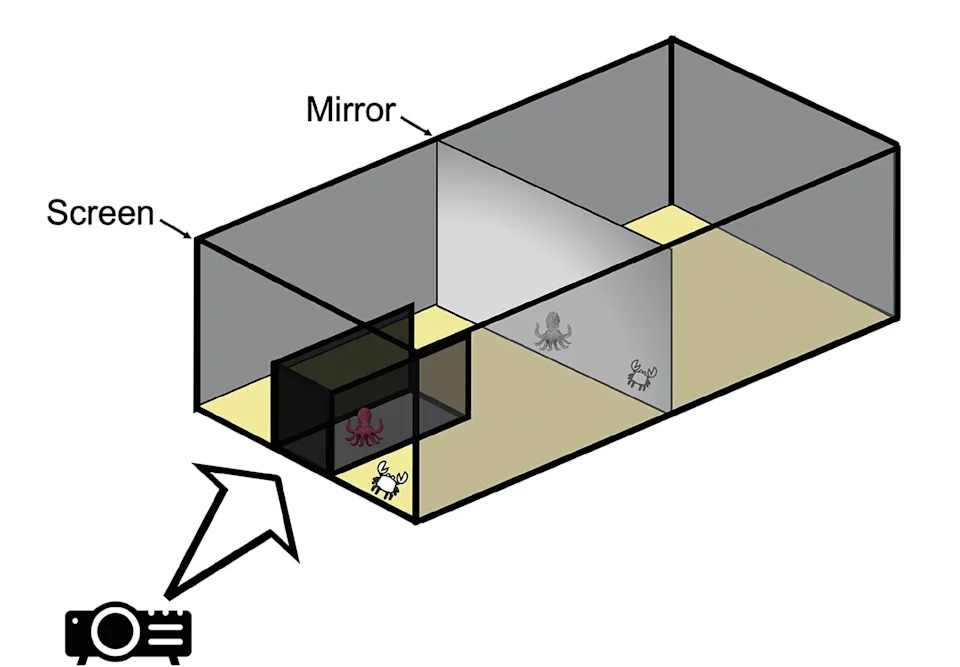
This diagram shows how the octopuses were placed in the experiment.Image:Kieseler et. al 'Current Biology' (2026)
Testing With a Virtual Crab
To eliminate chemical cues, the team projected a virtual crab onto the far wall of the tank so it could only be seen as a mirror image. Each octopus sat in a three-walled box at one end of the tank; the open side faced a large mirror spanning the tank so the octopus could view the back wall only via reflection. The virtual crab appeared either on the left or the right. To earn a reward (a live crab released from above), the octopus had to exit the box, turn, and travel to the side indicated by the reflection.
Results
Across dozens of trials, octopuses chose the correct side about 70% of the time — a result statistical tests showed was unlikely due to chance. In many successful trials (59% of correct attempts), octopuses used a shortcut: instead of exiting and walking around, they climbed up and over the box wall directly toward the target. One individual used that shortcut on its first trial.
‘Their understanding of their environment seems to be more 3D than ours,’ said Kieseler, now a postdoctoral researcher at the University of Fribourg. ‘Humans cannot simply walk up a vertical wall the way an octopus can, and that spatial flexibility may help them use mirrored information effectively.’
Interpretation and Caveats
The researchers emphasize that the experiments demonstrate mirror-guided problem solving, not necessarily self-recognition. The behaviour is best understood as spatial problem solving shaped by ecological pressures: ambush hunting and predator avoidance demand a three-dimensional awareness of rocks, reefs, and crevices. That ecological need may have driven octopuses to evolve mirror-use abilities independently from vertebrates.
These results expand comparative cognition research and challenge human-centered measures of intelligence by showing complex, useful cognition can take very different forms in distantly related animals.
Study: Kieseler et al., Current Biology (2026)
Help us improve.