Defense Secretary Pete Hegseth signed a memo directing U.S. Cyber Command and supporting agencies to use advanced intelligence and cyber tools to protect the midterm elections from foreign interference. The order, issued about five weeks before Election Day, calls for coordination with the Department of Homeland Security to safeguard election infrastructure. Officials note similar operations were undertaken before the 2024 vote, but concerns persist after the second Trump administration scaled back counter-influence units and questioned prior intelligence. It remains unclear what role the Election Security Group will play and whether there is sufficient time for thorough planning.
Hegseth Directs Military Cyber Forces To Protect U.S. Midterms From Foreign Interference

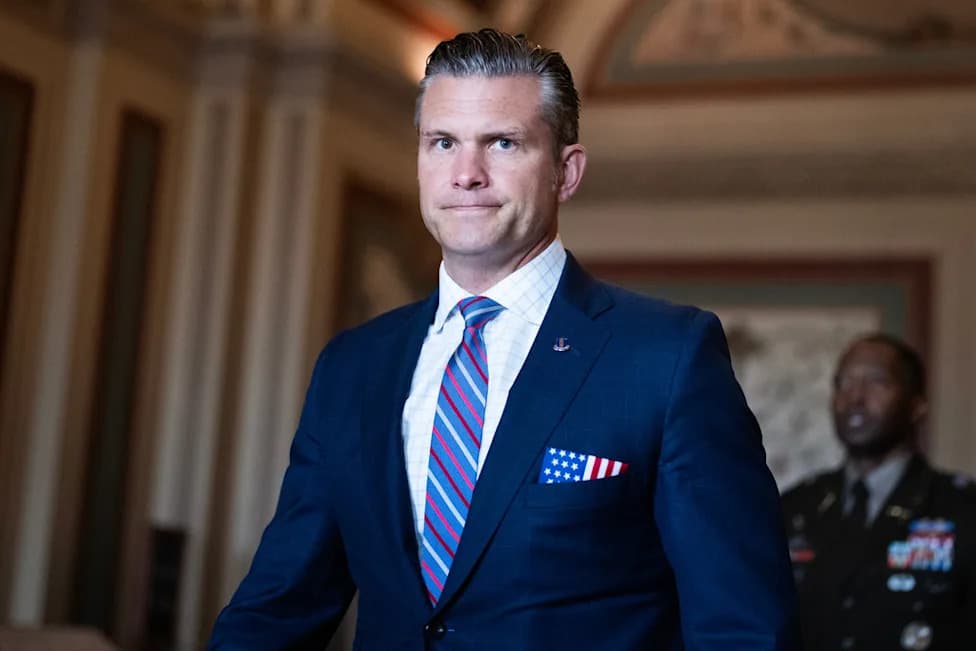
US Defense Secretary Pete Hegseth watches a US Air Force flyover at the Pentagon in Washington, DC, on September 18, 2026. - Jonathan Ernst/Reuters
Defense Secretary Pete Hegseth has signed a memo directing the U.S. military to take active steps to defend the upcoming midterm elections from foreign interference, the Pentagon announced Monday.
The directive tasks U.S. Cyber Command — the military's cyberwarfare arm — along with combat support agencies to "deploy advanced intelligence and cyber capabilities" to "identify, disrupt, and neutralize foreign interference in U.S. democratic processes," the department said in a statement.
Issued roughly five weeks before Election Day, the memo instructs Cyber Command to coordinate closely with the Department of Homeland Security to counter cyber threats aimed at election infrastructure, voter registration databases, and other critical systems.
Context and Precedent
Many of the activities called for in the memo mirror steps U.S. military and intelligence services took to protect American elections prior to President Trump's return to the White House in 2025. For example, in the weeks before the 2024 presidential election, Cyber Command reportedly executed a covert operation to disrupt Russian troll networks that were spreading false information to U.S. voters.
However, the second Trump administration has scaled back or disbanded several government units that previously focused on countering foreign influence operations, including teams inside the FBI and the Office of the Director of National Intelligence. The president has also publicly questioned or downplayed past U.S. intelligence assessments about Russian and Chinese efforts to influence elections, prompting concern among current and former national security officials about the priority given to election defense.
Questions About Preparedness
Those concerns intensified in April, when Gen. Joshua M. Rudd, the new head of Cyber Command and the National Security Agency, told lawmakers he was unsure whether a specialized military-intelligence team dedicated to countering foreign threats to elections had been established for the midterms.
Since 2020, a standing unit called the Election Security Group (ESG) has served as a hub for NSA and Cyber Command officials to share intelligence and, when necessary, launch countermeasures against online influence campaigns from actors in Russia, Iran and elsewhere. The ESG was created in response to Russia's broad influence operation around the 2016 election, after agencies were criticized for being caught off guard.
Gen. Rudd said in a statement Monday that Cyber Command and the NSA "regularly counter actions by malicious foreign cyber actors including those with the intent to interfere with our democratic process."
Andrew Schoka, who worked at Cyber Command during the 2020 election cycle, told CNN: "The ESG's work takes months of planning and coordination, and a lot of their impact takes place far in advance of Election Day. If that's just being started now, you're really limiting the impact that you're able to have on adversaries before the midterms."
It is not yet clear what role, if any, the Election Security Group will play in the operations ordered by Hegseth, or whether the timeline allows for the level of preparation experts say is required to be most effective. The Pentagon's announcement underscores an effort to mobilize military cyber capabilities quickly, but it also raises questions about coordination, legal authorities, and the time needed to mount a proactive defense.
What To Watch: Officials will likely clarify the ESG's status and the scope of Cyber Command's actions in the days ahead. Observers are watching for details on how the military will coordinate with civilian agencies and what measures — defensive or disruptive — will be employed as Election Day approaches.
Help us improve.