Octopuses achieve near-instant camouflage using chromatophores, iridophores, and muscular papillae to change color, sheen, and texture in milliseconds. These changes are driven directly by nerves, not slow hormones, and are supported by a highly decentralized nervous system with many neurons in the arms. Octopuses also learn and solve problems, though how they match colors so well despite limited color vision is still an open scientific puzzle.
How Octopuses Vanish in Plain Sight: The Science Behind Their Instant Camouflage
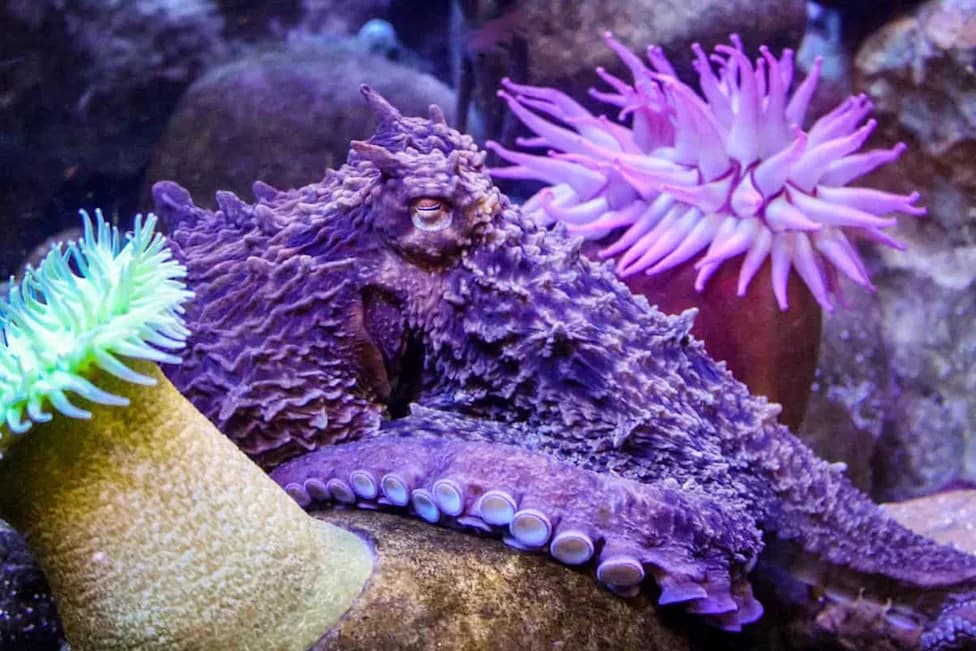
Octopuses© iStock.com/ Lisa5201
Octopuses rarely hold a single color or shape for long. In shallow reefs and rocky seabeds they can seemingly vanish against coral or stone, a near-magical feat that continues to surprise marine biologists.
Color, Pattern, and Texture: How the Disguise Works
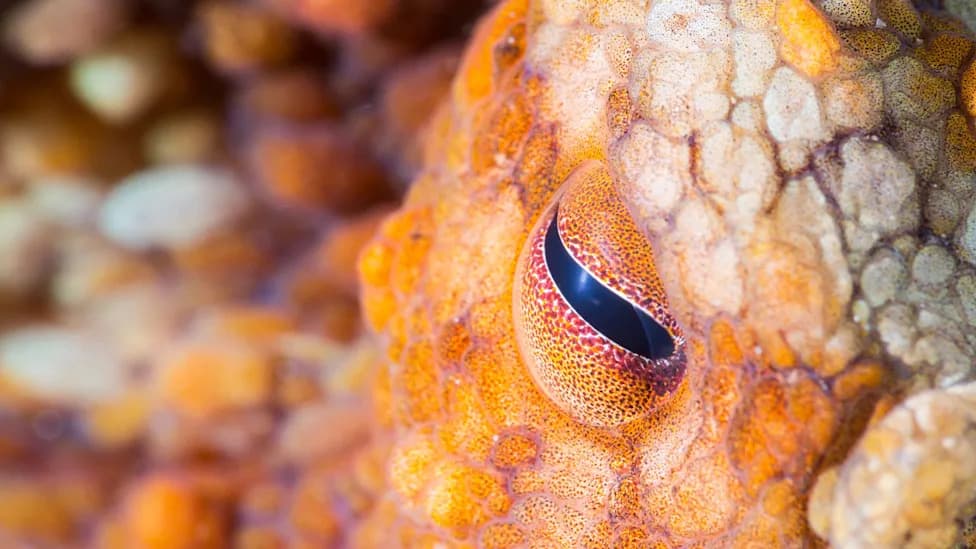
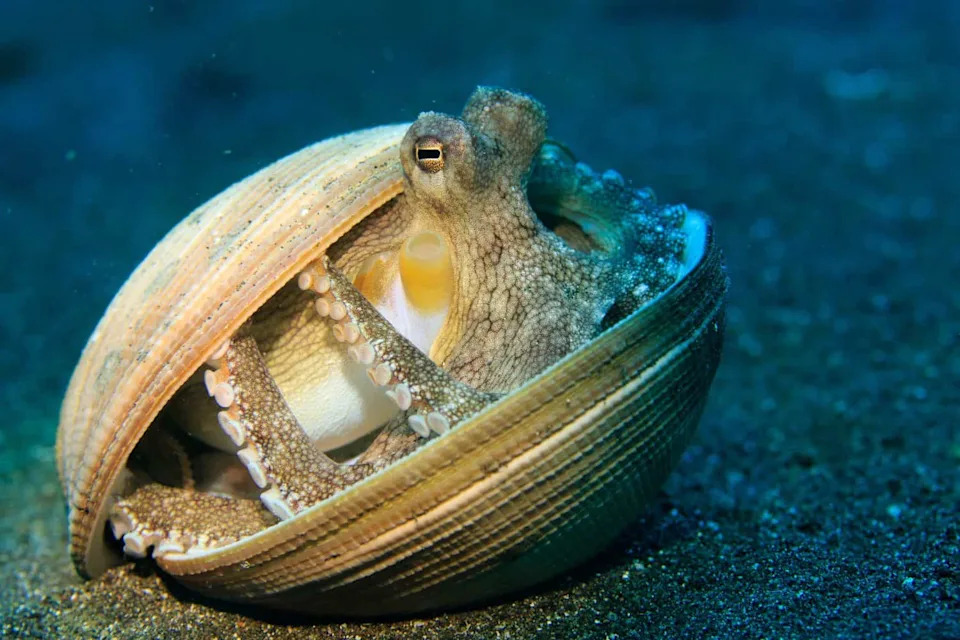
Their skin contains several specialized systems that work together. Chromatophores are tiny pigment-filled sacs that expand and contract to change color and pattern in milliseconds. Beneath them, iridophores and leucophores create structural colors and scattered light effects that add sheen and brightness. Together these layers let an octopus match specks of sand, coral patches, or the shifting glare of sunlight on rock.
©SergeUWPhoto/Shutterstock.com
More Than Skin-Deep: Texture and Shape
Camouflage isn’t just about color. Muscular structures called papillae alter the skin’s texture—raising bumps or smoothing ridges—to mimic rough rock, spongy surfaces, or soft anemones. By changing both color and texture, an octopus can erase the visual cues predators use to find prey.
Fast, Neural Control
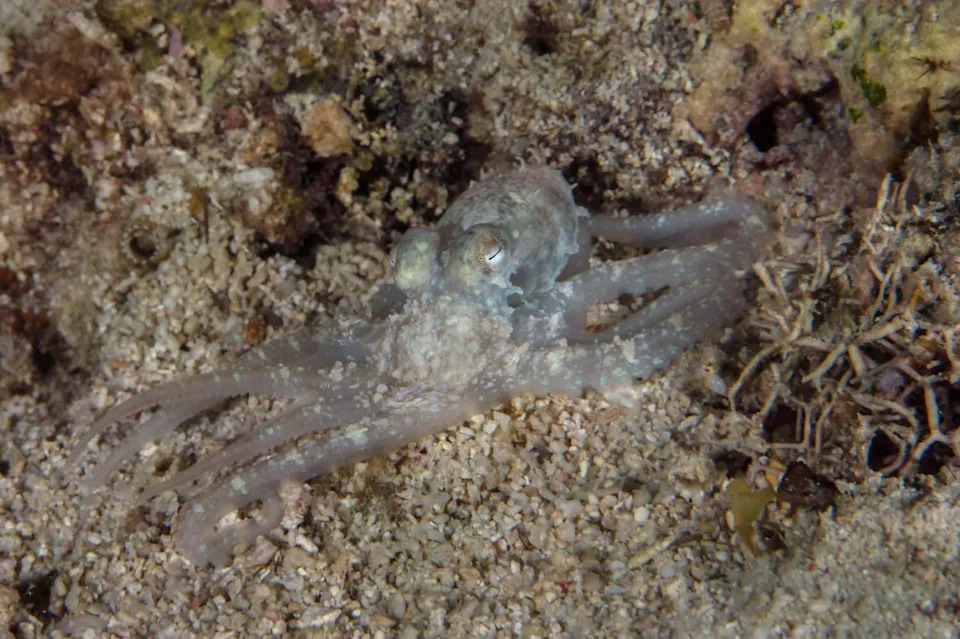
What makes octopus camouflage extraordinary is speed. Experimental work shows these changes are under direct neural control: nerves trigger chromatophores and papillae in near real time. Unlike animals that rely on slower hormonal shifts, octopuses can switch appearance instantly in response to danger or opportunity.
©Oksana Maksymova/Shutterstock.com
Decentralized Intelligence
The octopus nervous system is unusual: more than half of its neurons are distributed through its arms rather than concentrated in the brain. Each arm can sense and act with a degree of autonomy, giving the animal a distributed way of interacting with its environment—simultaneously exploring, manipulating, and responding with multiple limbs.
Cognition: Learning and Problem Solving
Laboratory studies show octopuses can form associations, remember them, and solve tasks such as opening containers or navigating mazes. While researchers debate how much they plan ahead, their behavioral flexibility and capacity for rapid adaptation point to sophisticated cognitive abilities uncommon among invertebrates.
The Color-Vision Puzzle
A continuing mystery is how they match colors so precisely despite evidence that their eyes may have limited color discrimination. Scientists are exploring several hypotheses—use of polarized light sensitivity, spatial and contrast cues, or even light-detecting molecules in the skin itself—but the full explanation remains under active investigation.
Why This Matters
Octopus camouflage combines rapid sensory-motor control, a decentralized nervous architecture, and behavioral adaptability. Studying these animals not only reveals powerful survival strategies evolved over millions of years under the sea, it also challenges and extends our ideas about perception, learning, and intelligence across the animal kingdom.
Help us improve.