AI "nudify" tools have drastically increased the scale and speed of non-consensual intimate imagery and CSAM, affecting hundreds of students and many teens worldwide. Industry responses such as the Tech Coalition's Lantern and stopNCII.org provide shared signals and hashing to detect and remove content, but critics say moderation, advertising practices and cross-platform complexity slow effective action. Experts call for faster coordination, stronger ad controls and prevention measures like deterrence messaging.
Deepfake Nudes Are Flooding Social Media — How Tech, Schools and Safety Groups Are Fighting Back

Deepfake nudes are a global crisis, making it harder to pin down bad actors and stop the rapid influx of child sexual abuse material being generated and shared online. Tech companies are struggling to keep up, experts say.
In 2020, Selena Scola won a landmark class-action lawsuit against Facebook after eight and a half months working as a content moderator. She says relentless exposure to extreme material, including sexual violence and child endangerment, left her with post-traumatic stress disorder. Years later she still cannot watch many horror films without becoming destabilized; she describes a form of "digital death" — a breakdown in her ability to use social platforms that damaged her social life. Only recently has she begun to use sites such as Facebook again.
Scola now finds herself on the receiving end of online abuse. She must preserve evidence of doxxing, sexual imagery and threats directed at her. "I once moderated harmful content to protect Facebook and Instagram users. Now I am stuck reviewing abuse directed at me to protect myself," she said.
How Generative AI Changed the Threat Landscape
Where much harmful content used to be created and recorded by individuals, generative AI now enables people to manufacture non-consensual intimate imagery (NCII) and child sexual abuse material (CSAM) from ordinary photos, producing countless variations at scale. The advent of "nudify" apps and image-generation tools has transformed how these images are created, distributed and moderated.
"Generative AI is really changing everything," said Sean Litton, former CEO of the Tech Coalition, an alliance of more than 60 technology companies focused on child safety. "Its ability to create imagery at speed and scale is changing the whole paradigm."
Scope and Impact
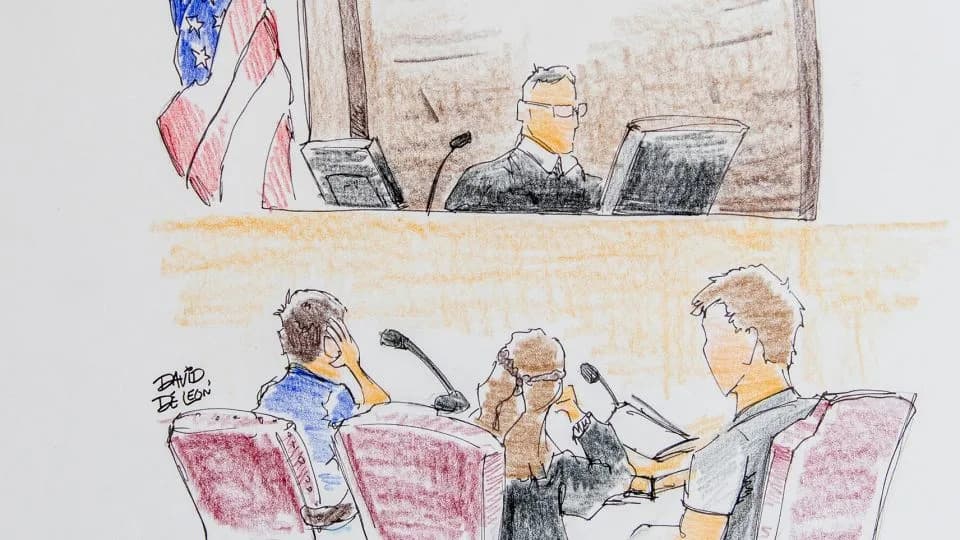
An analysis by Wired and Indicator, citing USA TODAY reporting on a Lancaster, Pennsylvania incident, found nearly 90 schools and roughly 600 students worldwide were affected by AI-generated nudes between 2023 and April 2026. The child-protection group Thorn reports that one in eight teens know someone targeted by fake nudes and one in 17 say they were victims themselves. Victims describe severe social and psychological harm when images spread among peers.
Where Responsibility Falls
Parents, schools and the teenagers who produce deepfakes have all been criticized. But advocates stress that technology companies that enable creation and distribution also bear responsibility. Researchers and digital-safety groups say imperfect moderation systems and problematic ad practices can inadvertently facilitate abuse.
Katie Paul, director of the Tech Transparency Project, argues that platforms have financial and operational incentives that prevent sufficiently aggressive action. In one investigation the group flagged more than 300 ads on Facebook and Instagram containing CSAM or links to apps that could "nudify" images; some ads included images of real children, and many pointed to AI apps based overseas.
Industry Responses and Tools
Tech companies point to new safety initiatives. Meta says it removed hundreds of thousands of ads related to nudify apps in a recent period, pursued legal action against app operators and shared thousands of URLs with industry partners to block repeat offenders.
To address cross-platform abuse, the Tech Coalition launched Lantern in 2023, a shared-intelligence system that lets participating companies exchange signals such as account names, email addresses and URLs. Litton says Lantern has processed more than 2 million signals and prompted over 350,000 enforcement actions; between 2023 and 2025 that led to roughly 164,575 accounts and 163,112 URLs being banned across platforms and the removal of 26,119 pieces of content.
Technical defenses also include services like stopNCII.org, which create a unique digital fingerprint or "hash" for intimate images so participating platforms can detect and remove matches. Prevention tactics such as "deterrence messaging" — pop-ups and extra friction around risky searches or tags — are recommended to reduce sharing and creation of NCII. A 2025 report from the Center for Democracy and Technology found that exposure to NCII increases the likelihood of sharing it, and that additional friction and education can reduce such behavior.
Limits, Debate and the Path Forward
While companies emphasize enforcement and removal efforts, critics say detection is imperfect and responses are often reactive. The deepfake threat typically spans multiple platforms, payment channels and jurisdictions, which complicates enforcement. Litton and others emphasize that no single company can solve the problem alone and call for broader collaboration and wider adoption of tools such as Lantern.
Public concern is rising: an August Pew Research Center survey found 55% of adults under 30 are more worried than excited about AI, and a July YouGov poll reported seven in 10 adults believe technology companies hold too much power. Experts urge faster coordination, stronger ad controls, better platform design to deter sharing, and more legal and technical pressure on apps that facilitate NCII and CSAM.
Bottom line: Generative AI has accelerated the production and spread of non-consensual intimate imagery and CSAM, creating new challenges for victims, schools and platforms. Industry tools and shared intelligence are making an impact, but many experts say action must be faster, more transparent and better coordinated to protect children and adults alike.
This article originally appeared on USA TODAY: Deepfake nudes are flooding social media. Here's what's being done about it.
Help us improve.