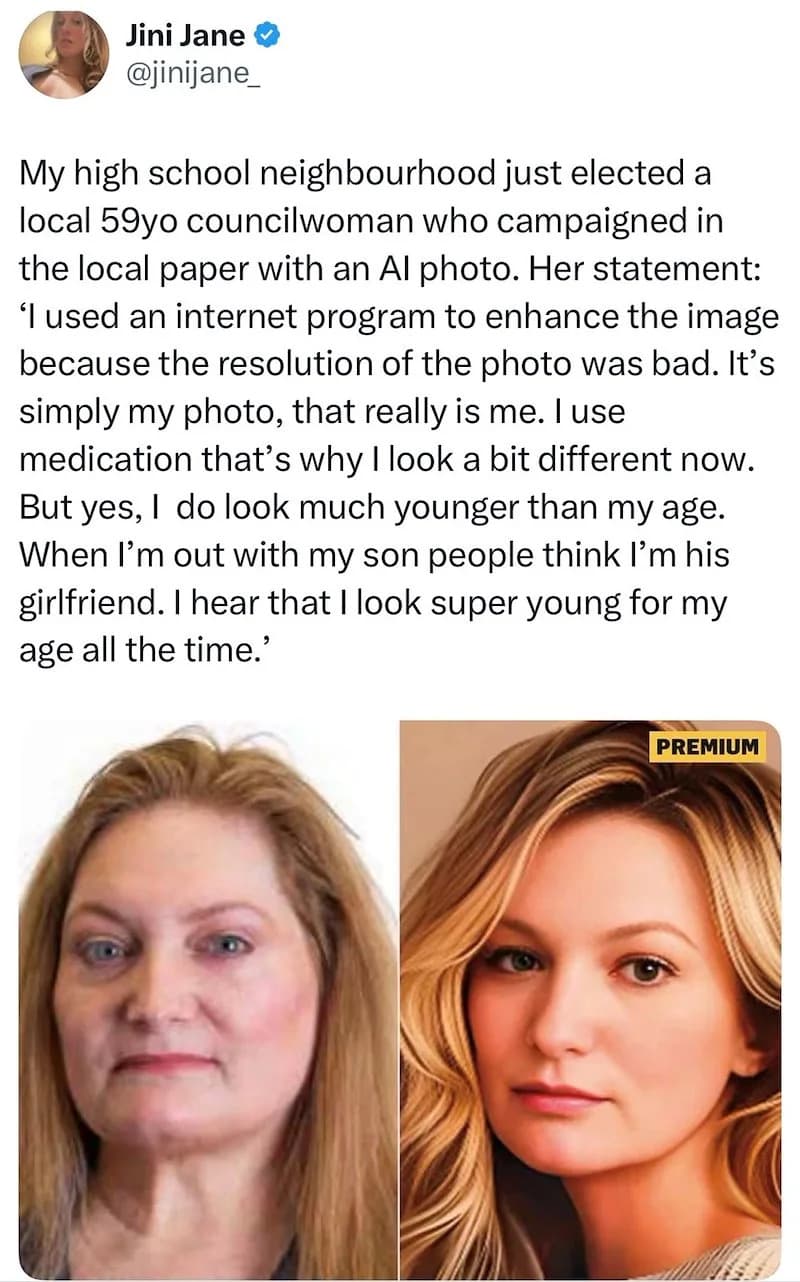
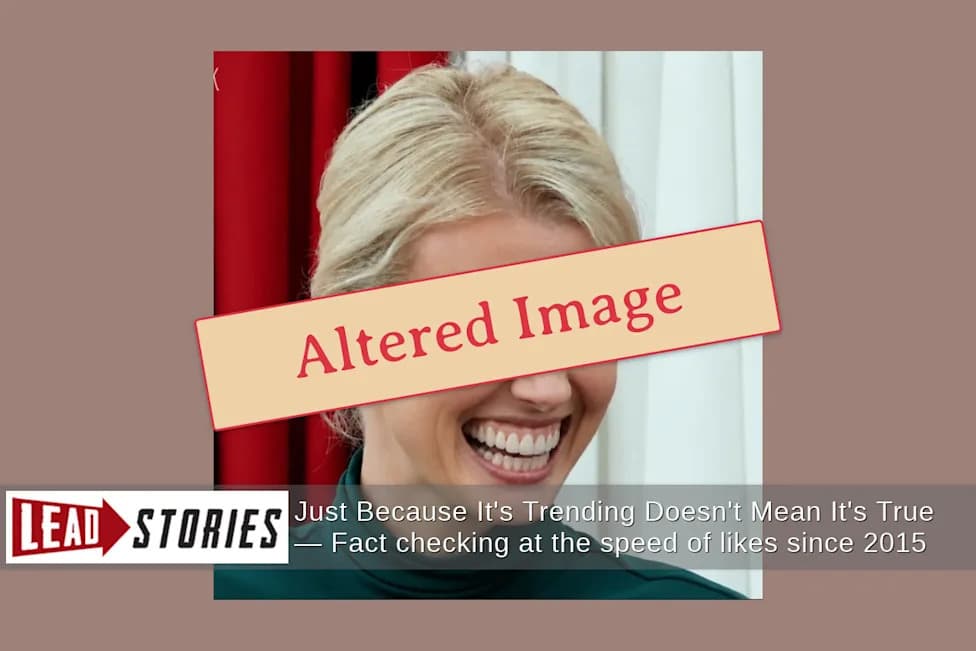
A UK council candidate who used an AI-generated, de-aged campaign photo that made her appear decades younger has sparked a debate about truth, perception and the role of artificial intelligence in political communication.
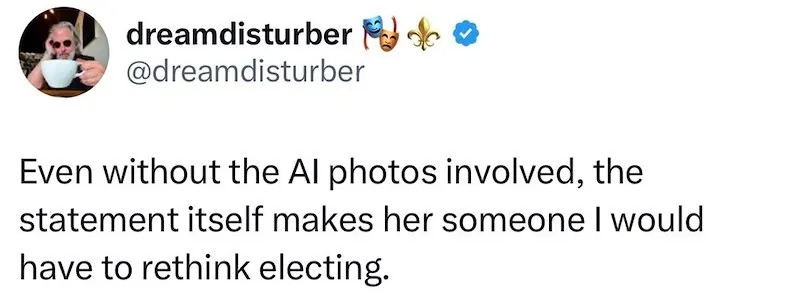
dreamdisturber No @dreamdisturber Even without the Al photos involved, the statement itself makes her someone I would have to rethink electing.
AI-Psychosis is a non-clinical term used to describe situations where prolonged interaction with AI appears to reinforce or amplify delusional thinking—such as treating a chatbot as an actual person. Although not a medical diagnosis, the phrase captures a growing cultural concern: when AI mirrors and validates distorted beliefs, users may become less anchored to shared reality.
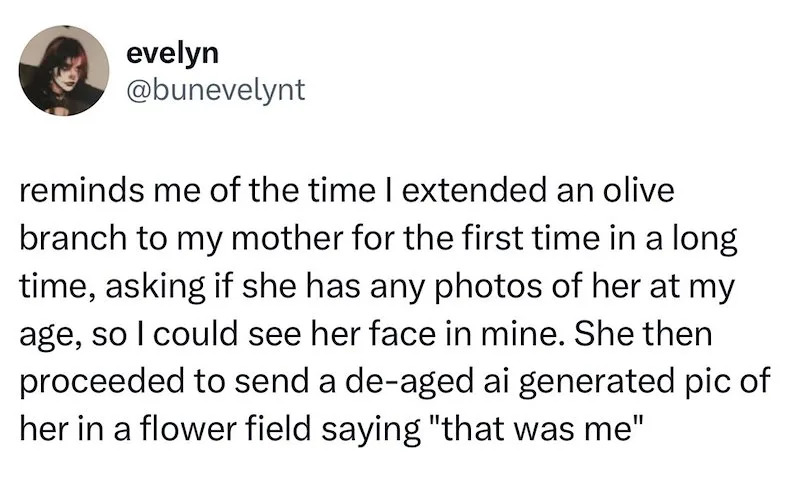
evelyn @bunevelynt reminds me of the time I extended an olive branch to my mother for the first time in a long time, asking if she has any photos of her at my age, so I could see her face in mine. She then proceeded to send a de-aged ai generated pic of her in a flower field saying "that was me"
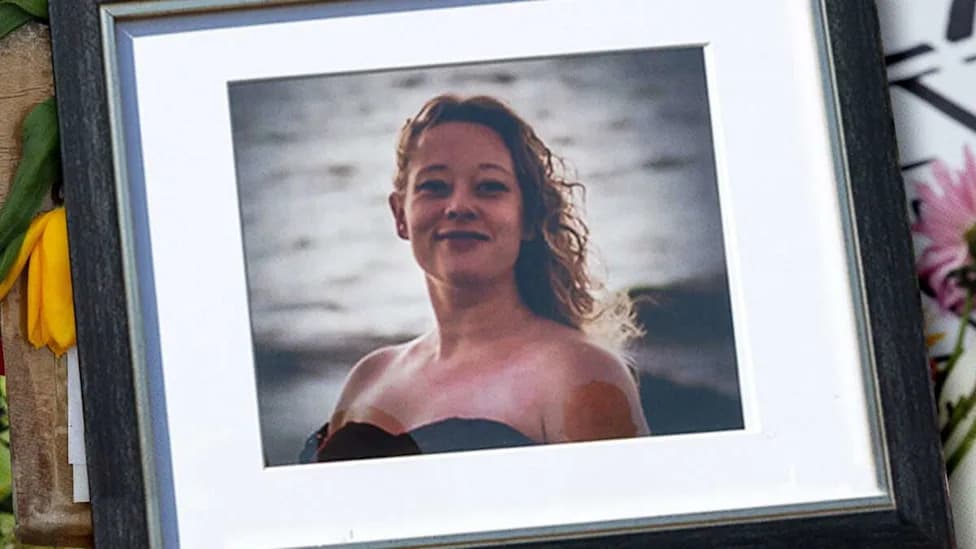
In this case, the 59-year-old candidate employed an AI tool to produce a campaign portrait that made her look about 30 years younger. When critics accused her of misrepresentation, she defended the image, saying medication had changed her appearance and insisting the photo "really is [her]." Whether this reflects genuine self-deception or intentional deception aimed at voters remains unclear.
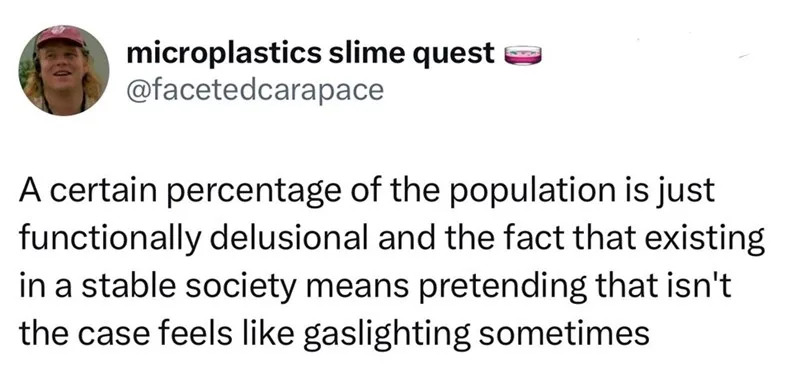
microplastics slime quest @facetedcarapace A certain percentage of the population is just functionally delusional and the fact that existing in a stable society means pretending that isn't the case feels like gaslighting sometimes
Why This Matters
This episode highlights multiple, interconnected problems:
- Erosion of Trust: Voters expect an honest presentation from candidates. Digitally altered images complicate voters' ability to evaluate authenticity.
- Perception vs. Intent: It can be difficult to distinguish between someone who genuinely believes an altered image represents them and someone who knowingly misleads others for advantage.
- Scale of Misuse: As AI image and video tools improve, an increasing number of people may struggle to tell real from fabricated media, or may assume others cannot tell.
Broader Implications
Beyond this single campaign, the incident raises policy and cultural questions. Should there be clear disclosure rules for AI-altered campaign materials? How should platforms, news outlets and election regulators respond when digitally altered media is used in political contexts? Many experts argue for transparency standards and better public education about media literacy.
There are also wider economic and social debates about AI's role in society. Optimists point to productivity gains; critics warn about job displacement and new forms of inequality. While dire scenarios that predict mass job loss make headlines, the more immediate and certain consequence is a shift in how information is produced and judged.
Ultimately, this story is a prompt to rethink norms around authenticity online. Whether the candidate was mistaken, misled by AI, or intentionally deceptive, the episode underscores the need for clearer rules, stronger verification practices, and a public conversation about the acceptable use of AI in public life.