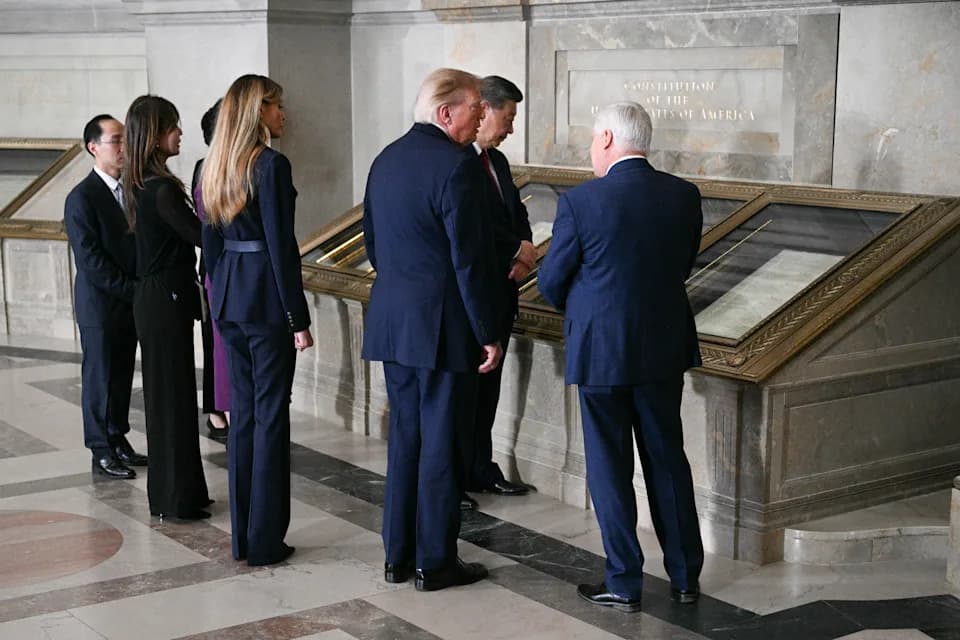
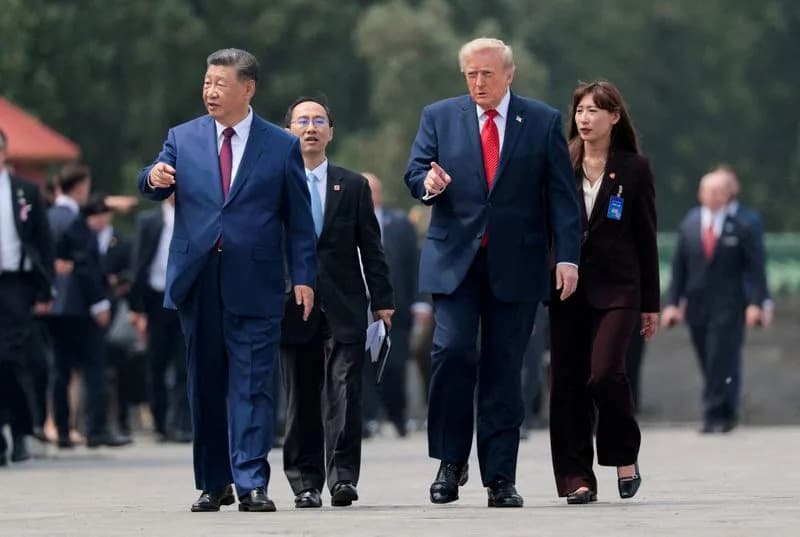
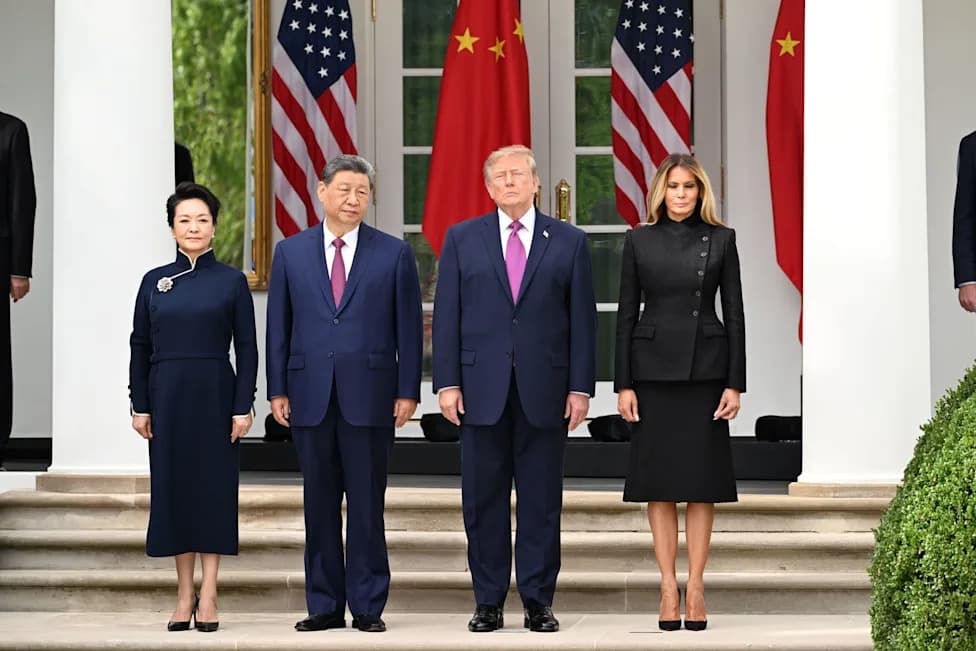
The state visit by Xi Jinping produced spectacular ceremony but only modest policy outcomes, highlighting a managed stalemate between the U.S. and China. Leaders agreed in principle to tariff cuts on a $60 billion package of non-sensitive goods with no implementation timeline, while a broader trade deal was deferred to next year. China offered tariff relief on some U.S. farm goods (corn, dairy) but excluded soybeans, and the summit strengthened China’s diplomatic position on issues such as Taiwan and arms sales.
Trump-Xi Summit: Glitzy State Visit, Limited Policy Wins — A PR Boost for China
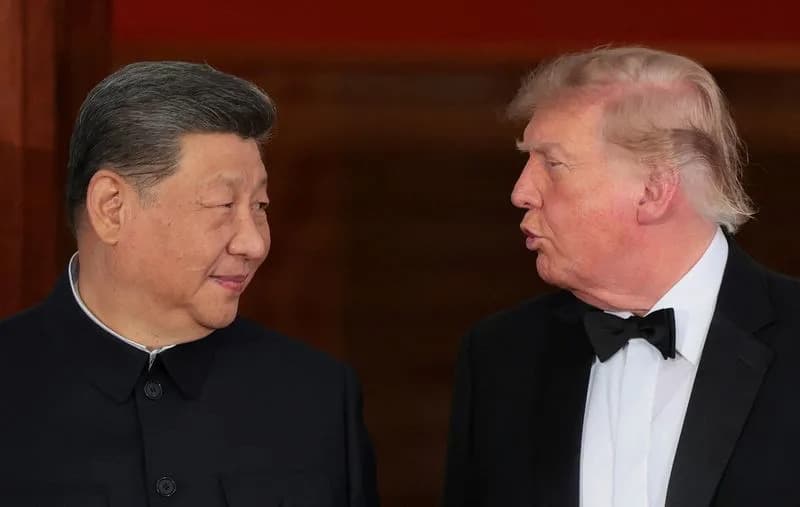
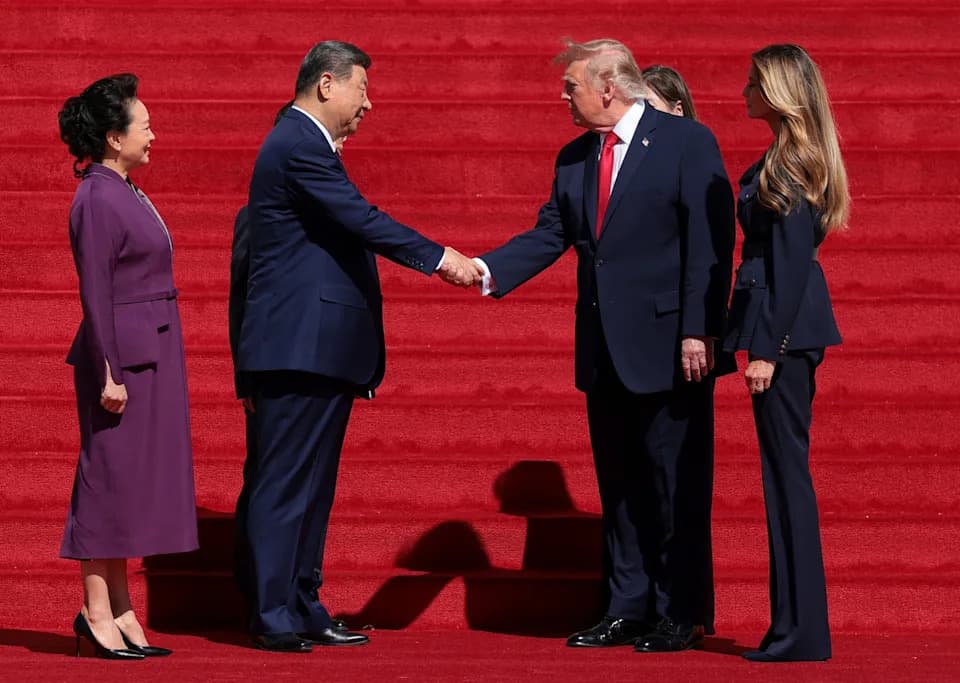
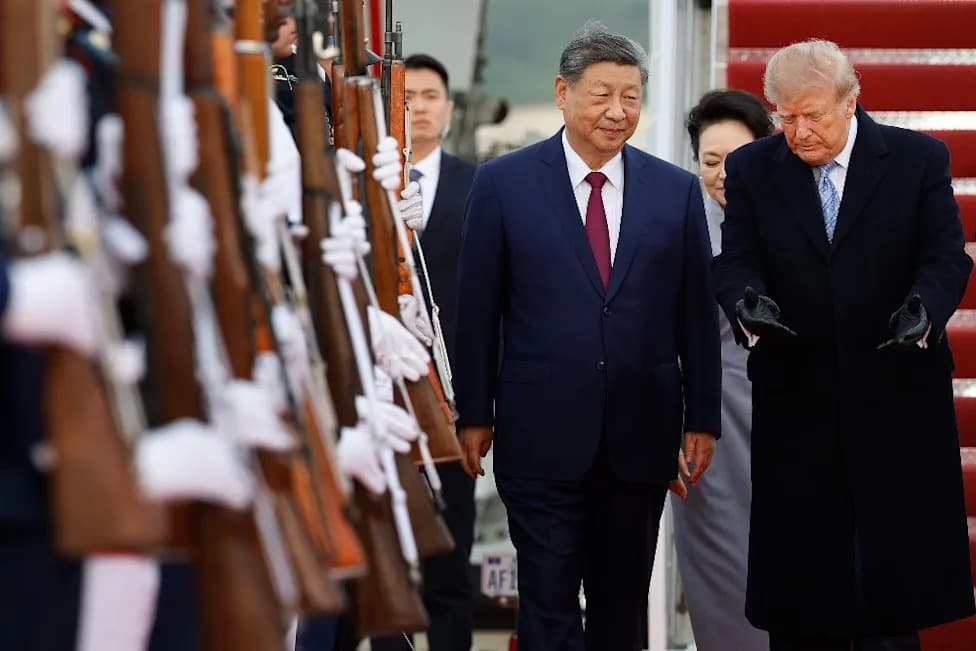
US President Donald Trump speaks with Chinese President Xi Jinping while welcoming him at the North Portico of the White House for a state dinner in Washington, D.C., US, September 24, 2026. REUTERS/Kylie Cooper
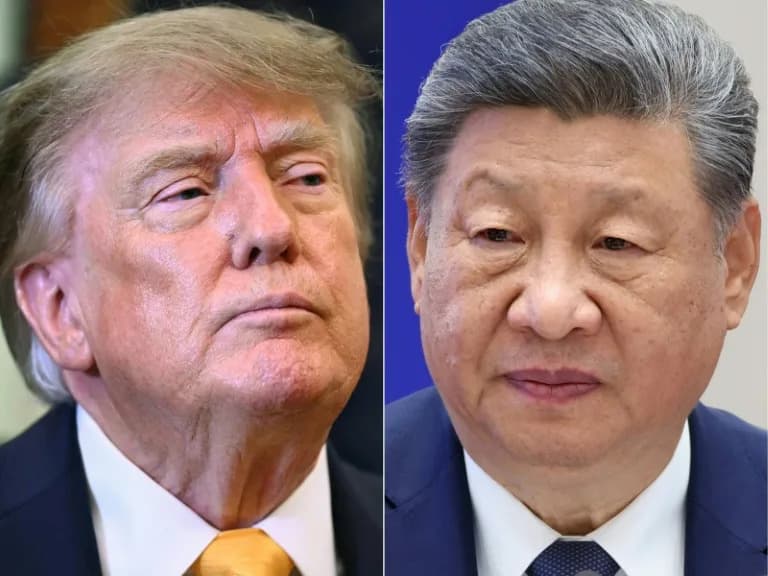
President Donald Trump’s state visit by Chinese leader Xi Jinping delivered high ceremony but few concrete policy breakthroughs, underscoring what analysts describe as a managed stalemate between Washington and Beijing.
What Happened
Both governments announced agreement in principle to cut tariffs on a $60 billion tranche of non-sensitive goods, but provided no implementation timeline. Negotiators also pushed a broader trade deadline into next year. The summit’s pomp — including Trump breaking protocol to greet Xi at the airport and a lavish state banquet — attracted attention even as substantive progress remained limited.
A Managed Stalemate
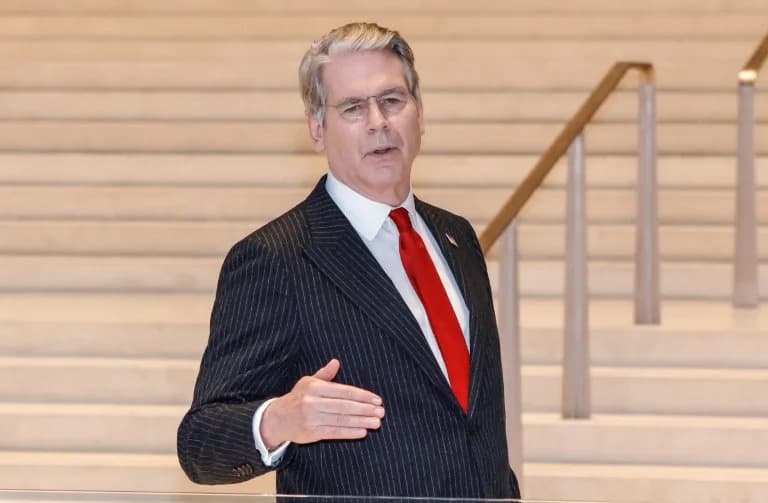
"The US-China relationship has settled into a managed stalemate," said Craig Singleton, senior director for China at the Foundation for Defense of Democracies. "The elaborate pageantry matters precisely because there is still relatively little substantive progress to showcase."
Trade Details And Limits
China proposed tariff cuts on a range of U.S. agricultural products such as corn and dairy, according to a Chinese commerce ministry list. In return, the United States said it would reduce levies on selected Chinese imports, including toys, fireworks and Christmas ornaments. Notably absent from China’s list were soybeans — one of the largest U.S. agricultural exports — leaving that sector vulnerable to future political shifts.
Business And Investment Signals
The absence of a delegation of Chinese chief executives traveling with Xi highlighted lingering American suspicion about Chinese investment and raised doubts about the two-way investment framework announced in Beijing in May. That lack of corporate presence diminished expectations of major commercial deals emerging from the visit.
Strategic Issues: Taiwan, Iran And Rare Earths
Xi pressed Trump on sensitive topics such as U.S. support for Taiwan. Publicly, Trump avoided discussing Taiwan during the visit — a contrast with earlier comments that had framed a pending $14 billion arms package as a potential negotiating chip. Analysts said frequent high-level meetings can buy Beijing time to blunt U.S. actions like arms sales to Taiwan, a dynamic some describe as a strategic win for China and a setback for Taiwan and certain U.S. allies.
China also gave little sign it would help resolve the Iran conflict. After Xi’s departure, Chinese Vice President Han Zheng defended China’s positions on Iran and rebuked U.S. criticisms at U.N. meetings in New York. Meanwhile, China’s dominance in rare earths and other strategic supply chains continues to give it leverage in broader economic and security disputes.
Political Payoffs
For Beijing the visit was a public-relations success: the display of respect, cordial public exchanges and optics of cooperation reinforced China’s standing. For Trump, modest tariff concessions and proposed agricultural purchases provide some relief to U.S. farmers, a key constituency ahead of politically difficult midterm elections — but the absence of soybeans and timelines muted the gains.
What Comes Next
Officials said the leaders are likely to meet again this year at international forums in Shenzhen and Miami. Analysts expect more symbolic gestures and limited, gradual policy adjustments rather than a rapid shift in the strategic competition between the two powers.
Reporting note: This article synthesizes reporting from Beijing, Tokyo and Washington and includes analyst commentary to explain the diplomatic and strategic implications of the visit.
Help us improve.