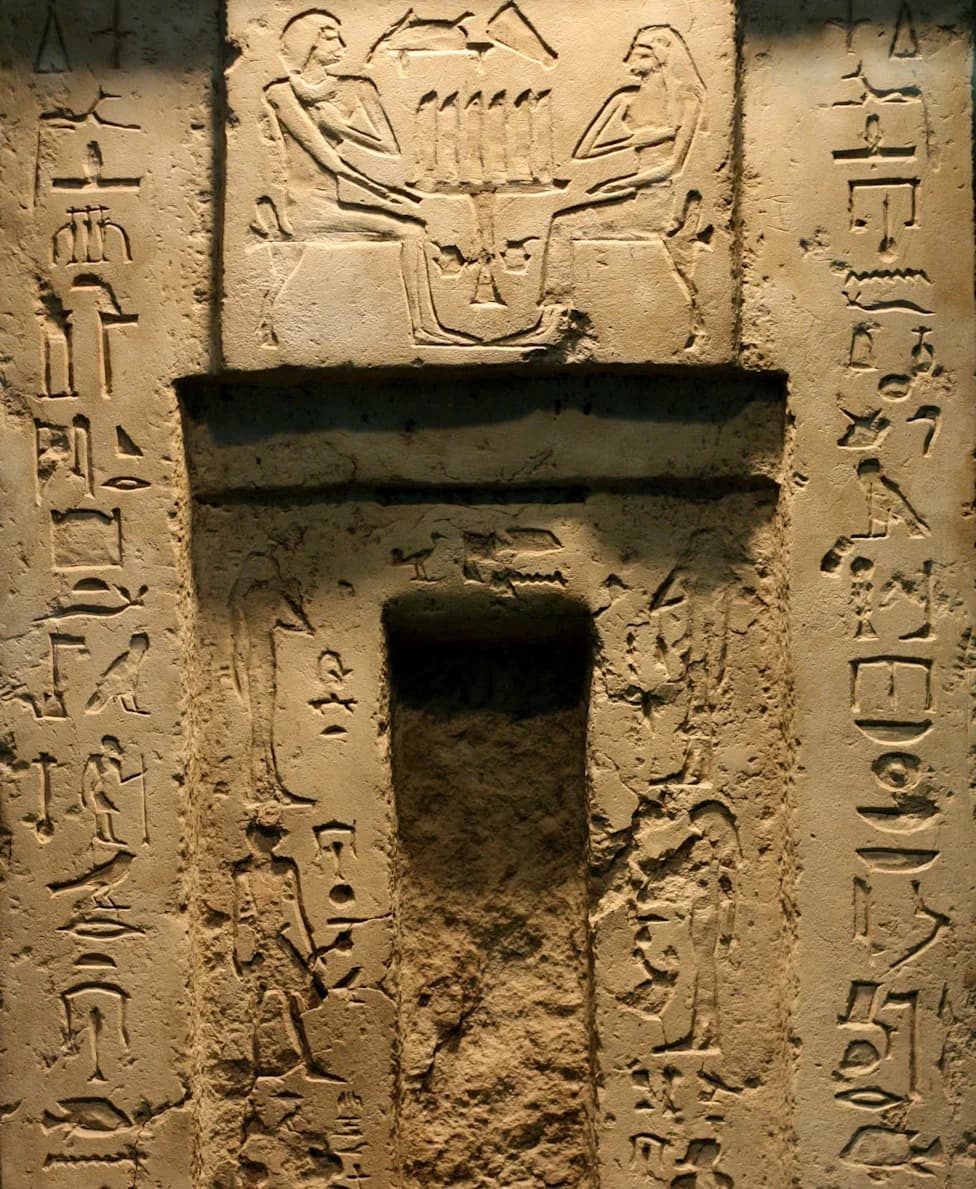
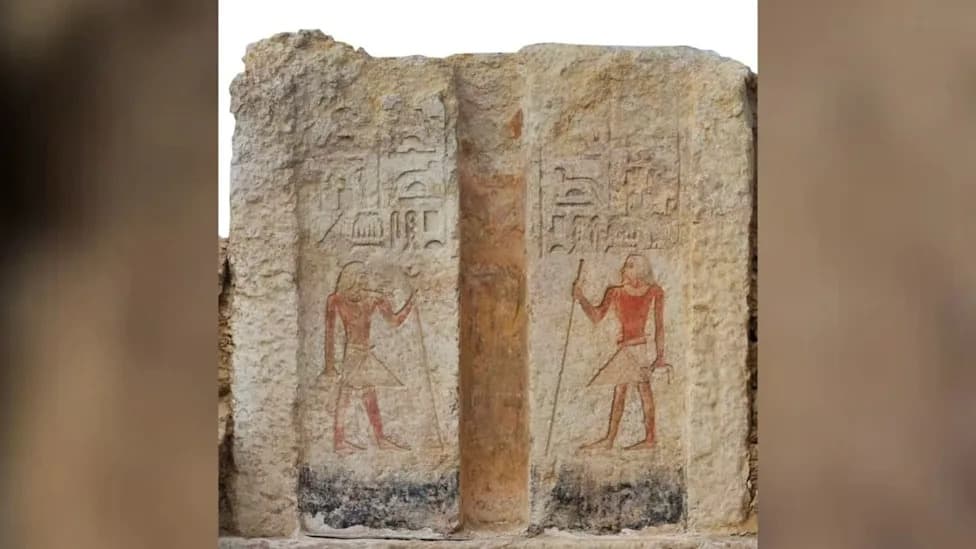
Archaeologists in the Dakhla Oasis uncovered a fourth-century limestone tomb containing a rare 19-line ancient Greek lament for a man named Pisechtes, likely written by his son Sarapion. The burial also features hieroglyphic spells, references to the Amduat, ritual objects and a coin of Constantine the Great, though no Christian imagery was found. Scholars note the poem's Homeric grammar and diacritical marks, and evidence suggests the tomb may have been reused later.
1,700-Year-Old Egyptian Tomb Reveals Rare Ancient Greek Lament — "Listen, Father!"
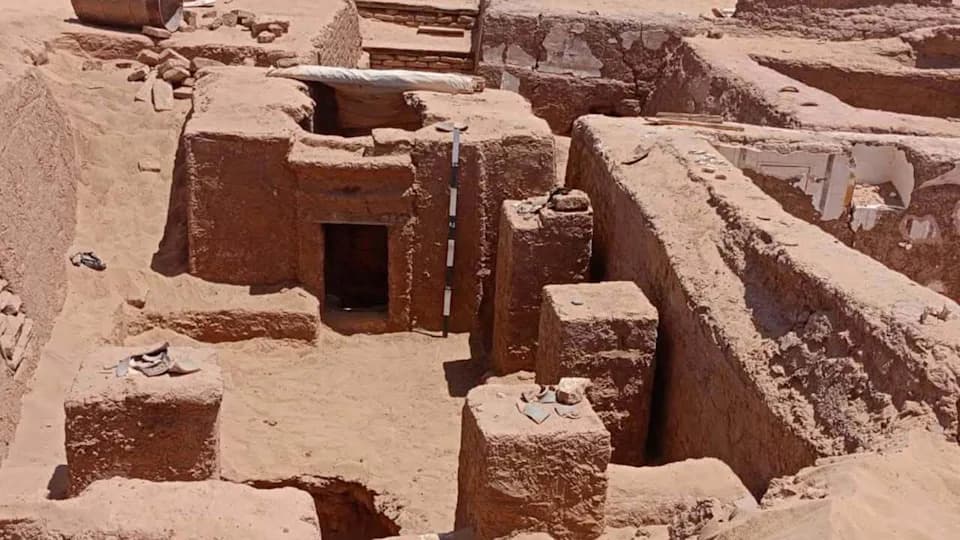
The fourth-century tomb was unearthed in a necropolis in the Dakhla Oasis of Egypt. . | Credit: Courtesy of the Egyptian Ministry of Tourism and Antiquities
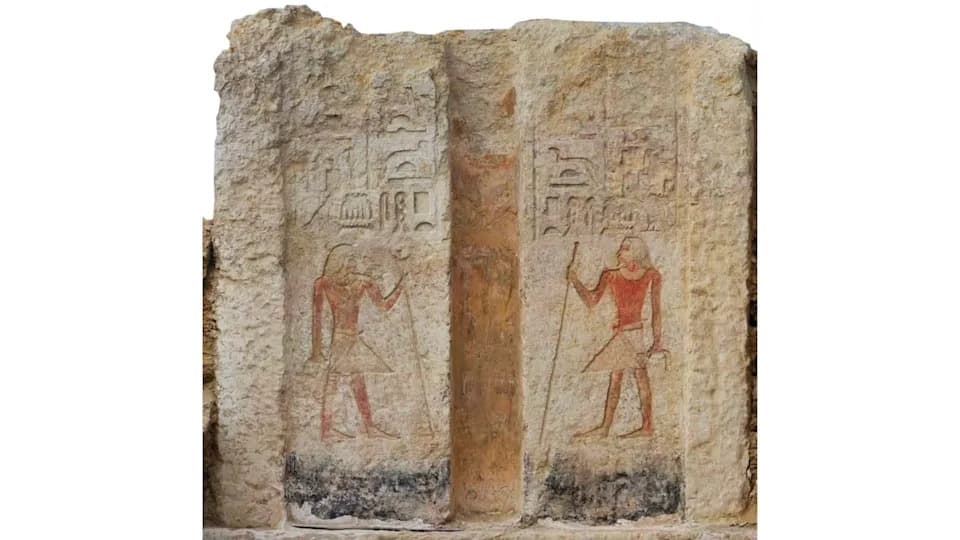
Archaeologists have uncovered a 1,700-year-old limestone tomb in Egypt's Dakhla Oasis that contains a rare 19-line poem in ancient Greek and hieroglyphic spells intended to protect the dead. The fourth-century burial, located in a necropolis near ancient Mothis (modern Mut), has a pyramid-shaped roof and appears to have been built for a husband and wife, Egyptian Ministry of Tourism and Antiquities officials said in a translated statement.
A Personal Lament Carved in Stone
The tomb features a stone plaque bearing a lyrical lament likely composed by a son mourning his father. The deceased is named Pisechtes, who officials suggest may have served as a judge. The poem—19 lines long—praises the man for kindness and wisdom and calls him an "advisor in life." Its closing lines record the son, named Sarapion, addressing his father with the cry:
"Listen, father!"
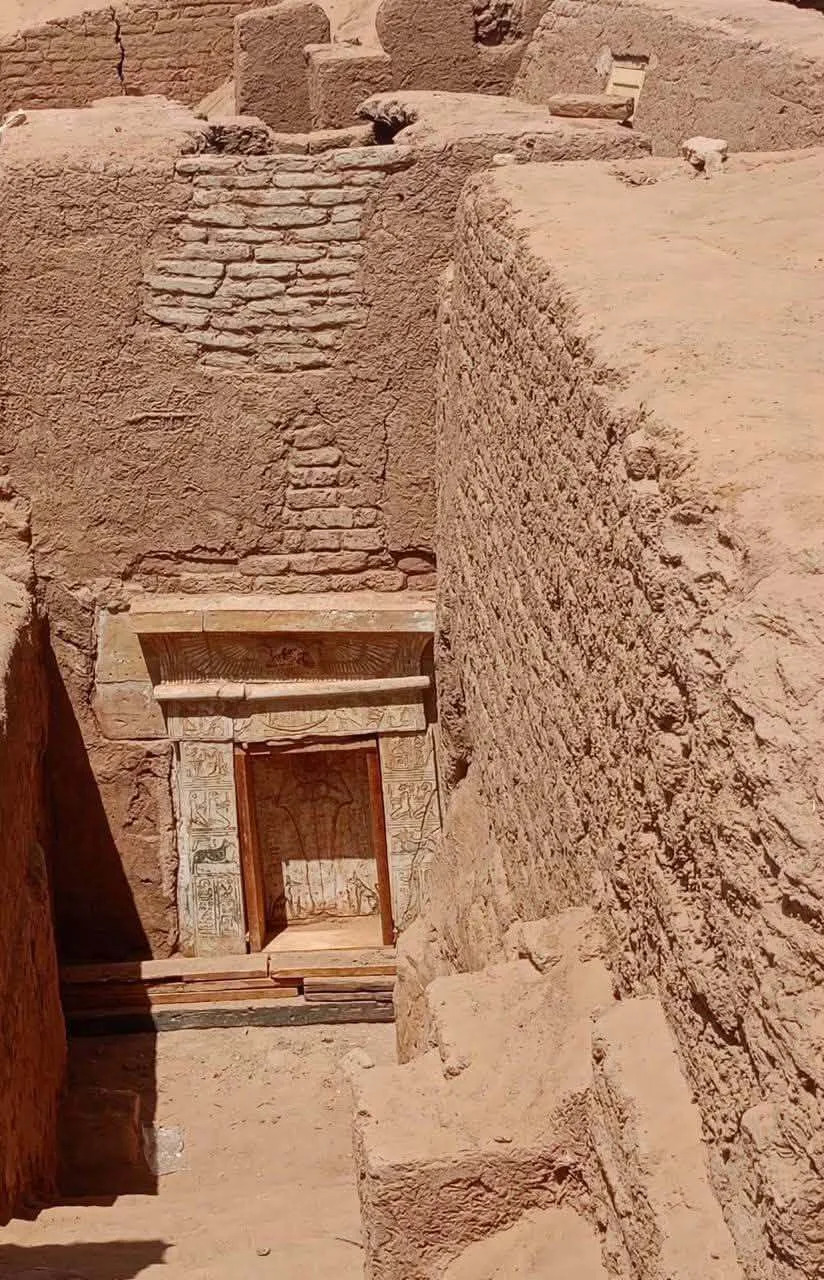
The tomb was built for a husband and wife and is about 1,700 years old. | Credit: Courtesy of the Egyptian Ministry of Tourism and Antiquities
Egyptian Rituals and Roman Connections
In addition to the Greek epigram, hieroglyphic inscriptions frame the entrance and record protective spells, including references to parts of the Amduat, the funerary text describing the sun god's nightly voyage through the underworld. Excavators also found ritual and household objects: an offering table, a purification basin, pottery sherds and at least one coin depicting the Roman emperor Constantine the Great (reigned A.D. 306–337).
Although the coin dates to Constantine's era—when Christianity was legalized in the Roman Empire—investigators reported no overtly Christian decorations or texts inside the tomb.
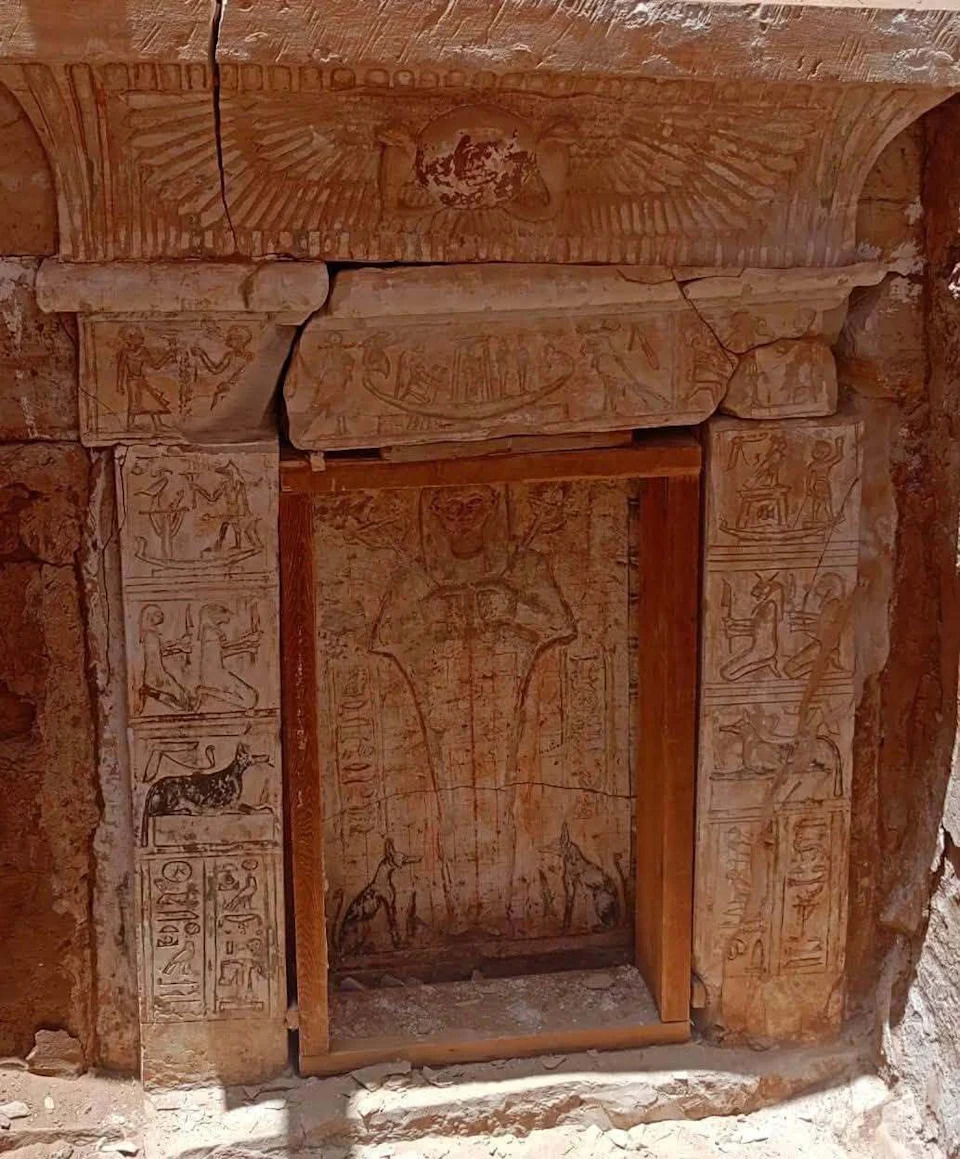
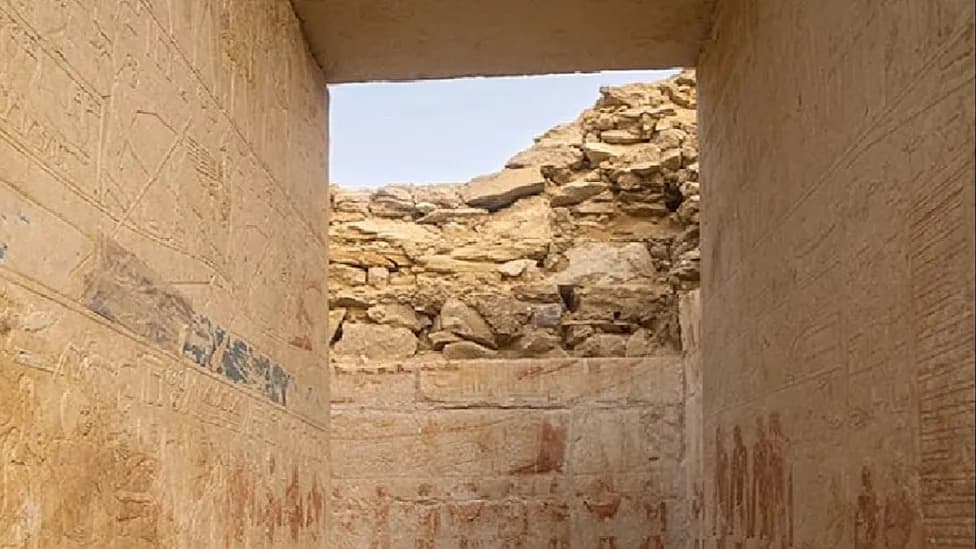
Hieroglyphs near the tomb entrance contain spells protecting the deceased. | Credit: Courtesy of the Egyptian Ministry of Tourism and Antiquities
Decoration, Access, and Later Use
Access to the burial chamber is via fourteen descending steps. The doorway is richly decorated with iconography including a winged sun disk, an image of the god Osiris and two cobras, while hieroglyphs at the entrance invoke spells to protect the deceased.
Officials said a mud-brick shrine erected above the tomb entrance likely postdates the original burial, suggesting the tomb may have been reused at a later time. The ministry's statement did not report the discovery of human remains.
Scholarly Notes on the Inscription
Angelos Chaniotis, a scholar at the Institute for Advanced Study in New Jersey who was not part of the excavation team, described the Greek inscription as "a highly literary and original epigram." He noted that its grammar echoes Homeric patterns and that the author used diacritical marks—such as accents—a detail indicating a high level of education.
The combination of a Homeric-style Greek epigram and traditional Egyptian funerary spells illustrates the multicultural character of Egypt under Roman rule. Live Science contacted the excavation team for comment but had not received a response at time of publication.
Help us improve.