The U.S. seized the domain LabelsBank.com after charging Faheem Akram with operating an unauthorized site that allegedly sold more than 5.1 million counterfeit USPS labels, causing over $126 million in estimated losses. Authorities say the fake $2 flat-rate labels let shippers bypass correct postage and are increasingly sold via social media and third-party marketplaces. The Postal Inspection Service says its Crime Lab can detect fake stamps and warns buyers to use only approved postal providers.
U.S. Seizes LabelsBank.com, Charges Operator in Alleged $126M Counterfeit USPS Label Scheme
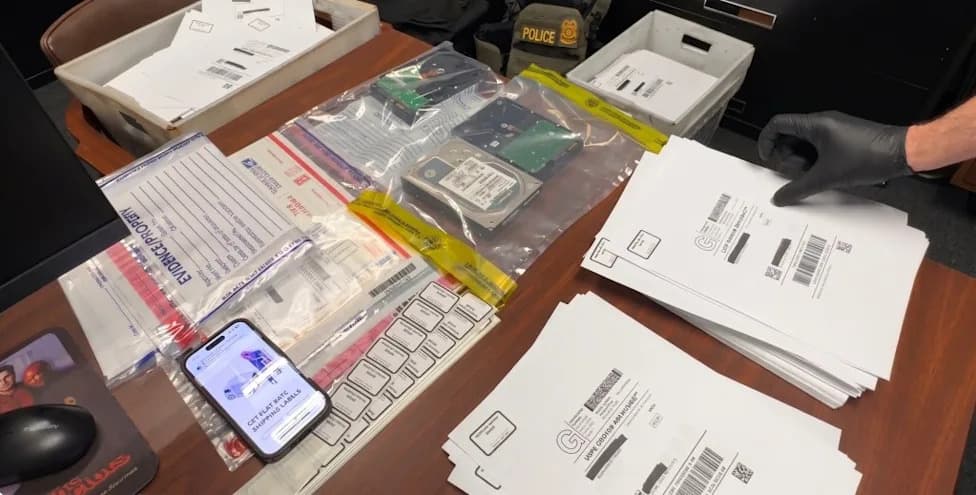
An investigator lays out copies of counterfeit parcel shipping labels. (Screen shot of U.S. Postal Inspection Service video)
U.S. law enforcement has seized the domain LabelsBank.com and charged a Pakistani national in an alleged scheme that sold more than 5.1 million counterfeit U.S. Postal Service postage labels, producing estimated losses exceeding $126 million, authorities said.
What Happened
According to court records and a statement from the U.S. Postal Inspection Service (USPIS), 33-year-old Faheem Akram of Khanewal, Pakistan, is accused of operating LabelsBank.com, a website that sold bogus USPS postage at a flat rate—typically $2 per label—regardless of package weight, size or destination. LabelsBank.com was not authorized to distribute Postal Service products or services.
Scope And Seizure
Postal inspectors in Miami determined that more than 5,000 customers used the site to buy over 5.1 million counterfeit shipping labels. In conjunction with Akram's indictment, a federal judge authorized seizure of the domain and shutdown of the website.
Charges
Akram has been charged with one count of conspiracy to defraud the United States and to make and sell counterfeit postage, five counts related to making and selling counterfeit postage labels, and four counts of wire fraud.
Our reach goes beyond our borders, said Bladismir Rojo, Miami Division postal inspector in charge. If you are defrauding the Postal Service and targeting U.S. consumers by pushing phony postage, we will find you and bring you to justice.
Investigation Details And Risks
The USPIS Crime Lab says forensic scientists can detect subtle differences between genuine and counterfeit postage. Investigators also report counterfeit labels are increasingly linked to reshipping scams, where victims are recruited to receive and forward packages that often contain stolen goods; scammers supply postage-paid labels that appear legitimate but are fake. Both trafficking in stolen goods and using counterfeit postage are federal crimes.
Why It Matters
Fraud involving counterfeit postage costs the Postal Service hundreds of millions to billions of dollars annually, undermining revenue needed to sustain mail and package services and creating an unfair advantage for dishonest shippers. Under updated U.S. rules, mail bearing counterfeit postage can be treated as abandoned.
Related Cases And Consumer Guidance
The seizure follows other large prosecutions: in July a Los Angeles-area woman received a 30-month prison sentence for using counterfeit postage in a scheme that reportedly caused more than $150 million in losses. Separately, a federal grand jury indicted two men accused of purchasing counterfeit postage from overseas suppliers and reselling it in the U.S., a scheme that allegedly produced about $1.7 million from roughly 6.5 million stamps.
The USPIS cautions consumers and businesses that buying postage from third-party wholesalers, social media sellers or unverified online vendors carries significant risk because authenticity cannot be reliably confirmed. The agency recommends purchasing postage only from approved postal providers and major retail chains that resell postage under formal agreements with the Postal Service.
For more reporting by Eric Kulisch, email [email protected].
Help us improve.